
Imagine this: You have had a long, exhausting day. Dinner needs to be prepared, household chores are waiting, and your young child wants your attention.
You switch on the television, play their favourite cartoon, and suddenly the house becomes peaceful.
Sounds familiar?
For many parents, cartoons are a convenient way to entertain children while managing everyday responsibilities. And not all cartoons are harmful. Some educational programmes can support learning, especially when parents watch and interact with their children.
But an important question remains: What happens when cartoons take up too much of a child’s day?
Research suggests that excessive screen time may be associated with difficulties involving children’s attention, behaviour, sleep and development. However, the effects depend on factors such as age, content quality, viewing habits and parental involvement.
For example, a 2022 systematic review published in JAMA Psychiatry, involving more than 159,000 children, found small but statistically significant associations between longer screen time and behavioural difficulties.[1]
In this article, we will examine nine potential concerns, explore what scientific research reveals, and share practical, Bible-based parenting principles to develop healthier screen habits.
- Exposure to aggressive behaviour

Children often imitate what they see, including the behaviour of cartoon characters.
Have you ever noticed your child pretending to fight like a superhero, shouting at their siblings or copying disrespectful language from a television programme?
Children learn through observation. When cartoons repeatedly portray hitting, bullying or aggression as entertaining or acceptable, young viewers may imitate some of these behaviours.
A 2022 meta-analysis published in JAMA Psychiatry examined 87 studies involving 159,425 children aged 12 and below. It found a small association between longer screen time and externalising behavioural problems, including aggression and inattention. [ibid.]
However, this research examined screen time broadly rather than violent cartoons specifically. It does not establish that watching cartoons directly causes aggressive behaviour.
What parents can do: Preview programmes and choose cartoons that encourage kindness, cooperation, respect and peaceful conflict resolution. When characters behave badly, discuss why their actions are inappropriate.
- Irritability and tantrums when screens are switched off
Some children become frustrated, angry or tearful when their favourite cartoons are interrupted.
Fast-moving scenes, exciting sounds and colourful animation can make programmes highly engaging. Switching suddenly from this entertainment to a less stimulating activity may be difficult for some young children.
The 2022 JAMA Psychiatry review also found a small association between greater screen time and emotional difficulties, including anxiety and depressive symptoms. [ibid.]
Nevertheless, these findings do not establish that cartoons cause tantrums through dopamine withdrawal. Frustration at screen limits can also reflect ordinary childhood difficulties with transitions and emotional regulation.
What parents can do: Establish predictable viewing routines. Give your child a warning before screen time ends, and offer another enjoyable activity, such as storytelling, drawing, or outdoor play.
- Confusion between fantasy and reality
Young children are still developing their understanding of what is real and what is imaginary.
A cartoon character may jump from a building, survive an explosion or fly through the air without getting hurt.
Adults understand that these events are fictional. Young children, however, may not fully appreciate the difference between cartoon adventures and real-life dangers.
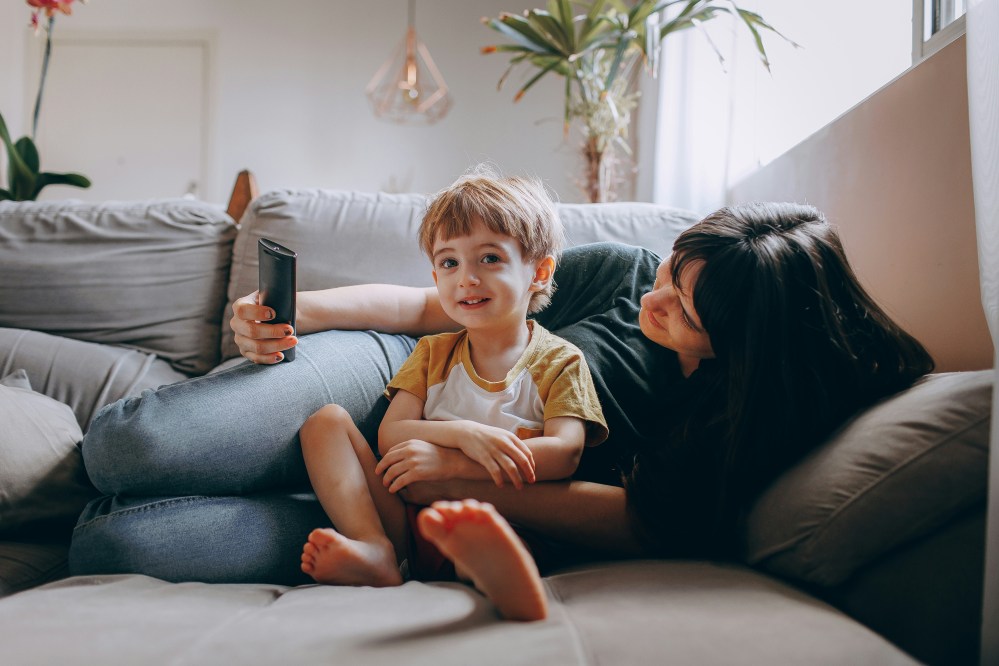
This does not mean cartoons routinely cause dangerous behaviour. Rather, it highlights the importance of age-appropriate content and parental guidance.
What parents can do: Explain unrealistic scenes and discuss why certain actions should never be attempted. Help children understand that cartoon characters do not always experience real-world consequences.
- Difficulties with attention and self-control
One of the most frequently discussed concerns about fast-paced cartoons is their potential effect on young children’s attention and executive functioning.
Executive functions are mental skills that help us concentrate, follow instructions, remember information, solve problems and control impulses.
In a 2011 study published in Pediatrics, researchers Angeline Lillard and Jennifer Peterson studied 60 four-year-old children. [2]
The children were randomly assigned to one of three activities: watching a fast-paced cartoon, watching an educational cartoon or drawing for nine minutes.
The researchers found that children who watched the fast-paced cartoon performed significantly worse on immediate tests of executive function than children in the other groups.
But there is an important distinction: The study demonstrated short-term effects. It did not prove that nine minutes of cartoons permanently damages children’s brains or causes lasting attention disorders.
What parents can do: Balance screen entertainment with activities that develop patience and concentration, including reading, puzzles, building blocks, and imaginative play.
- Speech and language development concerns
Young children learn language best through meaningful interaction with other people.
When parents talk, sing, read, smile, and respond to their children’s sounds, they create valuable opportunities for communication and learning.
Excessive passive screen viewing may reduce the time available for these interactions.
A 2020 systematic review and meta-analysis published in JAMA Pediatrics examined 42 studies involving 18,905 children. [3]
The researchers found that greater amounts of screen time were associated with weaker language skills. Interestingly, educational programming and watching together with caregivers were associated with stronger language skills.
These findings suggest that how children use screens matters alongside how long they use them.
They do not mean that every child who watches cartoons will experience speech delays.
What parents can do: Prioritise conversation, reading and interactive play. If your child watches an educational programme, ask questions, name objects and encourage them to describe what they see.
- Sleep problems and bedtime difficulties
Does your child struggle to fall asleep after watching cartoons late in the evening?
Screen use close to bedtime may interfere with healthy sleep routines through stimulating content, exposure to light and delayed bedtimes.
A 2015 systematic review published in Sleep Medicine Reviews examined 67 studies involving school-aged children and adolescents. [4]
The researchers found that 90% of the studies reported an adverse association between screen time and at least one sleep outcome, particularly shorter sleep duration or later sleep timing.
Although the review did not establish causation, the findings support limiting recreational screen exposure around bedtime.
What parents can do: Create a screen-free bedtime routine. Replace late-night cartoons with reading, quiet conversations, gentle music, or family prayer. I would personally recommend a Weekly Devotional for Kids by Dr. Claudine Onsongo as a healthy alternative for your kids. You can order a hard copy of this masterpiece on Amazon, as well as a soft copy.
- Reduced physical activity and increased obesity risk
Children need opportunities to run, jump, climb, play, and explore. These activities support muscle development, coordination, cardiovascular health and emotional well-being.
When screen entertainment occupies much of a child’s free time, opportunities for movement may decrease.
A 2019 systematic review and meta-analysis published in Child: Care, Health and Development examined 16 studies and found that children with at least two hours of daily screen time had higher odds of overweight or obesity than those with less than two hours. [5]
This association does not prove that cartoons directly cause obesity. Diet, sleep, physical activity and other family circumstances also influence children’s weight.
The World Health Organisation recommends balancing sedentary time with sufficient physical activity and sleep. [6]
What parents can do: Encourage outdoor games, walking, dancing, cycling and other age-appropriate physical activities. Even simple family games can help children develop healthier routines.
- Eye strain and short-sightedness
Extended screen viewing may contribute to temporary eye discomfort, including tired eyes, dryness, headaches and blurred vision.
Research has also explored the relationship between prolonged near-work activities and short-sightedness, medically known as myopia.
A 2015 systematic review and meta-analysis published in PLOS ONE examined research involving more than 25,000 children and found an association between greater near-work activity and increased odds of myopia. [7]
However, near-work activities include reading and other close-up tasks, not just watching screens.
The American Academy of Ophthalmology also notes that there is no evidence that ordinary screen use directly damages children’s developing visual systems.
What parents can do: Encourage regular viewing breaks, appropriate viewing distances, good lighting and outdoor activities. Consult an eye-care professional if your child frequently complains of headaches or blurred vision.
- Poor posture and physical discomfort
Children sometimes spend long periods watching cartoons while bending over tablets, leaning forward or sitting in uncomfortable positions. Maintaining awkward positions for extended periods can contribute to neck, shoulder, and back discomfort.
However, there is insufficient evidence to claim that cartoon watching itself causes permanent spinal curvature.
The practical concern is prolonged inactivity combined with uncomfortable posture.
What parents can do: Encourage comfortable seating, regular movement breaks and screen positioning that does not require excessive neck bending. Avoid allowing children to remain in the same position for hours.
Let’s now see what healthy screen time for children looks like.
How Much Screen Time Should Children Have?
Not all screen use is equally beneficial or harmful.
A child watching an educational programme with a parent has a different experience from a child watching several hours of entertainment alone.
Nevertheless, healthy boundaries are important.
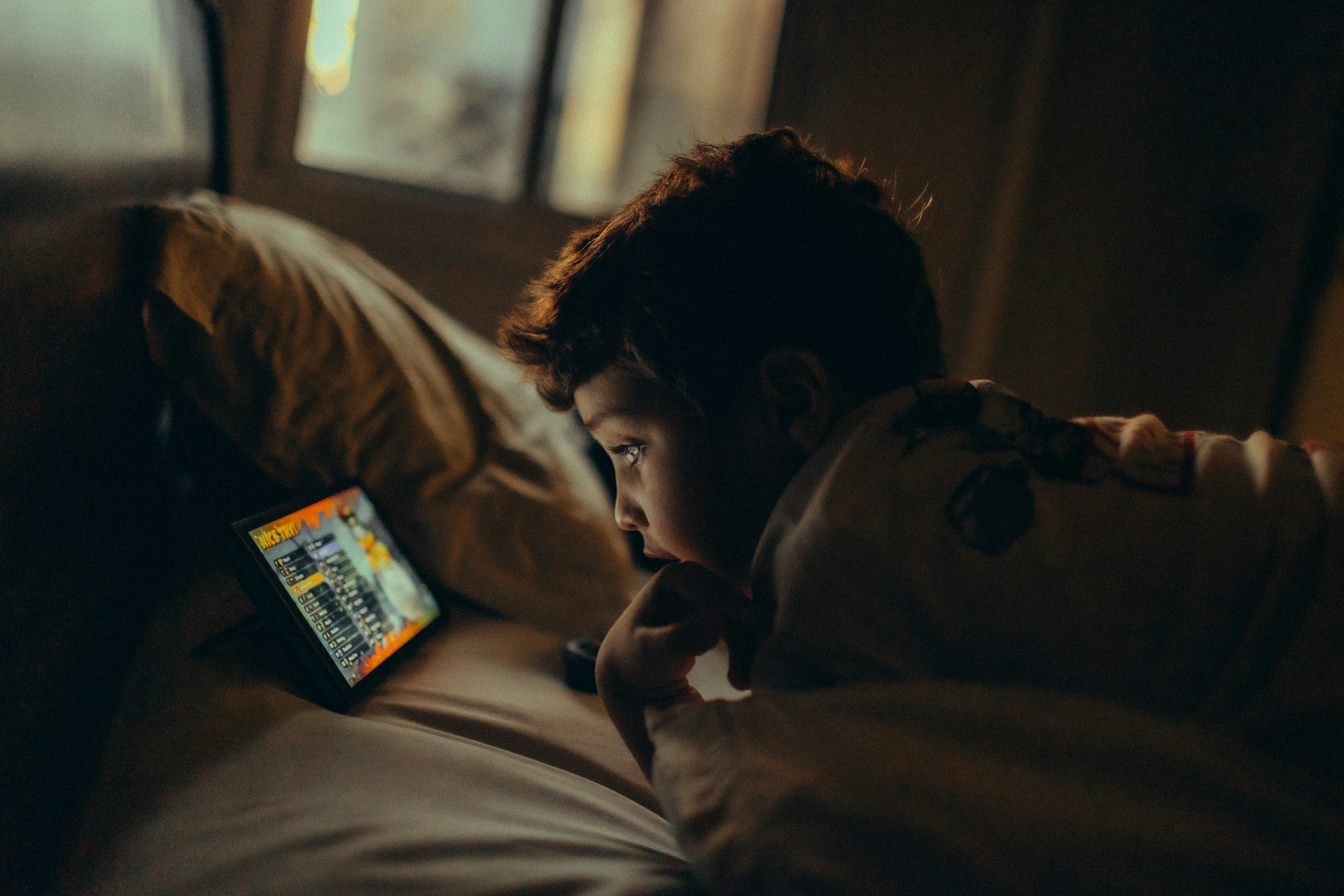
The World Health Organisation’s 2019 guidelines provide the following recommendations for children under five:
| Child’s age | Recommended sedentary screen time |
| Under 1 year | Not recommended |
| 1 year | Not recommended |
| 2 years | No more than 1 hour daily; less is better |
| 3–4 years | No more than 1 hour daily; less is better |
These recommendations are drawn from the WHO Guidelines on Physical Activity, Sedentary Behaviour and Sleep for Children Under 5 Years of Age.
For older children, parents should establish consistent boundaries that protect sleep, exercise, schoolwork, relationships, and other important activities.
Seven Practical Ways to Develop Healthy Screen Habits
Parents do not need to eliminate all cartoons to encourage healthier childhood development.
The goal is to use technology intentionally while protecting time for the experiences children need most.
Here are seven practical ways to develop healthy screen habits for your children:
- Establish clear viewing limits. Create predictable screen-time routines that reflect your child’s age and developmental needs.
- Choose positive, age-appropriate programmes. Look for content that promotes kindness, creativity, problem-solving and respectful behaviour.
- Watch together when possible. Discuss characters, stories and lessons to turn viewing into an interactive experience.
- Create screen-free family moments. Protect mealtimes, family worship and bedtime from unnecessary digital distractions.
- Encourage creative play. Offer opportunities for drawing, storytelling, puzzles, music, reading, and outdoor games.
- Model healthy technology habits. Children learn by watching adults. Demonstrate balanced screen use in your own daily life.
- Introduce changes with patience. If your child is accustomed to extensive screen time, gradually establish healthier routines and provide enjoyable alternatives.
Remember, children do not necessarily need expensive toys or elaborate activities. Sometimes, a ball, a storybook, or a few minutes of undivided parental attention can make a meaningful difference.
What Does the Bible Teach About Protecting Children’s Minds?

The Bible does not specifically discuss cartoons or digital screens. However, it offers valuable principles for nurturing children’s character, relationships, and overall development.
- Be intentional about what children watch
Philippians 4:8 encourages believers to focus on what is true, noble, just, pure, lovely and praiseworthy.
This principle can guide parents when choosing entertainment.
Before allowing a programme, ask yourself: Does it encourage kindness or cruelty? Respect or disrespect? Positive behaviour or harmful imitation?
The goal is not to prevent children from encountering every challenge but to help them develop wisdom and discernment.
- Make time for meaningful interaction
Deuteronomy 6:6–7 encourages parents to teach God’s principles during ordinary daily activities.
This reminds us that parenting is more than providing food, shelter, education, and entertainment.
Children also need meaningful conversations, guidance, affection and opportunities to learn from the adults around them.
A walk together, a bedtime story or a conversation about school can become a valuable opportunity for emotional and spiritual growth.
- Remember that children are a precious responsibility
Psalm 127:3 describes children as a heritage from the Lord.
Every child deserves love, protection, attention and opportunities to develop their God-given abilities.
Technology can support learning and entertainment, but it should not consistently replace the relationships and experiences that nurture healthy development.
When Should Parents Seek Professional Advice?
If your child experiences persistent speech delays, significant behavioural difficulties, ongoing sleep problems, loss of previously acquired skills or frequent vision complaints, consult a qualified healthcare professional.
These concerns may have several possible causes and should not automatically be blamed on cartoon watching.
Early assessment can help identify your child’s needs and provide appropriate support.
Your Child Needs More Than a Screen
Cartoons are not inherently harmful, and technology does not have to be the enemy of healthy parenting.
The greater concern is what happens when screen entertainment begins replacing the experiences children need most: meaningful conversations, physical activity, imaginative play, adequate sleep and loving family relationships.
As parents, we cannot control every influence our children encounter. But we can intentionally shape the environment in which they grow.
Start with one simple change today. Reduce unnecessary screen time, choose healthier entertainment, and spend more time connecting with your child.
Because childhood is too precious to be spent entirely in front of a screen.
And as Proverbs 22:6 encourages us, parents have an important responsibility to guide children towards a wise and meaningful life.
The habits we nurture today can help shape the adults our children become tomorrow.
Tweet
A question for parents: How do you manage cartoon watching and screen time in your home? What activities have helped your children spend less time in front of screens?
Share your experience in the comments. Your story may encourage another parent facing the same challenge.
Scientific References
- Eirich, R., et al. (2022). Association of Screen Time With Internalising and Externalising Behaviour Problems in Children 12 Years or Younger: A Systematic Review and Meta-analysis. JAMA Psychiatry, 79(5), 393–405. https://doi.org/10.1001/jamapsychiatry.2022.0155
- Lillard, A. S., & Peterson, J. (2011). The Immediate Impact of Different Types of Television on Young Children’s Executive Function. Paediatrics, 128(4), 644–649. https://doi.org/10.1542/peds.2010-1919
- Madigan, S., et al. (2020). Associations Between Screen Use and Child Language Skills: A Systematic Review and Meta-analysis. JAMA Paediatrics, 174(7), 665–675. https://doi.org/10.1001/jamapediatrics.2020.0327
- Hale, L., & Guan, S. (2015). Screen Time and Sleep Among School-Aged Children and Adolescents: A Systematic Literature Review. Sleep Medicine Reviews, 21, 50–58. https://doi.org/10.1016/j.smrv.2014.07.007
- Fang, K., Mu, M., Liu, K., & He, Y. (2019). Screen Time and Childhood Overweight/Obesity: A Systematic Review and Meta-analysis. Child: Care, Health and Development, 45, 744–753. https://doi.org/10.1111/cch.12701
- World Health Organisation. (2019). Guidelines on Physical Activity, Sedentary Behaviour and Sleep for Children Under 5 Years of Age. https://www.who.int/publications-detail-redirect/9789241550536
- Huang, H. M., Chang, D. S. T., & Wu, P. C. (2015). The Association Between Near Work Activities and Myopia in Children: A Systematic Review and Meta-analysis. PLOS ONE, 10(10), e0140419. https://doi.org/10.1371/journal.pone.0140419
- American Academy of Ophthalmology. Digital Devices and Your Eyes. https://aao.org/eye-health/tips-prevention/blue-light-digital-eye-strain


