There are moments when faith is asked to do more than leave the familiar. There are moments when faith is asked to wait. And then there are moments when faith is tested at the very point where God’s promise seems most precious.
Abraham had waited years for Isaac. Isaac was not merely a beloved son. He was the son God had promised. God had already told Abraham, “…in Isaac your seed shall be called” (Genesis 21:12, NKJV).
Through Isaac, the covenant promise would continue. Then came the command:
“Take now your son, your only son Isaac, whom you love, and go to the land of Moriah, and offer him there as a burnt offering on one of the mountains of which I shall tell you” (Genesis 22:2, NKJV).
The tension is almost unbearable. God had promised Isaac. Now God was asking Abraham to surrender Isaac. Who does that? Most of us usually differ with God when brought to such circumstances, and take a different path. For Abraham, this was equally not easy, but the way he handled it is probably one of the most remarkable demonstrations of faith in Scripture.
Hebrews tells us what Abraham did:
“By faith Abraham, when he was tested, offered up Isaac, and he who had received the promises offered up his only begotten son” (Hebrews 11:17, NKJV).
He obeyed. But Hebrews also tells us why.
“concluding that God was able to raise him up, even from the dead, from which he also received him in a figurative sense” (Hebrews 11:19, NKJV).
Abraham’s faith had reached a deeper place.
Faith trusts God with the promise even when obedience seems to contradict the promise.
When God tests what we hold most dear
Genesis 22 begins with a sobering statement, “Now it came to pass after these things that God tested Abraham…” (Genesis 22:1, NKJV).
The Bible does not say that God tempted Abraham to sin. James 1:13 makes clear that God does not tempt anyone with evil. This was a test. God was revealing the reality of Abraham’s faith.
The test reached the deepest place possible: his love for Isaac, his understanding of God's promise, and his willingness to trust God when he could not see how everything would work out.
Abraham had already learned to leave his homeland. He had learned to wait. Now he had to learn to surrender. That distinction matters.
Sometimes we imagine faith as receiving what God gives us. But Genesis 22 shows that faith must also be willing to place what God has given back into His hands.
Isaac belonged to Abraham. But before Isaac was Abraham’s son, he was God’s gift. And faith remembers the difference.
Faith sometimes comes with promises and problems walking side by side.
Abraham had a promise and a problem
From a human perspective, God’s command appeared impossible to reconcile with His promise. God had said, “For in Isaac your seed shall be called” (Genesis 21:12, NKJV).
Yet God commanded Abraham to offer Isaac. What was Abraham supposed to do with that contradiction?
He could have reasoned. He could have delayed. He could have questioned. He could have tried to reinterpret the command. Instead, he obeyed. Even if his only son had to die, God, who had brought him from the dead—considering the biological impossibilities with Sarah, who was equally well past her menopause—could raise him up again (Hebrews 11:19, NKJV).
Abraham did not know how God would fulfil His promise. But he knew who had made it. That was enough. His faith was not confidence in an outcome he could see. Instead, confidence in the God he knew.
This is one of the deepest lessons in the entire chapter.
Faith requires us to obey God's Word before we understand His method.
Abraham had no detailed explanation of what God was about to do. He had no guarantee that the next morning would make sense. He simply trusted that God’s promise could not fail.
“God will provide”
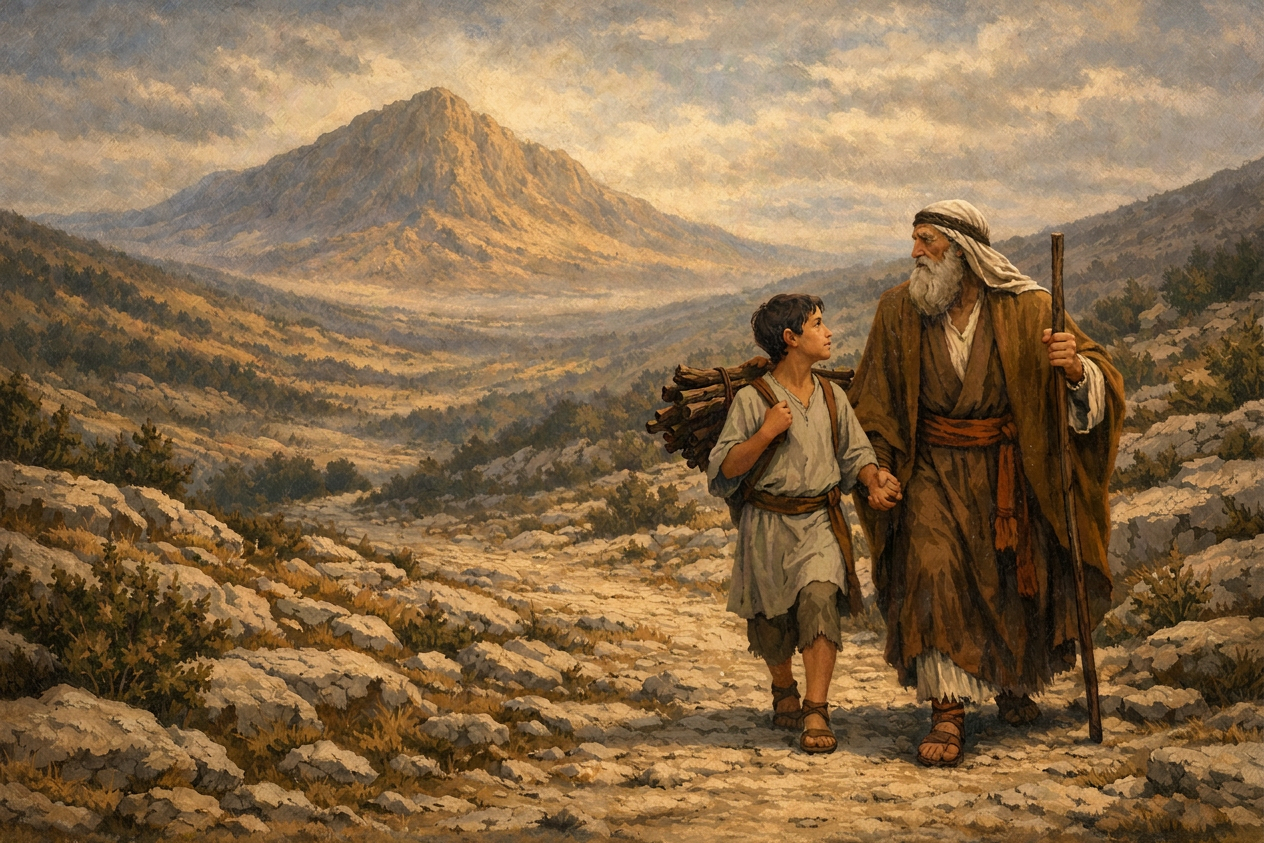
The journey to Mount Moriah contains one of the most moving conversations in Genesis.
Isaac noticed something was missing. They had the wood. They had the fire. They had the knife. But there was no lamb.
So Isaac asked:
“...Isaac spoke to Abraham his father and said, “My father!” And he said, “Here I am, my son.” Then he said, “Look, the fire and the wood, but where is the lamb for a burnt offering?” (Genesis 22:7, NKJV).
Abraham answered:
“My son, God will provide for Himself the lamb for a burnt offering” (Genesis 22:8, NKJV).
Abraham did not know exactly how God would provide. But he believed that God would.
That sentence captures something essential about biblical faith. Abraham was not pretending the situation was easy. He was not denying the reality of what was happening. He was trusting the character of God in the middle of what he could not explain.
And then God did provide.
When Abraham’s hand was stayed, he saw a ram caught in a thicket.
“Then Abraham went and took the ram, and offered it up for a burnt offering instead of his son” (Genesis 22:13, NKJV).
God had provided a substitute. The mountain was named accordingly:
“And Abraham called the name of the place, The-LORD-Will-Provide” (Genesis 22:14, NKJV).
But the story does not end merely with Abraham receiving an answer. It points beyond Abraham. It points towards Christ.
The son, the wood, and the substitute
Genesis 22 is one of Scripture’s most powerful pictures of the gospel.
A father offers his beloved son. The son carries the wood for the sacrifice. The event takes place on a mountain. A sacrifice is required. And then a substitute is provided.

We can’t help but see the events of Calvary playing in miniature on Mount Moriah. Scripture itself invites us to see the larger redemptive pattern.
Jesus said:
“Your father Abraham rejoiced to see My day, and he saw it and was glad” (John 8:56, NKJV).
The New Testament also identifies Christ as the ultimate fulfilment of the promised Seed.
Paul writes:
“Now to Abraham and his Seed were the promises made… ‘And to your Seed,’ who is Christ” (Galatians 3:16, NKJV).
Isaac was spared; Jesus was not. A ram took Isaac's place. At Calvary, there was no substitute for Jesus because Jesus was the Substitute.
The angel did not stop the cross. There was no voice from heaven saying, “It is enough.” Christ went all the way.
“He who did not spare His own Son, but delivered Him up for us all…” (Romans 8:32, NKJV).
Abraham learned that God could provide. At Calvary, the world saw the ultimate provision. God gave His Son.
Faith that surrenders
There is another lesson here that is easy to miss. Abraham’s greatest act of faith was not simply receiving Isaac.
It was being willing to surrender Isaac. That challenges our understanding of faith. We often speak about faith in terms of receiving:
- “God will provide.”
- “God will open the door.”
- “God will answer.”
- “God will fulfil His promise.”
All of that is true. But sometimes faith says something else: “Even if I cannot see what God is doing, I will still trust Him.”
Faith does not hold God's gifts more tightly than it holds God Himself.
Abraham could surrender Isaac because he trusted the Giver more than the gift. That is where faith becomes worship. And that is where faith becomes freedom. We are often afraid to surrender because we imagine that letting go means losing everything. But Abraham’s story reminds us that nothing placed in God’s hands is ever outside God’s care.
That does not mean God will always restore what we surrender in the way Abraham received Isaac back. Scripture never gives us permission to turn Abraham’s experience into a guarantee that every earthly loss will be reversed.
Faith is not a contract with God. Faith is trust in God. Sometimes God restores, sometimes He transforms. Sometimes He asks us to wait, and sometimes His people suffer losses that will not be reversed until the resurrection.
But through all of it, God remains faithful.
Living by faith today
Most of us will never stand on Mount Moriah. But we will face moments when God’s Word calls us to trust Him with something we deeply value:
- Perhaps it is a relationship
- A dream
- A career
- A ministry
- A child
- A future we carefully planned
- A prayer we have carried for years
The question is not whether these things matter. They do. Rather, the question is whether they matter more to us than God does.
Faith says:
“Lord, what You have given me is precious, but You are more precious still.”
That kind of faith does not become passive. Abraham still walked. He still obeyed. He still climbed the mountain. Faith did not remove the difficulty. Faith gave him the courage to obey in the middle of it.
Sometimes we want God to explain everything before we move. But Abraham teaches us that obedience often comes before explanation. We may not know what God will do. We can know who God is. And sometimes that is enough.
Let’s now peer into the devotional series.
From the Conflict of the Ages Series
Ellen G. White reflects on the faith behind Abraham’s obedience:
“Looking beyond that which was seen, Abraham grasped the divine word, ‘accounting that God was able to raise him up, even from the dead.’”
— Ellen G. White, Patriarchs and Prophets, p. 151
The emphasis is important. Abraham looked beyond what was seen.
He did not ignore the visible circumstances. He simply refused to let them have the final word. God’s promise had the final word. And that is precisely what faith does.
Looking unto Jesus
Hebrews 11 eventually moves us beyond Abraham’s mountain to a greater sacrifice. The story of Abraham and Isaac prepares us to understand something astonishing about God.
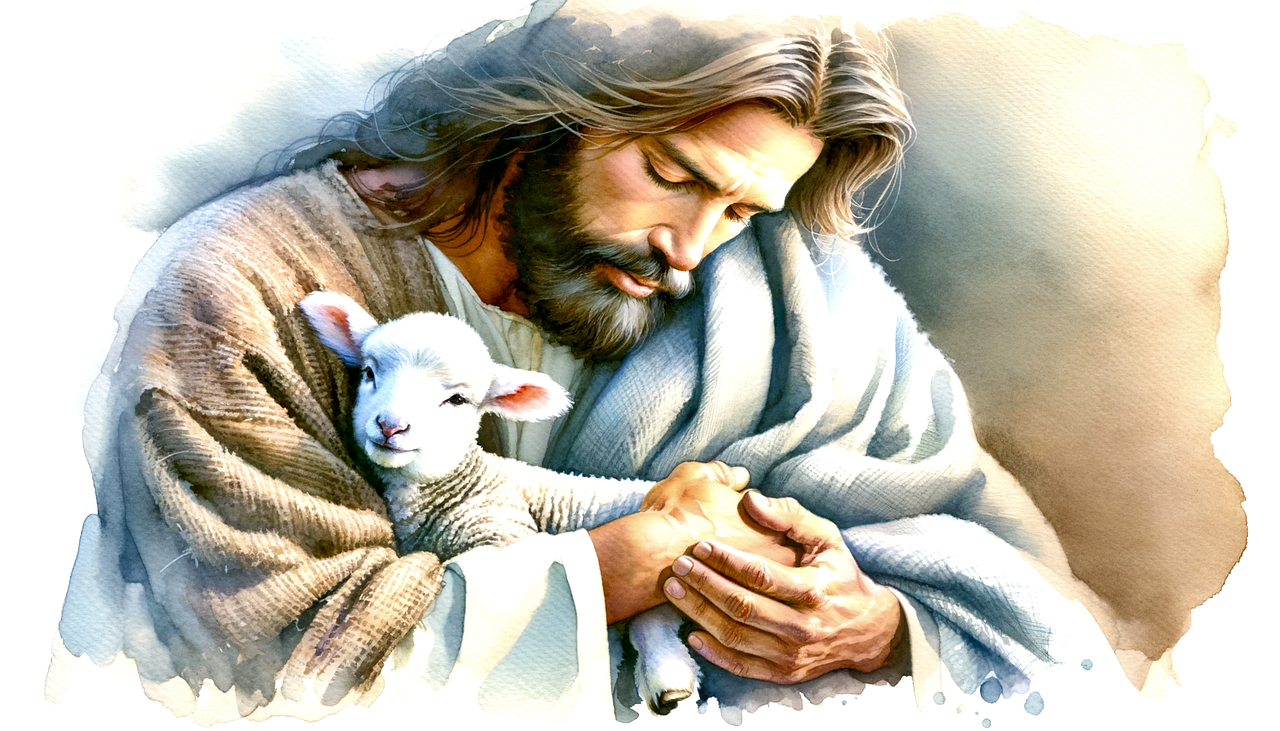
Abraham was willing to surrender his beloved son. God actually gave His beloved Son. At Moriah, Abraham said:
“God will provide for Himself the lamb” (Genesis 22:8, NKJV).
At Calvary, God provided. Jesus Christ became the Lamb. John the Baptist declared:
“Behold! The Lamb of God who takes away the sin of the world!” (John 1:29, NKJV).
Our faith does not ultimately rest in Abraham’s example. It rests in the God Abraham trusted. And it rests in the Christ God provided. So when your faith is tested, look beyond the mountain. Look beyond the unanswered question. Look beyond what you can see.
Look unto Jesus. He is the One who was promised. He is the One who was given. He is the One who died. He is the One who rose again. And He is the One who remains faithful.
Faith focus
Faith trusts God with the promise even when obedience seems to contradict the promise.
You may not understand what God is doing. You may not see how His promise could possibly be fulfilled. You may even find yourself standing in a place where obedience feels costly.
But remember Abraham.
God’s faithfulness does not depend upon our ability to see the whole picture. Trust the Promiser. Trust His Word. Trust His timing.
And above all, trust the God who has already given His greatest gift in Jesus Christ.
Abraham’s faith has taken us from leaving to waiting, and now to surrender. But the story does not end with Abraham. The promise would continue through his son.
Next, we turn to Isaac, a man whose faith is expressed not primarily through dramatic battles or great journeys, but through blessing the generation that would come after him.
Sometimes faith does not simply walk into the future. Sometimes faith blesses the future it may never see.
By faith, they overcame their world. By faith we overcome ours.
“For whatever is born of God overcomes the world. And this is the victory that has overcome the world—our faith” (1 John 5:4, NKJV).


Well argued Sir. Keep it shining 💪💪🌟🌟
LikeLiked by 2 people
Thanks for your generous feedback…
LikeLike