Something significant is approaching on the Seventh-day Adventist Church calendar.
On September 5th 2026, Adventists around the world are being called to unite in a global proclamation of Jesus Christ under the banner OneVoice27. And this will climax in AD 2027. The initiative will use the theme: ‘
“All Things New: Hope Starts Here”
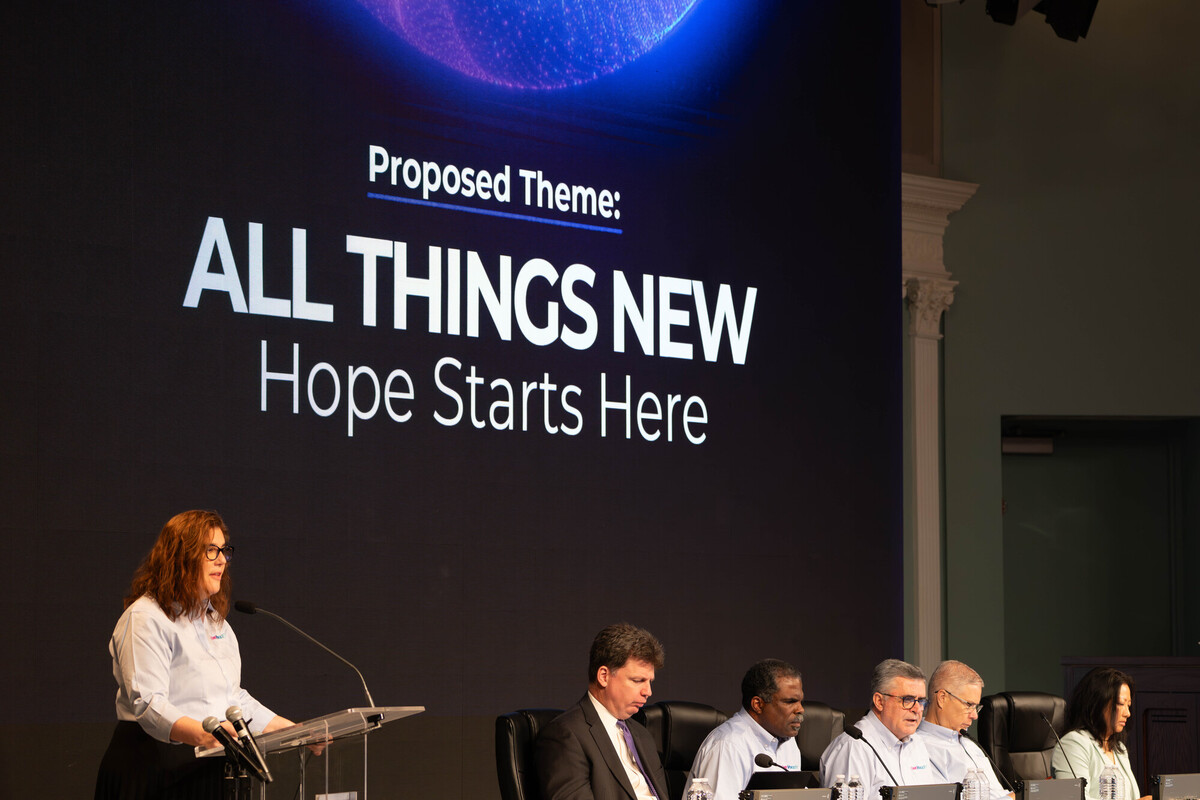
The official OneVoice27 initiative describes it as a worldwide movement in which the Seventh-day Adventist Church will proclaim the Messiah “in every nation, through every medium”, marking what the Church understands as 2,000 years since Jesus’ baptism and the beginning of His public ministry.
While thinking about things, an average congregant in the pew may be going through a series of questions, such as:
- What exactly is OneVoice27?
- Why 2027?
- Why is AD 27 so important?
- And what does this have to do with the mission of the Church today?
These are important questions, because OneVoice27 is not ultimately about a date, a logo, a campaign or a special programme. It is about Jesus Christ and the proclamation of His gospel.
To answer these questions and help you understand how you can get involved in proclaiming “All Things New,” we’ll cover:
Let’s start by understanding what OneVoice 27 is.
What Is OneVoice27?
OneVoice27 is a global Seventh-day Adventist movement culminating in September 2027, when the worldwide Church will unite to proclaim Christ through various media and locally relevant evangelistic outreach.

The vision is remarkably simple:
One worldwide Church. One mission. One Christ. One voice.
The initiative is intended to involve not merely pastors, evangelists, and church institutions, but ordinary members, families, churches, schools, small groups, young people, content creators, and individuals.
The official website describes participation at both the individual and group level, with an emphasis on prayer, study, and mission. It also describes the project as moving from church-operated media to member-driven media, recognising that the gospel can now travel through television, radio, publishing, social media, streaming platforms, personal testimony, and face-to-face ministry.
In other words, OneVoice27 is not simply asking the Church to organise more programmes. It is calling the Church to become more intentional about telling the world about Jesus.
Why 2027?
The year 2027 has been selected because the Seventh-day Adventist Church understands AD 27 to be the year of Jesus’ baptism and the beginning of His public ministry.
The official OneVoice27 website describes September 2027 as the “2,000-year anniversary of Jesus’ baptism” and says the initiative is Christ-focused, celebrating 2,000 years from His baptism and entrance into ministry.
This understanding is not based simply on counting backward from the present. It arises from a combination of biblical prophecy, Gospel chronology, and historical dating.
And this brings us to a question that many Church members may naturally ask: If Jesus was baptised in AD 27, when was He born?
AD 27: Understanding the Date of Jesus’ Baptism
At first, the chronology can seem confusing. We sometimes hear that Jesus was about thirty years old when He began His ministry, and we may instinctively calculate:
27 AD − 30 years = 3 BC.
But there is a problem with that calculation. There is no year 0. The calendar moves directly from:
1 BC → AD 1
There is no intervening year called “0”; why is there no year 0?
The BC/AD dating system was developed centuries after Jesus’s time. The system was intended to number the years in relation to Christ, but the calculation of Christ’s birth was not entirely accurate.
Consequently, the traditional calendar does not perfectly identify the historical year of Jesus’ birth.
This is why it is entirely possible—and historically quite reasonable—for Jesus to have been born several years BC while still being the Christ whose life divides history.
Matthew places Jesus’ birth during the reign of Herod the Great. “Now after Jesus was born in Bethlehem of Judea in the days of Herod the king, behold, wise men from the East came to Jerusalem” (Matthew 2:1, NKJV).
Matthew later records that Joseph returned with Jesus and Mary after Herod had died. “But when Herod was dead, behold, an angel of the Lord appeared in a dream to Joseph in Egypt” (Matthew 2:19, NKJV).
Historical chronology places Herod’s death around 4 BC. Therefore, Jesus’ birth must have occurred before Herod’s death. A birth around 4–6 BC is consequently compatible with the Gospel evidence.
Luke then tells us, “…Jesus Himself began His ministry at about thirty years of age…” (Luke 3:23, NKJV).
So there is no contradiction in Jesus being born around 4 BC and beginning His public ministry around AD 27.
For example:
4 BC → 3 BC → 2 BC → 1 BC → AD 1 → ... → AD 27
Because there is no year 0, that represents approximately 30 years. The calendar, therefore, does not require Jesus to have been born in AD 1.
Daniel 9 and the significance of AD 27
The more important biblical basis for AD 27 comes from Daniel 9:24–27. Daniel was told:
“Seventy weeks are determined
For your people and for your holy city...” (Daniel 9:24, NKJV).
The prophecy then identifies a starting point:
“Know therefore and understand,
That from the going forth of the command
To restore and build Jerusalem
Until Messiah the Prince,
There shall be seven weeks and sixty-two weeks...” (Daniel 9:25, NKJV).
In the historicist understanding used by Seventh-day Adventists, the seventy weeks represent 490 prophetic years, and the 69 weeks leading to “Messiah the Prince” represent 483 years.
The starting point is understood to be the decree of Artaxerxes concerning the restoration of Jerusalem in 457 BC.
Thus:
457 BC + 483 years = AD 27
There is again no year 0 to insert into the calculation.
The Seventh-day Adventist Biblical Research Institute explains this interpretation by identifying the 457 BC decree as the beginning of the 490-year period and AD 27 as the year in which the Messiah appeared, when Jesus was baptised and began His public ministry.
Luke’s Gospel provides an important chronological confirmation. When describing the beginning of Jesus’ ministry, Luke carefully identifies the governing authorities:
“Now in the fifteenth year of the reign of Tiberius Caesar...” (Luke 3:1, NKJV).
Tiberius Caesar began ruling in AD 12 as co-regent with Augustus, his grandfather, who died in AD 14. 15 years later would take us to AD 27. Luke then records the baptism of Jesus:
“When all the people were baptized, it came to pass that Jesus also was baptized...”(Luke 3:21, NKJV).
And immediately afterward, Luke identifies Jesus as being about thirty years old when He began His ministry (Luke 3:23).
The convergence of Daniel’s prophecy, Luke’s chronology, and the historical setting provides the basis for identifying AD 27 as the year of Christ’s baptism in the Adventist understanding. This is also the chronological foundation explicitly used by OneVoice27.
It is worth being precise, however: the Bible does not use the modern expression “AD 27”. AD 27 is a historical reconstruction of the biblical chronology. It is a strong and longstanding Adventist interpretation, rather than a date printed explicitly in the biblical text.
That distinction does not make the chronology meaningless. Rather, it reminds us to place our confidence where Scripture places it: in the prophetic Word and in the Christ to whom the prophecy points.
Why Does Jesus’ Baptism Matter So Much?
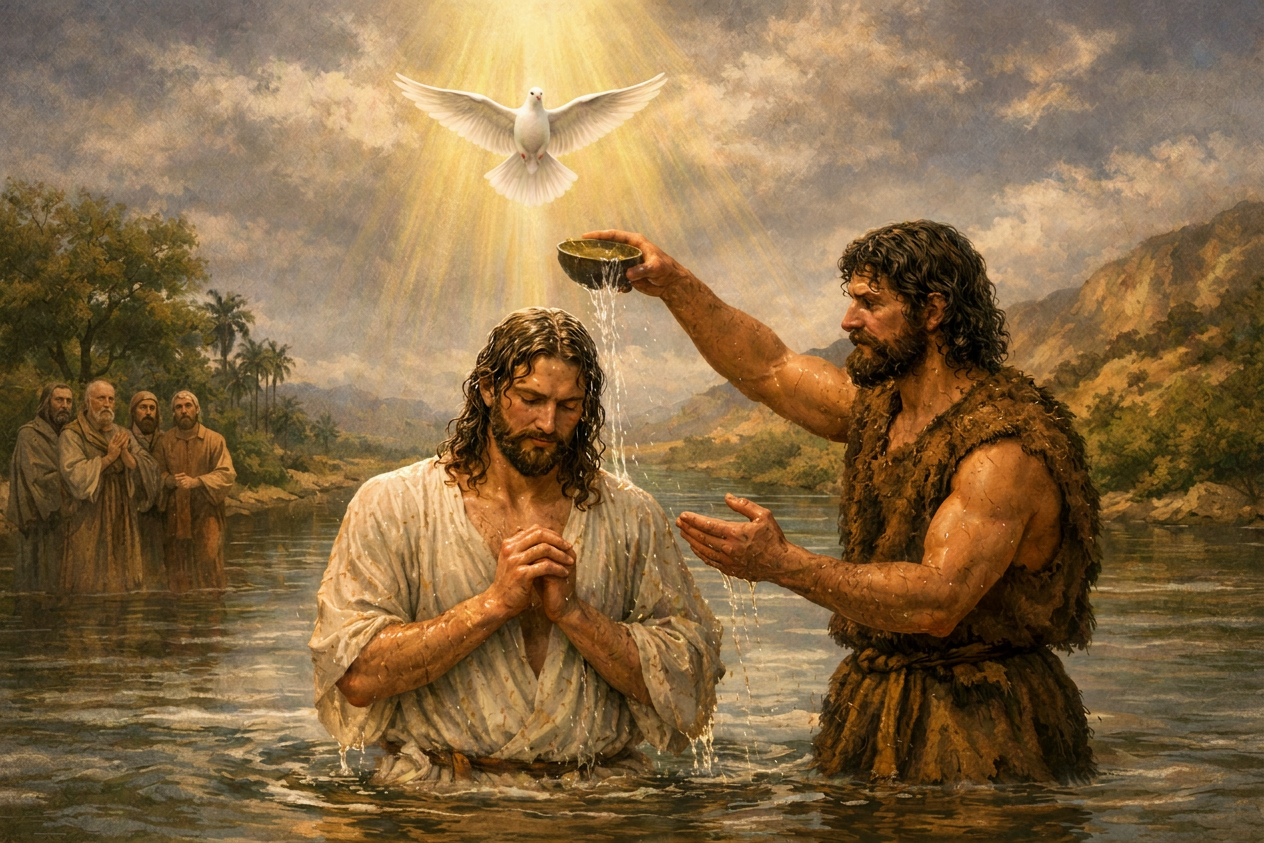
Jesus’ baptism was not merely another event in His earthly life. It marked the public beginning of His messianic ministry. At the Jordan, Jesus identified Himself with humanity and submitted to the Father’s will. Heaven responded:
“And suddenly a voice came from heaven, saying, ‘This is My beloved Son, in whom I am well pleased’” (Matthew 3:17, NKJV).
The Holy Spirit descended upon Him, and He entered publicly into the work for which He had come. Immediately after His baptism and temptation, Jesus began proclaiming the kingdom:
“Repent, for the kingdom of heaven is at hand” (Matthew 4:17, NKJV).
His ministry would include preaching, teaching, healing, confronting evil, forgiving sinners, forming disciples, and ultimately giving His life for the world. Jesus Himself summarised His mission:
“For the Son of Man has come to seek and to save that which was lost” (Luke 19:10, NKJV).
Therefore, when we speak about 2,000 years since Jesus’ baptism, we are not merely celebrating an anniversary. More than that, we are remembering the beginning of a ministry that changed the world—and a ministry whose mission has now been entrusted to His followers.
In Christ, all things can be made new, as we unite in one mission.
From One Messiah to One Mission
After His resurrection, Jesus gave His disciples a commission:
“Go into all the world and preach the gospel to every creature” (Mark 16:15, NKJV).
Matthew records the same commission in another form:
“Go therefore and make disciples of all the nations...” (Matthew 28:19, NKJV).
The book of Acts shows the disciples beginning to fulfil that commission. The Church was never meant to keep the story of Jesus to itself. And Revelation gives the final Church a remarkably universal picture of gospel proclamation:
“Then I saw another angel flying in the midst of heaven, having the everlasting gospel to preach to those who dwell on the earth—to every nation, tribe, tongue, and people...” (Revelation 14:6, NKJV).
That is why OneVoice27 has significance beyond an anniversary. It is an opportunity for the worldwide Church to ask:
What would happen if millions of believers intentionally told the story of Jesus at the same time?
And while at it, we need to understand what we really mean by “One Voice.”
“One Voice” Does Not Mean One Method
One voice does not mean that every Church member must preach the same sermon. It does not mean that every country must use the same programme.
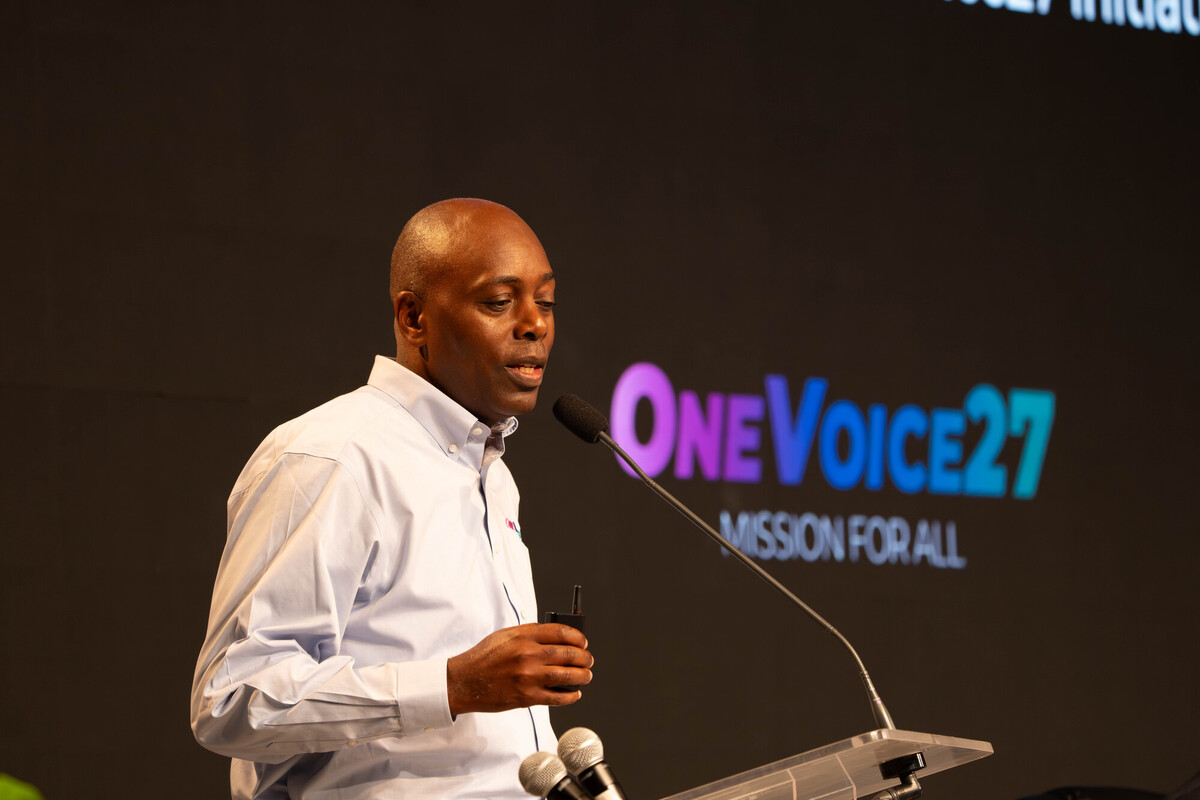
It does not mean that every culture must communicate the gospel in exactly the same way. The official initiative specifically envisions local and regional contextualisation, while using every available form of media and outreach:
- A young person might share Christ through a short video
- A pastor might preach a series of evangelistic sermons
- A family might invite neighbours for Bible study
- A teacher might introduce a student to the story of Jesus
- A small group might organise a community outreach
- A church member might simply share a personal testimony with a friend
- A radio presenter might tell the story of Christ
- A content creator might use social media to answer someone’s questions about faith
Different methods, different cultures, different languages, different gifts. And yet all proclaiming one Lord, one gospel, and one mission.
Paul captured this unity beautifully:
“There is one body and one Spirit... one Lord, one faith, one baptism” ( Ephesians 4:4–5, NKJV).
OneVoice27 Begins Before September 2027
The temptation with major evangelistic initiatives is to think about the final programme while neglecting the preparation required beforehand.
But the official OneVoice27 initiative explicitly identifies preparation as part of the movement. It calls the Church to prayer, reflection on Christ’s life, and study of Daniel and Revelation.
That is important.
Before we can effectively speak about Christ, we need to know Christ. Before we invite others to follow Jesus, we need to be following Him ourselves. Before we call the world to repentance, we must allow the Holy Spirit to search our own hearts.
The disciples’ power did not come merely from possessing information about Jesus. They had been with Jesus. And much more, they spent time in the upper room, waiting and preparing to be endued with power from above (Luke 24:49).
And perhaps this is one of the most important lessons of OneVoice27:
The loudest proclamation should come from a Church that has first encountered Christ personally.
What Should We Proclaim?
The answer should not be merely, “Jesus was baptised 2,000 years ago.” That is historically significant, but it is not the gospel. The message is much bigger:
- We proclaim Jesus the Messiah who came into the world
- We proclaim Jesus the Son of God
- We proclaim Jesus the One who lived a sinless life
- We proclaim Jesus the Lamb of God who takes away the sin of the world. “Behold! The Lamb of God who takes away the sin of the world!” (John 1:29, NKJV)
- We proclaim Jesus who died for our sins. “…Christ died for our sins according to the Scriptures” (1 Corinthians 15:3, NKJV).
- We proclaim Jesus who rose again. “He is not here; for He is risen, as He said” (Matthew 28:6, NKJV).
- We proclaim Jesus, who ministers for us as our great High Priest. “For we do not have a High Priest who cannot sympathize with our weaknesses…” (Hebrews 4:15, NKJV).
- And we proclaim Jesus who is coming again. “This same Jesus, who was taken up from you into heaven, will so come in like manner as you saw Him go into heaven” (Acts 1:11, NKJV).
This is where the anniversary becomes a mission.
We remember His first coming while proclaiming His second coming.
And yet we may need some warning to avoid extremes that people often tag to time prophecies.
OneVoice27 Is Not About Predicting the End
There is an important distinction that Church members should understand. The year 2027 should not become a date-setting exercise. Jesus did not tell His disciples to calculate the date of His return. Instead, He gave them a mission:
“And this gospel of the kingdom will be preached in all the world as a witness to all the nations, and then the end will come” ( Matthew 24:14, NKJV).
OneVoice27 should therefore not create the impression that 2027 is being identified as the year of Christ’s return. Instead, it is an evangelistic opportunity.
The date points backwards to Christ’s baptism and the beginning of His public ministry, while the mission points forward to the completion of the gospel commission and the soon return of Christ.
The emphasis should therefore not be that “Jesus is returning in 2027.” Instead, we are proclaiming that:
“Jesus has come, Jesus is alive, Jesus is saving, Jesus is coming again, Let us tell the world.”
Every Member Has a Voice
One of the most exciting features of OneVoice27 is that “voice” need not mean a microphone:
- Your voice may be your testimony
- Your voice may be your home
- Your voice may be your classroom
- Your voice may be your workplace
- Your voice may be your phone
- Your voice may be your social-media account.
- Your voice may be your music.
- Your voice may be your writing.
- Your voice may be a Bible study around your dining table.
- Your voice may simply be a conversation with one person who needs hope.
The early Church understood this principle. After being commanded not to speak in the name of Jesus, Peter and John responded:
“For we cannot but speak the things which we have seen and heard” ( Acts 4:20, NKJV).
That is the kind of voice the Church needs. Not merely a voice because we have been instructed to speak. A voice because we have encountered Jesus.
A Moment for Unity
The world does not need another religious argument. Instead:
- It needs hope
- It needs truth
- It needs grace
- It needs forgiveness
- It needs meaning
- It needs to know that sin and death do not have the final word
And the Church has a message that meets that need:
Jesus Christ.
OneVoice27 gives the Seventh-day Adventist Church a remarkable opportunity to put aside unnecessary competition, fragmentation and individual agendas and focus collectively on the person at the centre of our faith.

Paul’s words are an appropriate challenge:
“For we do not preach ourselves, but Christ Jesus the Lord...” ( 2 Corinthians 4:5, NKJV).
That should be the spirit of OneVoice27. Not our church first. Not our platform first. Not our programme first. Instead, Christ first.
But how can you prepare to make the most of OneVoice 27? Let’s Learn that Next.
How Can I Prepare?
Preparation for OneVoice27 can begin now. You can:
- Pray: Ask God to revive your personal relationship with Christ and prepare you to be a witness.
- Read the Gospels: Spend time with Jesus Himself. Read Matthew, Mark, Luke, and John—not merely to collect information, but to encounter the Saviour.
- Study Daniel and Revelation: The official initiative specifically encourages study of these prophetic books as part of preparation.
- Know your testimony: Ask yourself, “What has Jesus done for me?” You do not need a theological degree to answer that question.
- Identify your mission field: Who has God already placed around you? Your neighbour? Your colleague? Your classmate? Your family? Or, your online community?
- Discover your voice: What gift has God given you? Use it for Christ:
- Speaking?
- Writing?
- Music?
- Technology?
- Teaching?
- Hospitality?
- Evangelism?
- Prayer?
- Organisation?
- Compassion?
- Work together: OneVoice27 is not an invitation to compete over who can have the biggest programme. Rather, it is an invitation to cooperate.
The strength of the movement will not be found in one gifted preacher or one media platform. It will be found in a united Church filled with the Holy Spirit and centred on Jesus.
The Voice That Matters Most
Two thousand years ago, a voice was heard in the wilderness:
“Prepare the way of the LORD; Make His paths straight” (Matthew 3:3, NKJV).
John the Baptist’s ministry was ultimately not about John. When people began wondering whether he himself might be the Christ, John pointed away from himself, “He must increase, but I must decrease” (John 3:30, NKJV).
That is perhaps the best description of what OneVoice27 should become. Less of us and more of Christ. Less self-promotion and more gospel proclamation. Less competition and more cooperation. Less emphasis on the messenger and more emphasis on the Messiah.
The Church is preparing to speak with one voice. But that voice should have one unmistakable subject—Jesus Christ.
In September 2027, Adventists around the world will have an extraordinary opportunity to direct the attention of millions of people towards Him. The official initiative describes this as a global proclamation through every nation and every medium, with local communities contextualising their evangelistic efforts.
The question for every Church member is therefore not simply “What is OneVoice27?” The deeper question is “What will my voice say about Jesus?”
May the answer be simple. May it be biblical. May it be Christ-centred. As Annie Rebecca Smith sings:
“I asked again; earth, sea, and sun
Seemed, with ONE VOICE, to make reply:
“Time’s wasting sands are nearly run,
Eternity is nigh.
Then weep no more-with warning tones,
Portentous signs are thickening round,
The whole creation, waiting, groans,
To hear the trumpet sound.”
And may it echo the message of the everlasting gospel:
“Fear God and give glory to Him, for the hour of His judgment has come; and worship Him who made heaven and earth, the sea and springs of water” (Revelation 14:7, NKJV).


