There are moments when God asks us to move before He shows us where we are going. We prefer certainty. We want the destination before beginning the journey, the answers before asking the questions, and the complete plan before taking the first step.
But sometimes God gives us something different—a promise, a call, and just enough light to move forward.
That was Abraham’s experience.
His story of faith begins not with a miracle, a battle, or a spectacular demonstration of divine power. It begins with a command to leave.
“Get out of your country,
From your family
And from your father’s house,
To a land that I will show you” (Genesis 12:1, NKJV).
Notice the final words:
“I will show you.”
God did not give Abraham a map. Instead, He gave him a promise. And Abraham had to decide whether God’s promise was more trustworthy than everything he could already see.
And this was demonstrated by leaving what he was used to, and trying a new, unpromising path at the word of God.
Faith leaves the familiar
Hebrews tells us:
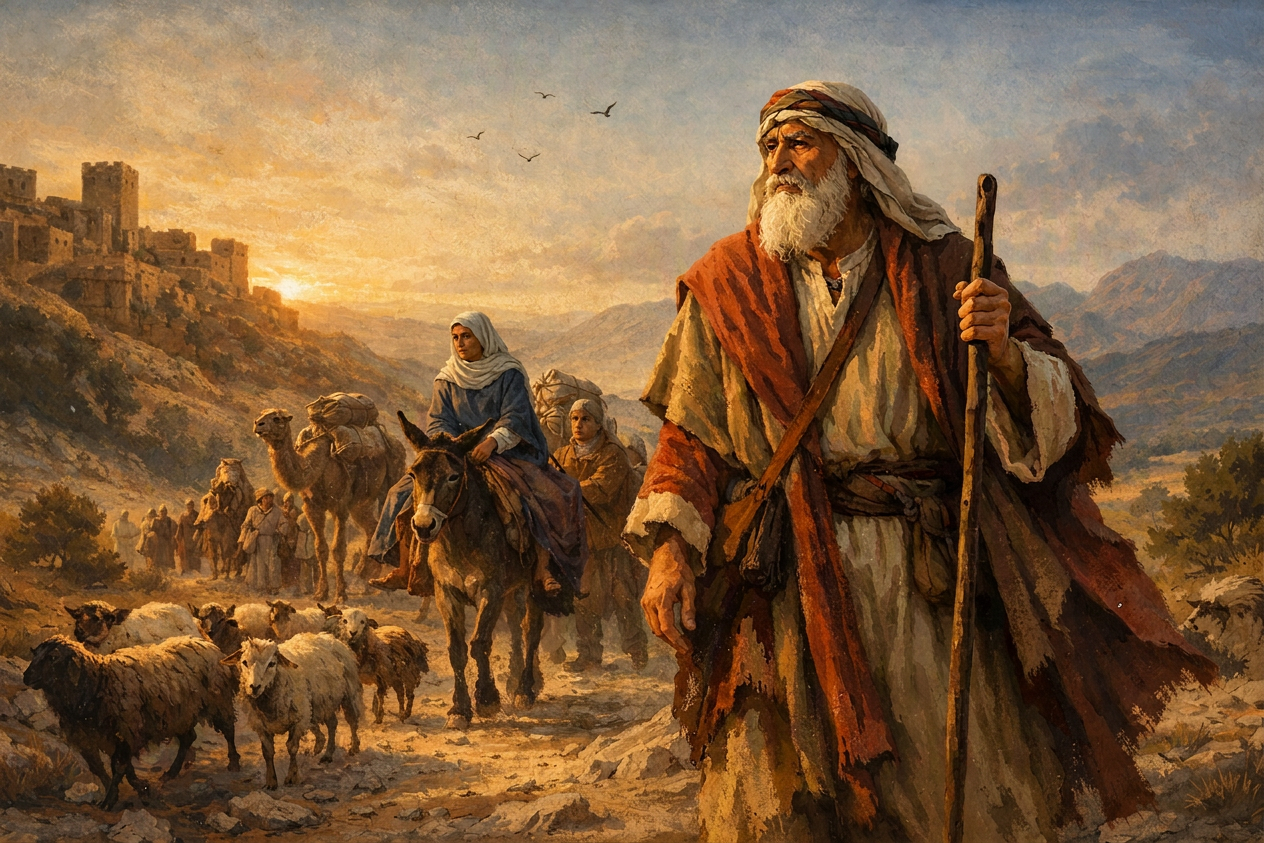
“By faith Abraham obeyed when he was called to go out to the place which he would receive as an inheritance. And he went out, not knowing where he was going” (Hebrews 11:8, NKJV).
The remarkable thing is what comes next:
“And he went out, not knowing where he was going.”
Abraham obeyed without having all the answers. He knew who had called him. He knew what God had promised. But he did not know exactly where the journey would lead. That is faith.
Biblical faith is not reckless uncertainty. Abraham was not taking a blind leap into the darkness. He was responding to a God who had revealed Himself and spoken a trustworthy word.
He did not know the destination, but he knew the One who did, and that was enough.
Let’s now take a look at what Abraham had to leave behind in accepting the call.
What was Abraham leaving?
God’s call was costly. Abraham was asked to leave his country, his relatives, and his father’s household (Genesis 12:1).
The familiar had to be surrendered for the promised. The secure had to be exchanged for the unknown. The visible had to give way to the unseen. And this is often where faith becomes difficult.
We can trust God with what we have never possessed. It can be much harder to trust Him with what we already have.
Sometimes the greatest obstacle to faith is not fear of the future but attachment to the past. Abraham could not simultaneously cling to Ur and pursue Canaan. Faith required movement.
Faith moves before it sees
Abraham’s journey teaches us something important about God’s guidance.
We often ask God, “Lord, show me where this will end.” But God may answer, “Trust Me enough to take the next step.”
Abraham had no complete itinerary. He had no satellite navigation. He had no guarantee that every stage of the journey would be comfortable. He simply had God’s word, and to him, God’s word was enough.
This is one of the great distinctions between faith and sight:
While sight says, “Show me, then I will go,” Faith says, “You have spoken, so I will go.”
Tweet
That does not mean faith refuses to think, plan, or seek wisdom. It means that when God’s revealed will is clear, uncertainty about the future is not an excuse for disobedience.
Abraham went, becoming a stranger in the promised land.
A stranger in the promised land
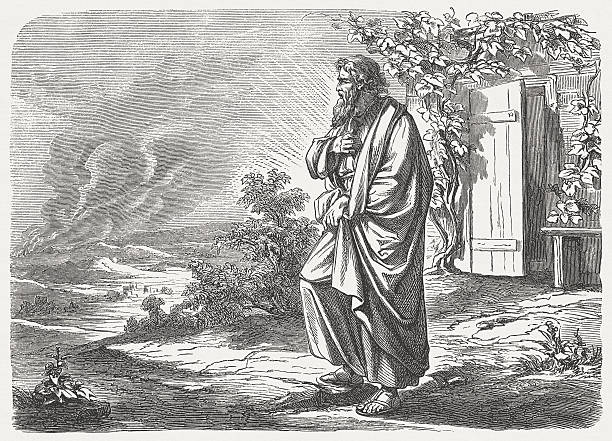
Perhaps the most surprising part of Abraham’s journey is what happened after he obeyed. He arrived in the land God had promised, yet Hebrews say:
“By faith he dwelt in the land of promise as in a foreign country...” (Hebrews 11:9, NKJV).
Think about that. He was in the promised land, but he was still living like a stranger. The promise had begun, but its fullness had not arrived. Abraham had to learn that receiving God’s promise does not always mean immediate fulfilment.
That is a lesson every generation of believers must learn:
God may give us a promise whose fulfilment stretches beyond our lifetime.
Tweet
Abraham eventually died without possessing everything God had promised him in the ultimate sense. And Hebrews explains why:
“For he waited for the city which has foundations, whose builder and maker is God” (Hebrews 11:10, NKJV).
Abraham was looking beyond Canaan. He was looking beyond the earthly inheritance. He was looking for something eternal.
That is a faith that waits upon God, and we will see that next.
The faith that waits
Abraham’s faith was therefore not merely the faith that leaves. It became the faith that waits.
While there is courage in leaving, there is often even greater courage in waiting. We can become impatient when God’s promises seem delayed. Abraham knew that experience. God had promised descendants, yet the years passed, and he didn’t even have a son. God had promised a land, yet Abraham remained a pilgrim. God had promised a future, yet he spent much of his life waiting for things he could not fully see.
Yet Scripture remembers him as a man of faith.
Why?
Because faith does not require immediate fulfilment to remain confident in God’s faithfulness. And this eventually becomes part of Abraham’s identity.
When faith becomes our identity
Abraham eventually became known as the father of those who believe.
Paul writes:
“Therefore know that only those who are of faith are sons of Abraham” (Galatians 3:7, NKJV).
That does not mean Abraham was perfect.
His journey included moments of fear, impatience, and failure. He sometimes tried to solve God’s promises through human methods. Yet the larger direction of his life was shaped by trust in God.
His failures do not erase his faith. They remind us that faith is not the absence of struggle. Faith is learning, again and again, to return our confidence to God.
So, how does this play out in your life? God usually asks us to leave one thing or more in order to serve Him or align with His will for our lives.
What are you being asked to leave?

Abraham’s story brings the question uncomfortably close to home. What might God be asking you to leave?
Perhaps it is a habit that has become comfortable. Perhaps it is a relationship that is pulling you away from God. Perhaps it is an ambition you have placed above His will. Perhaps it is resentment, control, fear, or the need to know exactly how everything will turn out.
Sometimes God calls us to leave something. Sometimes, He calls us to surrender our demand to understand. And sometimes the hardest thing to leave is the illusion that we are in control.
Yet faith says, “I may not know where this road leads, but I know who walks with me.”
Let’s now see our devotional companion on the series from the writings of Ellen White.
From the Conflict of the Ages Series
Ellen White reflects on the faith that enabled Abraham to respond to God’s call:
“It was no light test that was thus brought upon Abraham, no small sacrifice that was required of him. There were strong ties to bind him to his country, his kindred, and his home. But he did not hesitate to obey the call. He had no question to ask concerning the land of promise—whether the soil was fertile and the climate healthful, whether the country afforded agreeable surroundings and afforded opportunities for accumulating wealth. God had spoken, and His servant must obey; the happiest place on earth for him was the place where God would have him to be.”
—— Ellen G. White, Patriarchs and Prophets, p. 126
Abraham’s faith was not confidence in an unknown destination. It was confidence in a known God.
Looking unto Jesus
Abraham’s journey ultimately points beyond Canaan. God’s promise to Abraham was never merely about one man acquiring one piece of land. Through Abraham’s descendants, God promised blessings to the nations:
“I will bless those who bless you,
And I will curse him who curses you;
And in you all the families of the earth shall be blessed” (Genesis 12:3, NKJV).
Paul tells us where that promise ultimately leads:
“Now to Abraham and his Seed were the promises made. He does not say, “And to seeds,” as of many, but as of one, “And to your Seed,” who is Christ” (Galatians 3:16, NKJV).
Abraham left his earthly home because he trusted God’s promise. Christ left heaven itself to accomplish that promise. Abraham travelled toward a city he had never seen. Jesus came from heaven to seek a humanity that had wandered far from God. Abraham looked forward by faith.
We look back to Calvary and forward to the return of Christ. The journey of faith still requires us to leave some things behind. But we never leave alone. The God who called Abraham is still calling His children today. And He may not show us the entire road.
He may simply say:
Go.
When He does, faith does not demand a map. Faith trusts the Guide. For faith has never been about seeing the entire journey. It has always been about trusting the One who knows the way.
Faith does not need a map when it has God’s promise.
Tweet
Faith focus
Faith does not always show us where we are going; it teaches us to trust the One who calls us to go.
Abraham’s faith began with leaving the familiar. But leaving was only the beginning. God would eventually ask him to wait for a promise that seemed impossible, and that brings us to the next witness in Hebrews 11.
Next, we will see how by Faith Sarah was able to trust the impossible.
By faith, they overcame their world. By faith we overcome ours.
“For whatever is born of God overcomes the world. And this is the victory that has overcome the world—our faith” (1 John 5:4, NKJV).


2 thoughts on “By Faith Abraham… Leaving the Familiar”