When you hear the word malnutrition, what picture comes to mind?
For many of us, it is the heartbreaking image of a severely underweight child with too little food. And understandably so. Hunger and undernutrition remain serious global problems, particularly in Africa.
But there is another face of malnutrition that is becoming increasingly difficult to ignore.
It can sit at a table overflowing with food. It can consume more calories than the body needs. It can exist alongside overweight and obesity. In other words, it is possible to have too much to eat and still be poorly nourished.
The World Health Organization (WHO) defines malnutrition broadly as deficiencies, excesses, or imbalances in a person’s intake of energy and nutrients. This means undernutrition is one form of malnutrition—but so are overweight, obesity, and resulting diet-related noncommunicable diseases. [1]
This creates a striking modern paradox:
Some people are suffering because they do not have enough to eat, while others are suffering partly because they routinely consume more energy than their bodies can manage in a healthy way.
In this article, we will explore:
- What Does Malnutrition Really Mean?
- The Malnutrition of More
- Does Obesity Really Kill More People Than Famine?
- Hunger Has Not Disappeared
- Africa Is Living With Both Problems
- More Is Not Always Better
- What Does the Bible Say About Caring for Our Bodies?
- Stewardship Is Different From Obsession
- How Can We Practise Better Nutritional Stewardship?
- The Question Is No Longer Simply, “Do We Have Enough?”
The issue is not simply how much food is on our plates. It is whether the way we eat is helping our bodies flourish.
Let’s take a closer look.
What Does Malnutrition Really Mean?
Malnutrition is not simply starvation. It includes deficiencies, excesses, or imbalances in the nutrients and energy our bodies receive.
According to the Cleveland Clinic, “Malnutrition is an imbalance between the nutrients your body needs to function and the nutrients it gets. It can mean undernutrition or overnutrition. You can be malnourished from an overall lack of calories, or you might have a protein, vitamin or mineral deficiency. You might also have more excess calories than your body knows what to do with.”
That distinction changes the conversation.
WHO describes several forms of malnutrition, including undernutrition, micronutrient deficiencies, overweight, obesity, and diet-related noncommunicable diseases. [2]
So imagine two people.
One does not have enough food and regularly consumes fewer calories than the body requires. The other has abundant access to food and regularly consumes more energy than the body requires, while perhaps eating a diet poor in essential nutrients.
Their circumstances are very different. Their health problems may also be very different.
But both can exist on the spectrum of malnutrition.
This is often described as the double burden of malnutrition:
Double burden of malnutrition refers to the coexistence of undernutrition alongside overweight, obesity, and diet-related disease.
And remarkably, those problems can occur within the same country, the same community, and sometimes the same household.
The Malnutrition of More
One of the great nutritional challenges of our age is no longer simply obtaining enough calories. For many people, it is learning how to live healthily in an environment where calories are abundant.

Consider the scale of the change.
According to the WHO, 2.5 billion adults were overweight in 2022, including more than 890 million living with obesity. About 43% of adults worldwide were overweight, and 16% were living with obesity.
Worldwide adult obesity has more than doubled since 1990.[3]
That is an extraordinary shift in the global health landscape. And it is not simply about appearance or body size.
WHO estimates that higher-than-optimal body mass index (BMI) caused approximately 3.7 million deaths from noncommunicable diseases (NCDs) in 2021, including cardiovascular diseases, diabetes, cancers, neurological disorders, chronic respiratory diseases and digestive disorders.
An earlier WHO estimate placed the number at around 5 million NCD deaths in 2019. The difference is important: estimates may change as newer data and updated methodologies become available, so figures from different years should not be treated as if they were directly interchangeable.
The latest Global Burden of Disease (GBD) data offer another perspective.
The GBD 2023 study, produced by the Institute for Health Metrics and Evaluation (IHME) and published in 2025, estimates approximately 3.68 million deaths worldwide in 2023 attributable to obesity/high BMI, including about 546,000 deaths in Africa.[4]
Millions of people, then, are not becoming sick because food is completely absent.
They are living in a world where more food does not necessarily mean better nourishment.
Does Obesity Really Kill More People Than Famine?
Obesity-related mortality is now measured in the millions each year, while the death toll from individual modern famines is usually much lower than the catastrophic famines of previous centuries. But these figures should not be turned into a simplistic competition.
Famine and obesity are not measured in the same way.
Obesity-related deaths are generally estimated using epidemiological models that calculate the proportion of deaths from conditions such as cardiovascular disease, diabetes, and cancers that can be attributed statistically to high BMI.
Famine mortality is much harder to establish.
Modern famines often occur during war, displacement, political instability, and the collapse of health systems—the very circumstances in which reliable death registration is hardest to maintain.
The World Peace Foundation notes that estimates of famine mortality can vary considerably because methods, assumptions, and available data differ from one event to another. Its researchers caution that comparing famine death estimates across periods and populations is inherently difficult. [5]
Recent experience reinforces the problem. In conflict settings, researchers may know that starvation, infection, and weakened immunity are contributing to deaths without being able to calculate a definitive famine death toll.
So it would be misleading to say simply:
“Obesity kills more people than hunger.”
Hunger, chronic undernourishment, acute malnutrition, and famine are related concepts, but they are not identical.
A more responsible conclusion is this:
Humanity now faces severe health consequences at both ends of the nutritional spectrum.
Tweet
One comes from too little, while the other can come amid too much.
Hunger Has Not Disappeared
The growing burden of obesity does not mean the world’s hunger crisis has gone away. Hundreds of millions of people still do not receive enough food.
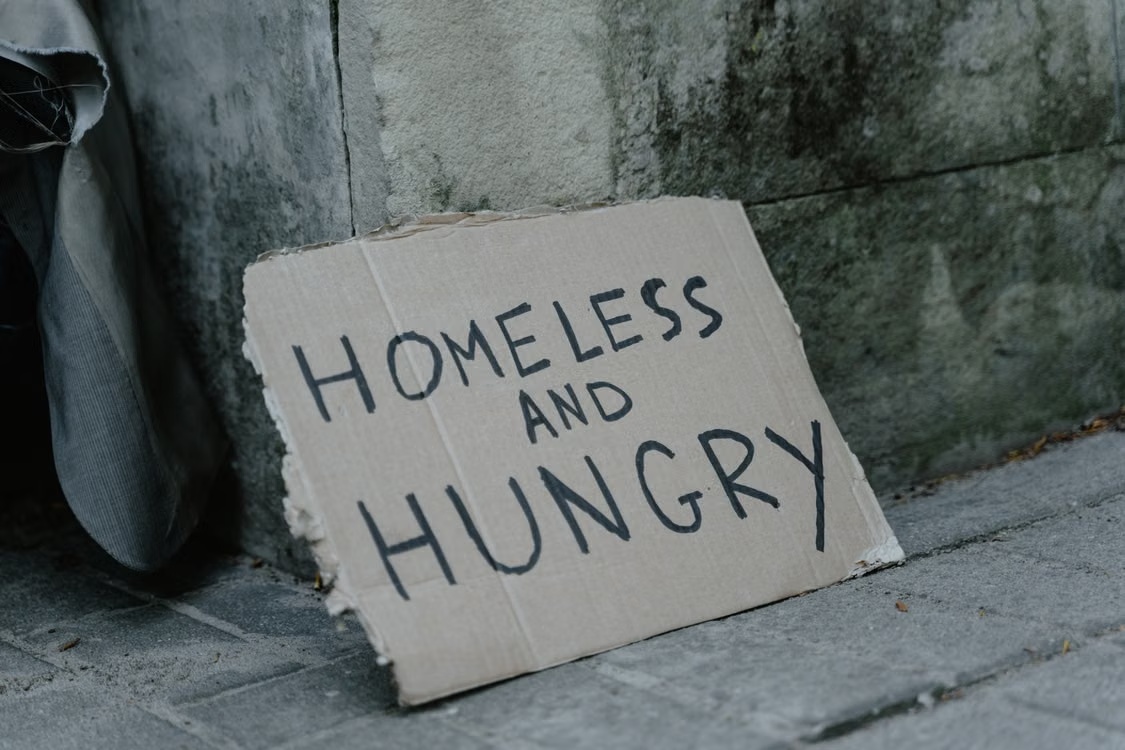
The latest edition of The State of Food Security and Nutrition in the World 2026 (SOFI 2026) estimates that approximately 645 million people faced hunger in 2025, equivalent to about 7.8% of the world’s population.
Moderate or severe food insecurity affected around 2.1 billion people. [6]
Africa remains especially affected.
In 2025, around 309 million people in Africa were undernourished, representing approximately one in five people on the continent. Although Africa’s hunger rate declined slightly for the first time since 2017, the continent is still projected to account for more than half of the world’s hungry people by 2030.
Meanwhile, the latest UNICEF-WHO-World Bank Joint Child Malnutrition Estimates (JME) show that in 2024:
- 150.2 million children under five were stunted
- 42.8 million were affected by wasting
- 35.5 million were overweight. [7]
Notice what those figures reveal.
The world is not moving neatly from one nutrition problem to another. Undernutrition and overnutrition now exist side by side.
Africa Is Living With Both Problems
Africa’s nutritional challenge is increasingly a double burden: persistent hunger and undernutrition exist alongside rising overweight and obesity.
WHO reports that the number of overweight children under five in Africa has increased by approximately 12% since 2000.
At the same time, hundreds of millions of Africans remain undernourished.
This means conversations about African nutrition cannot stop at simply asking, “Do people have enough food?”
We also need to ask: What kind of food is available, affordable, and convenient?
A person may consume sufficient or excessive calories while still eating a diet that does not consistently provide the nutrients necessary for good health.
And there is an important economic dimension.
SOFI 2026 estimates that about 2.7 billion people worldwide cannot afford a healthy diet. Nearly one-third of humanity therefore faces barriers not merely to food, but to food that is safe, varied, and nutritionally adequate.
That distinction matters.
Having access to calories is not the same thing as having access to nourishment.
More Is Not Always Better
Modern food environments can make it remarkably easy to consume abundant energy without achieving a genuinely balanced diet.
Highly processed foods can be convenient, aggressively marketed, and relatively inexpensive. Busy schedules can also make quick, calorie-dense options easier than preparing balanced meals.
But obesity is not simply a story of people lacking discipline.
WHO classifies obesity as a chronic, relapsing disease influenced by complex interactions between genetics, neurobiology, eating behaviour, access to healthy food, market forces, and the wider environment:
- Income matters
- Food prices matter
- Work patterns matter
- Urban environments matter
- Biology matters
- Culture matters
Personal choices matter too, but they exist within a larger context. That understanding should make us more compassionate, not less responsible.
And this is where the biblical idea of stewardship becomes especially helpful.
What Does the Bible Say About Caring for Our Bodies?
The Bible presents the human body as something entrusted to our care, making health a matter of stewardship rather than merely appearance.
Paul writes in 1 Corinthians 6:19–20 that our bodies are temples of the Holy Spirit and concludes with the instruction to “glorify God in your body.”
The immediate context of this passage concerns sexual morality. We should therefore be careful not to pretend that Paul was giving a lesson about nutrition.
Yet the principle underneath the passage is powerful:
Our bodies belong to God and therefore matter to God.
Tweet
Christian stewardship is often discussed in relation to money, possessions, talents, and time.
But what about the physical body through which we use all those things?
Your body allows you:
- To work
- To think
- To worship
- To serve
- To embrace your children
- To help your neighbour
- To fulfil responsibilities
- To carry out the purpose God has given you
Caring for the body, therefore, need not become an exercise in vanity.
It can become an act of gratitude and stewardship.
Stewardship Is Different From Obsession
Biblical stewardship calls us towards wise care of the body, not fear of food, shame about weight, or obsession with appearance.
This distinction matters.
Health messages can quickly become judgemental. People living with obesity should not be reduced to numbers on a scale, just as people experiencing undernutrition should not be reduced to statistics.
The Christian response should combine truth with compassion and responsibility with grace.
The question is not, “Do I look like someone else’s idea of a healthy person?” A better question is, “Am I wisely caring for what God has entrusted to me?”
For one person, stewardship may mean finding ways to obtain enough nutritious food.
For another, it may mean recognizing that constant abundance has become its own health challenge.
For someone else, it may mean seeking professional help for a medical condition affecting weight, appetite or nutrition.
The circumstances differ. The principle remains to receive the body as a gift and care for it wisely.
How Can We Practise Better Nutritional Stewardship?
Better stewardship begins by shifting our attention from simply eating more or less towards nourishing the body wisely and consistently.
That can involve simple, sustainable decisions:
- Think nourishment, not just fullness. Ask whether your regular meals provide the nutrients your body needs, rather than simply enough calories to remove hunger.
- Prioritise minimally processed foods where practical. Build meals around vegetables, fruits, legumes, whole grains, nuts and other nutrient-rich foods available in your setting.
- Be mindful of highly processed, energy-dense foods. Convenience can make it remarkably easy to consume more energy than the body requires.
- Drink wisely. Sugary drinks can contribute substantial energy without providing the same nutritional value as many whole foods.
- Move regularly. Physical activity is part of caring for a body designed for movement.
- Practise moderation rather than extremes. Sustainable habits are generally more helpful than dramatic diets that cannot be maintained.
- Seek qualified help when needed. Obesity and malnutrition can involve medical, psychological, social, economic and biological factors. Professional guidance can be part of responsible stewardship.
And perhaps most importantly, resist the assumption that more automatically means better:
- More food
- More convenience
- More indulgence
- More consumption
Abundance can be a blessing, yet abundance still requires wisdom.
The Question Is No Longer Simply, “Do We Have Enough?”
For much of human history, the nutritional struggle was overwhelmingly understood as the struggle to obtain enough.
For millions of people, especially across Africa, that struggle remains painfully real. Hunger, wasting, stunting and micronutrient deficiencies still demand urgent attention.
But another crisis now exists beside it.
Millions of people live in environments where calories are abundant while obesity and diet-related diseases continue to rise.
WHO’s definition reminds us why:
Malnutrition can result from excess and imbalance as well as deficiency.
Tweet
Perhaps, then, the health question of our age is not simply “Do I have enough to eat?” It may also be “Is what I am eating truly nourishing me?”
And for the Christian, there is an even deeper question: “Am I caring wisely for the body God has entrusted to me?” 1 Corinthians 6 reminds us that our bodies have significance beyond appearance, appetite, or convenience.
They are instruments through which we live, love, serve, and glorify God.
Malnutrition from scarcity is tragic. But in an age of unprecedented abundance for many, we must also recognise the malnutrition of more.
The goal is neither deprivation nor excess. Instead, it is wise, grateful, and balanced stewardship.
What is one choice you could make this week to care more intentionally for the body God has given you?
Sources
- World Health Organization (WHO). Malnutrition. Defines malnutrition as deficiencies, excesses, or imbalances in energy and nutrient intake and identifies undernutrition, overweight, obesity, and diet-related NCDs as forms of malnutrition.
WHO — Malnutrition - World Health Organization (WHO). Obesity and overweight. Updated 8 December 2025. Source for global overweight and obesity prevalence, trends since 1990, childhood overweight trends in Africa, and the estimate of 3.7 million NCD deaths attributable to higher-than-optimal BMI in 2021.
WHO — Obesity and overweight - World Health Organization (WHO). Background material on the global burden of obesity, including the earlier estimate of approximately 5 million NCD deaths attributable to high BMI in 2019.
WHO — Obesity background data - Institute for Health Metrics and Evaluation (IHME). Global Burden of Disease Study 2023 (GBD 2023). Published 2025. Obesity mortality estimates are presented through Our World in Data using IHME’s GBD risk-factor data.
Our World in Data — Deaths due to obesity - Food and Agriculture Organization of the United Nations (FAO), International Fund for Agricultural Development (IFAD), United Nations Children’s Fund (UNICEF), World Food Programme (WFP), and World Health Organization (WHO). The State of Food Security and Nutrition in the World 2026. Reports approximately 645 million people facing hunger in 2025 and about 2.7 billion people unable to afford a healthy diet.
FAO — The State of Food Security and Nutrition in the World 2026 - Food and Agriculture Organization of the United Nations (FAO). Launch of The State of Food Security and Nutrition in the World 2026. Provides the latest global and African hunger figures, including approximately 309 million undernourished people in Africa in 2025.
FAO — SOFI 2026 launch statement - UNICEF, World Health Organization, and World Bank Group. Joint Child Malnutrition Estimates: 2025 Edition. Reports that in 2024, 150.2 million children under five were stunted, 42.8 million were affected by wasting and 35.5 million were overweight.
WHO — Joint Child Malnutrition Estimates - World Peace Foundation. Historical Trends in Famine Mortality. 13 May 2025. Reviews the long-term decline in famine mortality and cautions that famine death estimates remain approximate.
World Peace Foundation — Historical Trends in Famine Mortality - World Peace Foundation. Famine Data Matters! 4 March 2025. Explains methodological challenges in measuring historical and contemporary famine mortality and distinguishes between different famine datasets and classification systems.
World Peace Foundation — Famine Data Matters - World Peace Foundation. Rethinking Current Famine Classification: Insights from History. 17 February 2026. Discusses why mortality-based famine classification can be especially difficult in conflict settings where reliable demographic data are limited.
World Peace Foundation — Rethinking famine classification


One thought on “The Malnutrition of More: Can Food Abundance Leave Us Malnourished?”