Have you ever read the first verse of the eleventh chapter of the second book of Samuel?
Chances are that yes, you have. But not that verse only, maybe the whole chapter. This verse opens one of the most dramatic moral collapses in the entire Old Testament.
It almost goes unnoticed, and it is easy to skip over. Why? Because it does not describe a sin but a decision. A quiet, unremarkable decision that changed everything.
“In the spring, at the time when kings go off to war, David sent Joab out with the king’s men and the whole Israelite army... but David remained in Jerusalem” (2 Samuel 11:1, NIV).
That is it.
David stayed home. He neither rebelled nor did anything wrong. He was just a man who was supposed to be somewhere and chose not to be. And that evening, restless, unoccupied, wandering his rooftop, he saw Bathsheba.
The rest of the chapter reads like a slow-motion catastrophe, adultery, deception, and eventually murder, all flowing from that one quiet absence at the beginning.
The question worth sitting with is not why David sinned. It is what made him vulnerable enough to sin in the first place. And the answer is written clearly in that overlooked opening line.
To glean the lessons in this account, we will cover:
- What ‘out of position’ actually means
- What science says about the unoccupied mind
- Purposelessness as a health risk, not just a spiritual one
- How your assignment protects you
- This week
- Bottomline
Let us start by understanding what it means to be out of position.
What ‘out of position’ actually means
David was a king. More than that, he was a warrior king, a man whose identity, training, and calling were built around leading his people into battle. Spring was when kings went to war. That was his season, his assignment, his post.
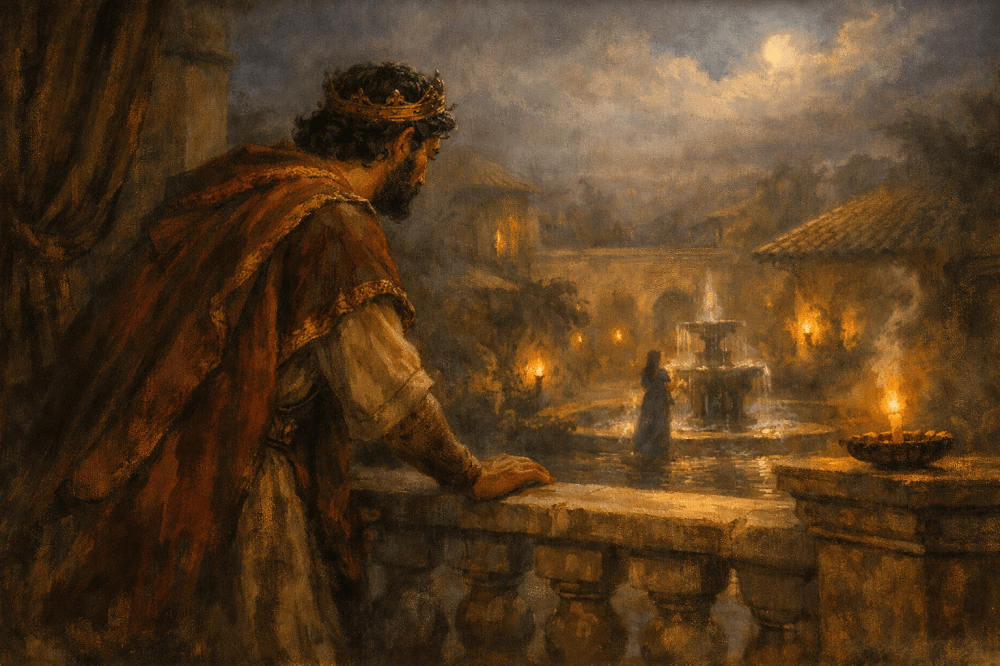
When he stayed in Jerusalem while Joab led the army, he was not simply taking a rest. He was removing himself from the place he was built to occupy.
Being out of position does not always look dramatic. It rarely announces itself as rebellion. It looks like a slightly different decision in the morning, a gradual drift from the thing you are supposed to be doing, a season of being present in your house but absent from your calling. You are technically there, just not where you are meant to be.
And the thing about being out of position is that it creates a vacuum. The energy, the focus, the capacity that would have been directed toward a purpose now has nowhere to go.
For David, that unspent energy went for a walk on a rooftop, where it found something it was never meant to find.
This is not just a spiritual observation. The science of what happens to an unoccupied mind has something very direct to say about why David’s evening went the way it did.
What science says about the unoccupied mind
Researchers define boredom as the feeling of wanting but failing to engage the mind, and describe it as a signal that cognitive resources are going unused.[1] When those resources have no productive outlet, the brain does not simply wait patiently. It goes looking.
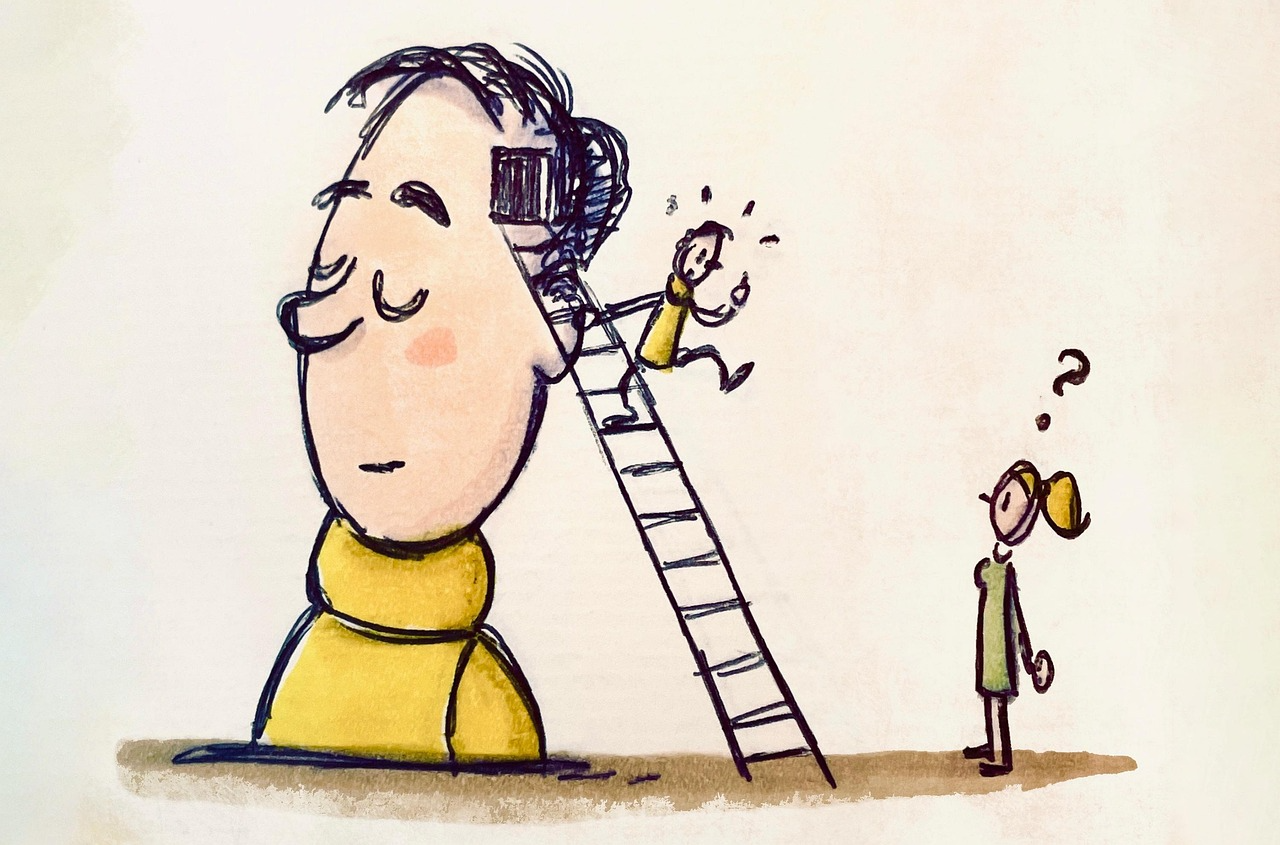
A widely cited study published in Science found that when left alone with nothing to do, two-thirds of men and a quarter of women chose to self-administer electric shocks rather than sit in an empty room for fifteen minutes.[2]
The conclusion the researchers drew was blunt: the mind, when unoccupied, finds the sensation of emptiness so aversive that it will seek almost any stimulation to escape it, including painful stimulation.
Boredom also reduces activity in the prefrontal cortex, the part of the brain responsible for sound decision-making, impulse control, and the ability to think through consequences. When that region is underactive, the brain’s appetite for stimulation increases while its ability to evaluate the wisdom of that stimulation decreases.
It is a combination that creates genuine vulnerability, the kind David experienced on that rooftop.
He was not a weak man. He was a high-value man whose capacities had nothing to work on, and so they worked on the wrong thing.
The implications of this go beyond moral failure. Purposelessness, the state of being chronically without assignment or engagement, carries measurable consequences for physical and mental health.
Purposelessness as a health risk, not just a spiritual one
Viktor Frankl, the Austrian psychiatrist who survived Nazi concentration camps and built an entire school of psychotherapy around his observations, documented something that has since been confirmed by decades of research: when human beings lack a sense of meaning and purpose, they fill the void.[3]
Frankl pointed directly to the connection between purposelessness and what he called “noogenic neuroses,” behavioral patterns that emerge specifically from existential emptiness: compulsive behaviors, addictions, destructive relationships, and moral failures that the person would never have chosen from a place of purpose and engagement.
Research in positive psychology has since built on this foundation. Studies measuring meaning and purpose in life consistently find that people with a clear sense of direction make better health decisions, resist impulsive behavior more effectively, recover from setbacks faster, and report significantly lower rates of anxiety and depression.[4]
Purpose, it turns out, functions as a kind of internal regulator, keeping the mind oriented toward what matters and away from what merely stimulates.
The physical consequences follow the psychological ones. Chronic idleness and disengagement are linked to elevated cortisol levels, disrupted sleep patterns, and compromised immune function.
A body that has no external force directing its energy does not simply rest. It produces stress hormones.
Tweet
David was not a naturally sedentary man. He was built for physical and mental engagement. Sitting in a palace while his calling lay elsewhere would have created exactly the kind of restless, unanchored energy the research describes. His rooftop walk was not a random moral failure. It was a predictable consequence of a man out of position.
Which raises the question that matters most practically: what does staying in position actually protect you from?
How your assignment protects you
Your assignment, the work you are called to, the role you are meant to occupy, the season you are in, does more than fill your time. It orients your mind. It gives your energy somewhere to go. It creates a context in which temptation has far less room to operate.

When you are genuinely engaged in your purpose, you are not available in the same way. A teacher deep in preparing a lesson, a student working through a difficult concept, a person building something that matters to them: these are not people wandering rooftops in search of stimulation. Their capacity is already directed. The vacuum that temptation fills simply does not exist in the same way.
This is why Scripture repeatedly connects purpose and protection. The psalmist says I have kept my feet from every evil path so that I might obey your word (Psalm 119:101). The keeping of the feet is not willpower in the abstract. It is the byproduct of having somewhere specific to walk, something specific to walk toward.
“What man actually needs is not a tensionless state but rather the striving and struggling for some goal worthy of him.”
– Viktor Frankl, Man’s Search for Meaning
Frankl was writing about survival under the most extreme conditions imaginable. But the principle holds at every scale. The person who knows what they are for, who is actively engaged in pursuing it, occupies the mental and spiritual territory that temptation would otherwise move into.
None of this means that being busy protects you. Busyness is not the same as being in position. David could have filled his days with palace activities and still been out of position. What protects is not activity for its own sake but alignment, knowing your assignment and occupying it.
So what does returning to your position look like this week, in the middle of an ordinary life?
This week
You do not need to overhaul your life to apply what David’s story teaches. You need to be honest about whether you are where you are supposed to be, and then take a few practical steps toward getting back there.
- Name your position. What is the thing you are called to be doing in this season? Your studies, your ministry, your work, your family. Write it down plainly. A person who cannot name their assignment cannot know when they have drifted from it.
- Notice your patterns of drift. When do you tend to wander, physically, mentally, or spiritually? Evening? Weekends? Seasons of completion, when you have finished one thing and not yet started the next? David’s vulnerability was seasonal. Knowing yours helps you prepare for it.
- Fill the vacuum intentionally. Unstructured time is not inherently dangerous, but unplanned unstructured time is. When you know you have a free evening or a quiet stretch, decide in advance what you’ll use it for. Prayer, reading, rest with intention, creative work. A vacuum you fill deliberately is one temptation cannot fill for you.
- Return without drama. If you have been out of position, the return does not need to be a production. David’s story is a warning, but it is also followed by restoration. You simply go back to what you were called to do today and begin again.
- Let your purpose carry you past the rooftop. When you are genuinely occupied with something that matters, the rooftop loses its pull. The goal is not to avoid every attractive distraction through sheer willpower. It is to be so oriented toward your calling that the distraction simply has less surface area to grip.
Bottomline
David’s worst night did not begin with lust. It began with a decision to remain behind when he was meant to go forward. The sin was downstream of the drift, and the drift was quiet, respectable, easy to miss.
The warning is not that rest is dangerous or that every idle moment is a moral hazard. Instead, the warning is that your assignment is also your anchor.
When you are in position, doing the thing you are built and called to do, you occupy the ground that temptation would otherwise claim. Your purpose is not just your direction. In more ways than one, it is your protection.
“I have kept my feet from every evil path so that I might obey your word” (Psalm 119:101, NIV).
Citations
- Eastwood JD, et al. The unengaged mind: Defining boredom in terms of attention. Perspect Psychol Sci. 2012;7(5):482-495.
- Wilson TD, et al. Just think: The challenges of the disengaged mind. Science. 2014;345(6192):75-77.
- Frankl VE. Man’s Search for Meaning. Boston: Beacon Press; 1959. Pursuit of Happiness. Available at: pursuit-of-happiness.org
- Park, N., Peterson, C., Szvarca, D., Vander Molen, R. J., Kim, E. S., & Collon, K. (2014). Positive Psychology and Physical Health: Research and Applications. American journal of lifestyle medicine, 10(3), 200–206. https://doi.org/10.1177/1559827614550277


What a wake up call read! Purpose Being not only my direction, but also my protection! May I endeavor to always be in position.
LikeLike
Amen
LikeLiked by 1 person