
“Why have you despised the commandment of the Lord, to do evil in His sight? You have killed Uriah the Hittite with the sword; you have taken his wife to be your wife, and have killed him with the sword of the people of Ammon” (2 Samuel 12:9, NKJV).
Context
Few figures in Scripture are as admired as David. He was the shepherd who became king, the giant slayer who inspired a nation, the psalmist whose songs continue to strengthen the faith of millions. Above all, he is remembered as a man after God’s own heart (Acts 13:22).
Yet the Bible never hides the failures of its heroes.
The events recorded in 2 Samuel 11 mark one of the darkest chapters in David’s life. While Israel’s army was away at war, David remained in Jerusalem. From the rooftop of his palace, he saw Bathsheba bathing. What began with a lingering glance soon became adultery. When Bathsheba became pregnant, David attempted to conceal his sin.
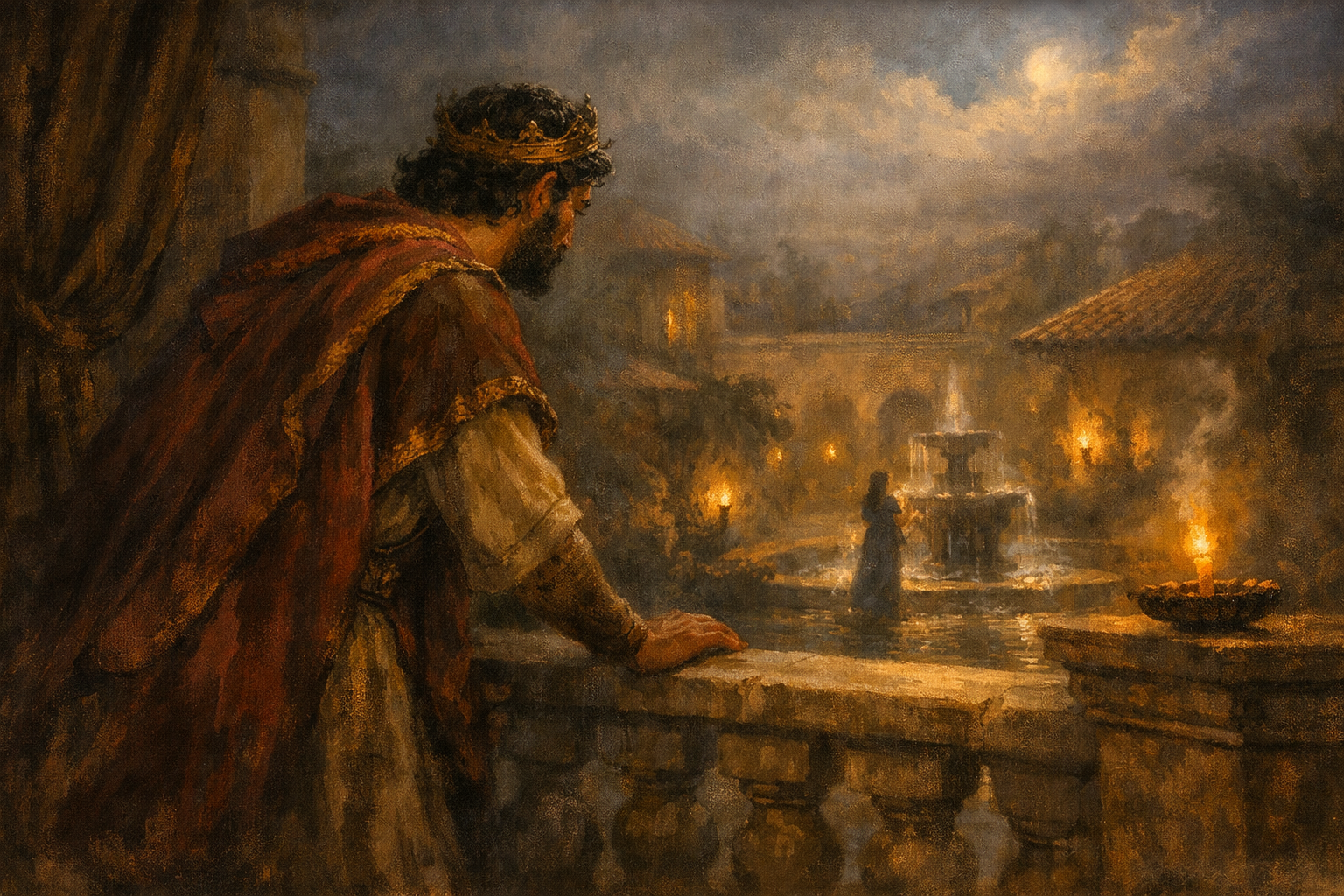
His deception eventually led him to arrange the death of Bathsheba’s husband, Uriah, one of his own loyal soldiers.
For a time, it appeared that David had succeeded. The king continued to rule. The kingdom remained stable. The secret seemed safely buried.
But there is one truth that Scripture repeatedly affirms: no sin remains hidden from God. Whoever attempts to conceal and palliate sin is courting failure:
“He who covers his sins will not prosper, but whoever confesses and forsakes them will have mercy” (Proverbs 28:13, NKJV).
In His mercy, the Lord sent the prophet Nathan, not merely to expose David’s sin, but to reclaim David’s heart.
After telling the unforgettable parable of a rich man who stole a poor man’s only lamb, Nathan looked at the king and declared, “You are the man!” (2 Samuel 12:7).
Then came God’s searching question: “Why have you despised the commandment of the LORD, to do evil in His sight?”
It is a question that reaches far beyond David’s palace and into every heart that has ever been tempted to place personal desire above God’s revealed will.
So, what is the danger of sin left unchecked? Let’s see that next.
When sin is left unchecked
David’s downfall did not happen in a single moment. It was the result of a series of choices, each of which made the next easier.
There was a time when David could not lift his hands against the Lord’s anointed. He embodied principles of truth and fairness even in the treatment of his soldiers (1 Samuel 30:22-23). He went out of his way to find Mephibosheth, King Saul’s grandson, and to grant him access to the royal court (2 Samuel 9).
But what happened to this noble man of God and the greatest king of Israel?
The king who once sought God’s guidance before battle now lingered where he should not have been. The glance became desire. Desire became action. One sin demanded another until deception, abuse of power, and murder were woven together.
Perhaps the most sobering detail in the story is that David appeared to carry on with life as though nothing had happened.
The court still functioned. The throne remained occupied. Worship continued.
But the final verse of chapter 11 reveals heaven’s verdict:
"...But the thing that David had done displeased the LORD" (2 Samuel 11:27, NKJV).
Human beings often judge by appearances. God sees the heart.
Though David may have silenced his own conscience for a time, God had not abandoned him to his sin. His silence was not indifference. It was mercy preparing the way for conviction.
In such circumstances, God comes again to us with the burden of truth, yet spoken in love.
Truth spoken in love
Rather than confronting David publicly or immediately condemning him, God sent Nathan with a story.
The prophet spoke of a wealthy man who possessed many flocks and herds, yet stole the only little ewe lamb belonging to a poor man. David listened with growing indignation. Outraged by such injustice, he declared that the offender deserved judgment.
Then Nathan uttered four unforgettable words:
“You are the man!”
In that instant, David became both the judge and the accused.
Nathan’s courage reminds us that genuine love does not avoid the difficult truth. God’s purpose was not to humiliate David but to awaken him. Before there could be restoration, there had to be recognition.
Only after David saw himself in the parable did God ask the question that exposed the true nature of his sin.
And now here comes the Lord’s question…
“Why have you despised the Commandment of the LORD?”
God’s question is striking because it reaches deeper than David’s outward actions.
The Lord does not ask:
“Why did you commit adultery?”
Nor does He ask:
“Why did you arrange Uriah’s death?”
Instead, He asks:
“Why have you despised the commandment of the LORD?”
This reveals the heart of all sin.
Every act of disobedience is ultimately an expression of how we regard God’s Word. To disregard His command is to place our own will above His wisdom.
David knew the commandments. He knew the sacredness of marriage. He knew the value of human life. His failure was not ignorance but deliberate disregard.
David’s healing began only when he stopped defending himself and acknowledged God’s verdict.
The same question still confronts every believer. Before sin becomes an outward act, it begins as an inward decision to treat God’s will as less important than our own. It is the heart’s internal treason to rebel against God’s safe guidance for life.
Let’s now proceed to see how David dealt with this soul-searching question.
Repentance opens the door to restoration
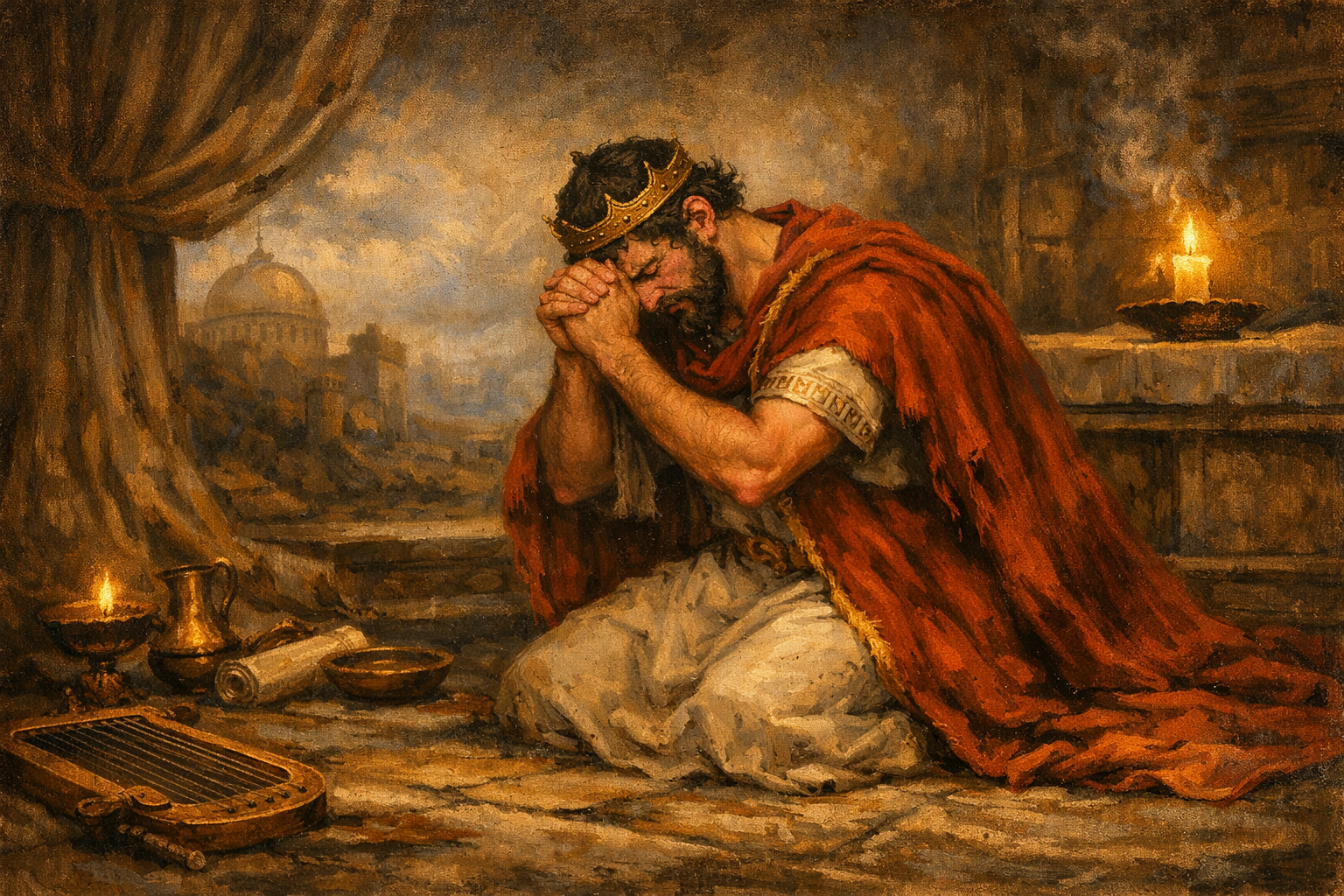
David’s response stands among the shortest and most profound confessions in Scripture:
"I have sinned against the LORD" (2 Samuel 12:13, NKJV).
There were no excuses.
No shifting of blame.
No attempt to justify his actions.
Psalm 51 allows us to look into David’s heart after this confrontation. There he pleads:
"Create in me a clean heart, O God, and renew a steadfast spirit within me." (Psalm 51:10, NKJV).
Ellen White writes:
“David’s repentance was sincere and deep. There was no effort to palliate his crime; no desire to escape the judgments threatened inspired his prayer. But he saw the enormity of his transgression against God; he saw the defilement of his soul; he loathed his sin.”
— Patriarchs and Prophets, p. 725
God forgave David, but forgiveness did not erase every earthly consequence. The sword would trouble his house, and the pain of his choices would leave lasting scars.
Yet God’s grace proved greater than David’s failure.
The Lord who confronted David also restored him. His story reminds us that while sin has consequences, genuine repentance finds mercy with God.
Conclusion
God’s question to David still echoes with convicting grace:
“Why have you despised the commandment of the LORD?”
It invites us to look beyond outward behavior and examine the attitude of our hearts.
Do we sometimes treat God’s commands as optional when they conflict with our desires?
Do we excuse what God clearly calls sin because we believe no one else will know?
Have we allowed success, position, or familiarity with spiritual things to dull our sensitivity to God’s voice?
The good news is that David’s story does not end with exposure. It ends with repentance, forgiveness, and renewed fellowship with God.
The Lord’s question was never meant simply to condemn. It was meant to bring David to the place where healing could begin.
The same God who confronted David still confronts us, not to drive us away, but to draw us back.
For every searching question God asks carries within it an invitation:
“Leave behind self-deception, return to My Word, and walk again in My ways.”
Because the God who exposes sin is also the God who delights in restoring the repentant heart.


