Long before faith built an ark, left a homeland, crossed a sea, or brought down the walls of Jericho, it built an altar.
That is where Hebrews begins:
"By faith Abel offered to God a more excellent sacrifice than Cain, through which he obtained witness that he was righteous, God testifying of his gifts; and through it he being dead still speaks" (Hebrews 11:4, NKJV).
The first person named in God’s gallery of faithful witnesses is not a king, a prophet, or a miracle worker. He preached no recorded sermon, wrote no book, led no nation, and performed no public miracle. His story occupies only a few verses in Genesis, yet the Holy Spirit places him first among the witnesses whose lives still inspire the church today.
That is no accident.
Before faith changes the world, it changes the worshipper.
This is the lesson Abel teaches us.
Two brothers, two worshippers, two destinies
Genesis 4 introduces us to two brothers who appeared remarkably alike.
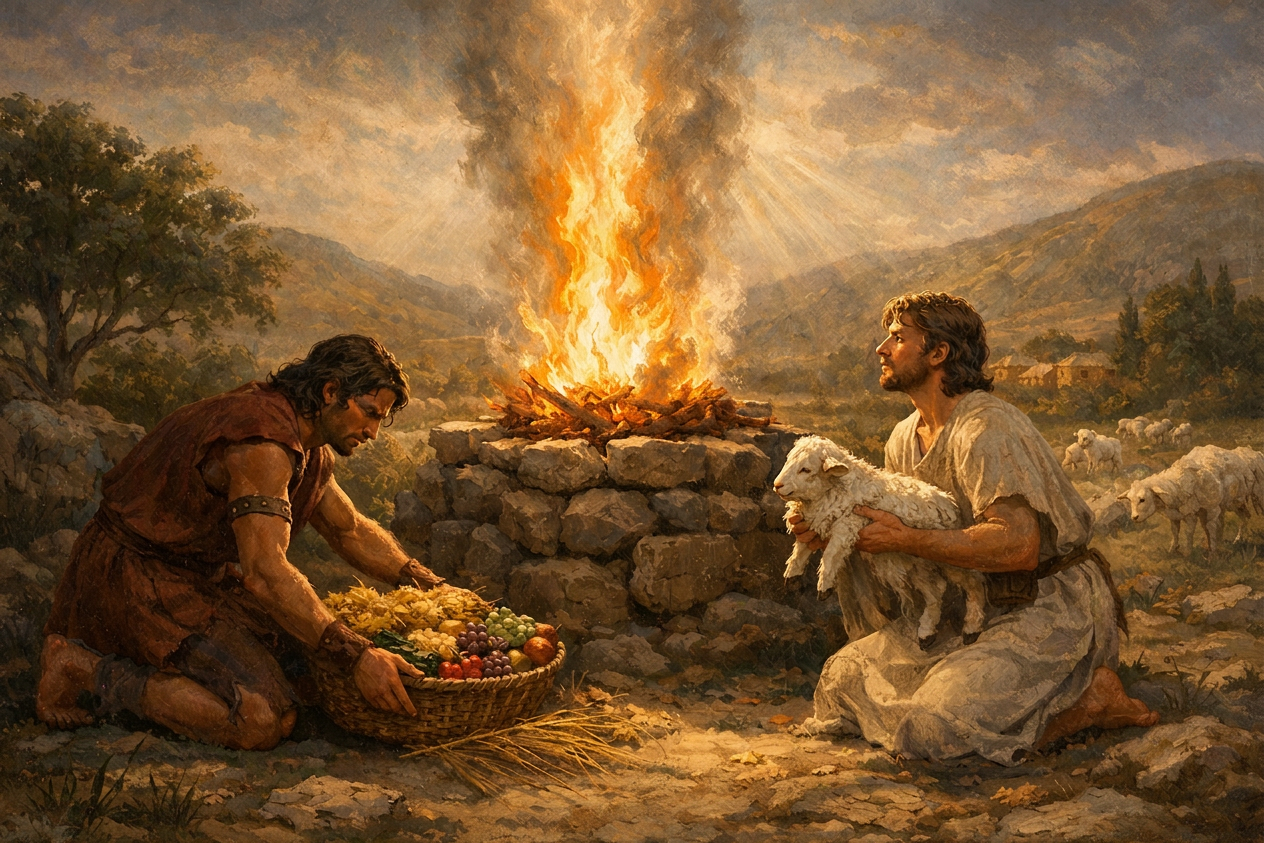
Both were sons of Adam and Eve. Both worked diligently in their chosen occupations. Both acknowledged God. Both came to worship. And most importantly, both brought offerings before the LORD.
To every outward observer, they were doing the same thing.
Yet Scripture records one of the most sobering statements in the Bible:
"And the LORD respected Abel and his offering, but He did not respect Cain and his offering" (Genesis 4:4–5, NKJV).
Why?
Hebrews supplies the answer:
"By faith Abel offered to God a more excellent sacrifice than Cain..." (Hebrews 11:4, NKJV).
The difference was not merely the offering.
The difference was faith.
Faith responds to God’s revelation
Biblical faith never begins with human initiative. Instead, it always begins with God. Faith is our response to what God has already revealed.
Although Genesis does not record the specific instructions God gave concerning sacrifice, Hebrews makes it clear that Abel acted “by faith.” Since “faith comes by hearing, and hearing by the word of God” (Romans 10:17, NKJV), Abel’s offering must have been grounded in divine revelation.
Whereas Abel approached God according to God’s instruction, Cain approached God according to his own reasoning.
That distinction remains as relevant today as it was outside Eden.
Sincerity alone does not make worship acceptable. Good intentions alone are not enough. True worship begins when we humbly receive God’s Word and respond in trusting obedience.
Faith never asks, “What do I think is best?” Rather, it asks, “What has God said?” And this leads us to seek to understand the worship God accepts.
The worship God accepts
Hebrews makes another important observation. It does not say Abel became righteous because he offered the right sacrifice. Rather, his offering demonstrated the faith through which he was declared righteous.
The offering revealed the heart. God testified not only of Abel’s gift, but of Abel himself. This principle echoes throughout Scripture. God first receives the worshipper before He receives the worship.
Religion often concentrates on outward performance. But God begins with inward surrender.
Abel’s sacrifice was accepted because it flowed from a heart that trusted God. Faith transformed an ordinary act of worship into one that pleased heaven.
But does faith necessarily guarantee an easy, peaceful life? Let’s see the bigger picture of the great controversy playing amidst faith.
When faith costs everything
We sometimes assume that faith guarantees an easier life. But Abel’s story reminds us otherwise. His faith did not protect him from suffering. It made him the first victim of it.
Consumed by jealousy, Cain murdered his own brother, and the first righteous worshipper became Scripture’s first martyr.
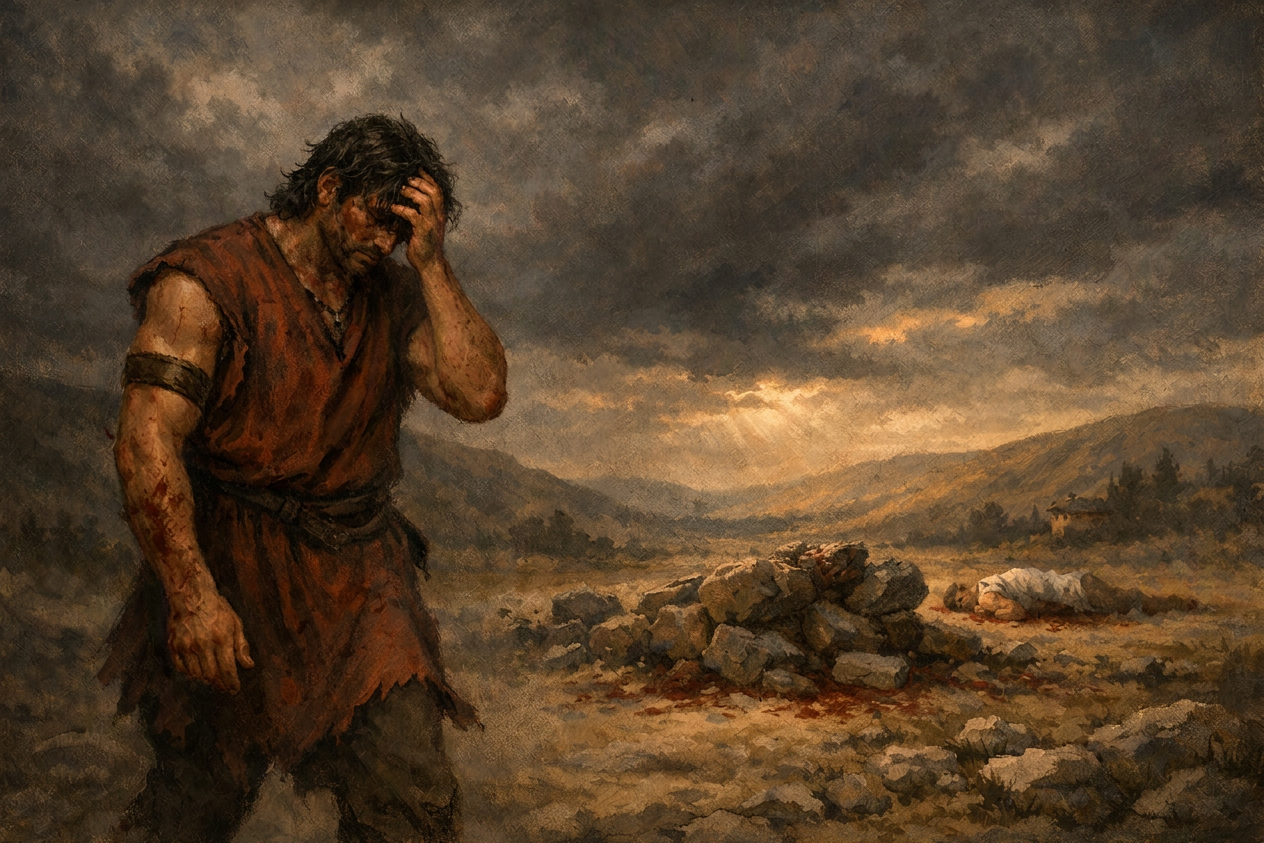
To human eyes, Abel appeared to lose everything. Yet heaven tells another story.
Hebrews concludes:
"...through it he being dead still speaks" (Hebrews 11:4, NKJV).
Death silenced Abel’s voice, but it could not silence his testimony. His life still speaks because faith always leaves a witness that outlives the believer.
The world measures success by influence, wealth, longevity, or achievement. But God measures faithfulness.
Abel has been speaking over time.
Across the centuries, Abel continues to proclaim enduring truths. He reminds us that God is to be worshipped on His terms. He teaches us that genuine faith always expresses itself in obedience.
He demonstrates that righteousness comes through trusting God rather than trusting ourselves. He assures us that God’s approval is worth more than the world’s applause.
His brief life continues to preach a sermon that countless words could never replace.
Our altars today
Few of us will ever bring a lamb to an altar. Yet every day we bring something before God.
We bring:
- Our priorities.
- Our ambitions.
- Our relationships.
- Our resources.
- Our obedience.
The question Abel asks every generation is not whether we worship. Everyone worships something.
The real question is whether our worship springs from faith. Do we approach God on His terms, or do we expect Him to accept ours?
Faith still begins at the altar. Yet there is much beyond the altar.
Looking beyond the altar
Abel’s sacrifice pointed beyond itself.
Every acceptable sacrifice in the Old Testament anticipated the perfect sacrifice of Jesus Christ, “the Lamb of God who takes away the sin of the world” (John 1:29, NKJV).
Abel brought the firstborn of his flock in obedient faith, looking beyond the sacrifice itself to God’s promised provision for sin.
From the Conflict of the Ages Series
Ellen White beautifully captures the spiritual significance of Abel’s faith:
“Abel grasped the great principles of redemption. He saw himself a sinner, and he saw sin and its penalty, death, standing between his soul and communion with God. He brought the slain victim, the sacrificed life, thus acknowledging the claims of the law that had been broken. Through the shed blood he looked to the future sacrifice, Christ dying on the cross of Calvary; and trusting in the atonement that was there to be made, he had the witness that he was righteous, and his offering accepted.”
— Patriarchs and Prophets, p. 72
Abel’s offering was therefore much more than an act of devotion. It was an expression of confidence in God’s promise of redemption. His faith reached beyond the altar in Eden’s shadow to the cross of Calvary, where God’s own Lamb would accomplish what every animal sacrifice could only foreshadow.
Looking unto Jesus
Hebrews does not leave us standing beside Abel’s altar.
It leads us to Christ.
The writer later declares that believers have come to:
"...Jesus the Mediator of the new covenant, and to the blood of sprinkling that speaks better things than that of Abel" (Hebrews 12:24, NKJV).
Abel’s blood cried out from the ground, bearing witness to humanity’s guilt and the devastating consequences of sin (Genesis 4:10).
Christ’s blood speaks a better word. It proclaims forgiveness instead of condemnation. It speaks mercy instead of judgement. It speaks of reconciliation instead of separation. It promises life instead of death.
While Abel trusted in the promise of a coming Redeemer, we trust in the Redeemer who has come, who died for our sins, rose again in victory, and now intercedes for us before the Father.
Faith, then, does not begin with what we bring to God. It begins with receiving what God has graciously provided in His Son.
Only through Christ can our worship be acceptable. Only through Christ can our consciences be cleansed. Only through Christ can we be declared righteous before a holy God.
Abel’s story is not ultimately about Abel. It is about Jesus. Every altar in Scripture casts its shadow toward Calvary. Every sacrifice anticipates the cross. Every act of genuine faith finds its fulfilment in Christ.
As we continue this journey through Hebrews 11, Abel invites us to begin where every life of faith begins—with humble worship, wholehearted trust, and eyes fixed upon the Lamb of God.
For faith has never been about denying reality. It has always been about believing that God’s reality is greater than the one before our eyes.
Faith begins where sight reaches its limit.
Faith focus
Faith worships God on His terms, not our own. By faith, they overcame their world. By faith we overcome ours.
"For whatever is born of God overcomes the world. And this is the victory that has overcome the world—our faith" ( 1 John 5:4, NKJV).


