
Last week, we talked about the meal you keep skipping and what it is quietly costing your body. If that piece landed with you, this one is its hopeful sequel. Because once you understand the cost, the next question is the more exciting one: so what does a good breakfast actually look like, and how do you build one into a morning that is already running faster than you can keep up with?
That is exactly what we are here to answer. Not with a complicated meal plan or a list of ingredients you have never heard of. But with a warm, practical, faith-grounded case for why breakfast deserves to be the best part of your morning, and how to make it one even when the alarm goes off too early and the day is already making demands before your feet hit the floor.
To answer this question, we will cover:
- Why breakfast deserves the title it has been given
- What America’s most translated author said about breakfast long before the research agreed
- What a balanced breakfast actually looks like
- How to build the habit when mornings are already too full
- Grace for the mornings when it does not happen
- This week
- Let’s make breakfast great again
Let’s start by understanding why breakfast is rightly named.
Why breakfast deserves the title it has been given

The phrase has been repeated so many times that it has lost its weight. But the science behind it has only grown stronger.
A review published in Advances in Nutrition examined randomised controlled trials assessing the impact of breakfast on carbohydrate metabolism and found that consuming breakfast, compared with skipping it, improved glucose and insulin responses throughout the entire day. Not just in the morning. [1]
The quality of what you eat first sets the metabolic tone for everything that follows. A good breakfast stabilises blood sugar, reduces the likelihood of overeating later, and supports the body’s natural hormonal rhythm in a way that no other meal can replicate, because no other meal comes after an overnight fast.
A randomised controlled crossover study published in the Journal of Dairy Science followed young women across three trial days and found that a protein-rich breakfast significantly enhanced both satiety and cognitive concentration before lunch, compared with either a carbohydrate-heavy breakfast or no breakfast at all. [2]
Participants who ate the protein-rich breakfast scored measurably higher on cognitive concentration tests administered hours later. What you eat in the morning is still shaping your capacity to think clearly by midday.
A further study published in Appetite found that breakfast consumption was associated with lower mental fatigue later in the day, with higher energy intake at breakfast linked to better mood and alertness. [3]
Mood. Fatigue. Concentration. These are not small peripheral benefits. They are the foundation of a day where you are present, patient, and genuinely capable of showing up for your responsibilities and for the people who need you.
The morning meal matters because the morning sets everything else in motion. A body that begins the day nourished is a body that is available for everything the day will demand of it.
Let’s now look at what America’s most translated author had to say about breakfast.
What America’s most translated author said about breakfast long before the research agreed
Ellen G. White is widely recognised as the most translated American author in literary history and the most translated female non-fiction author. Her contribution to health and wellness has been regarded as helpful by many enthusiasts of healthy living.

Ellen G. White was unusually specific on this subject. Writing in Counsels on Diet and Foods, she states:
“It is the custom and order of society to take a slight breakfast. But this is not the best way to treat the stomach. At breakfast time the stomach is in a better condition to take care of more food than at the second or third meal of the day. The habit of eating a sparing breakfast and a large dinner is wrong. Make your breakfast correspond more nearly to the heartiest meal of the day.” –Counsels on Diet and Foods, p.173 [4]
She wrote that in the nineteenth century, before nutrition science had developed the tools to measure glucose responses or run randomised controlled trials on satiety hormones. And yet what she described, that the stomach is best positioned to receive and process food in the morning, maps with striking precision onto what researchers are now confirming about circadian metabolism and the body’s digestive capacity earlier in the day.
She was not suggesting an elaborate feast. She was suggesting a reordering of priorities. Most of us save our largest meal for the end of the day, when the body is winding down, and the digestive system is preparing for rest.
She was saying: give the body its best fuel when it is most equipped to use it. Give it that fuel in the morning.
So, what does a balanced breakfast look like?
What a balanced breakfast actually looks like
A balanced breakfast does not require a recipe book or a trip to a speciality shop. It needs three things working together:
- A source of protein to support satiety and concentration
- A source of complex carbohydrate to provide steady energy.
- Food rich in fibre or healthy fat to slow glucose absorption and keep hunger at bay.
That is the principle. In practice, it will look different depending on what’s available and the available means.
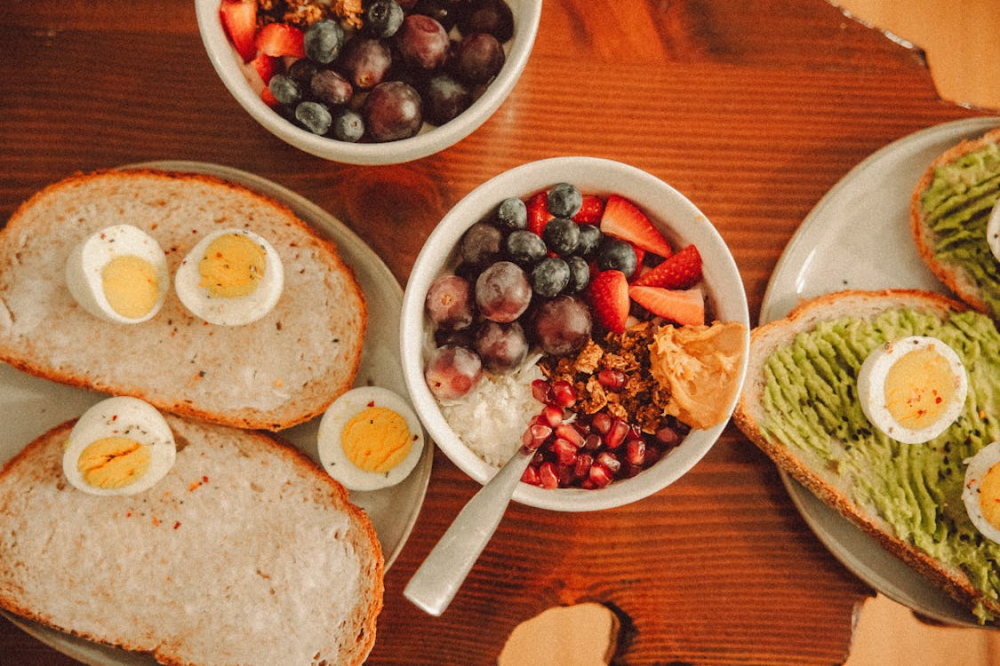
Here are some options to consider adding to your breakfast table:
- Protein: Boiled eggs, fermented milk such as mursik or maziwa lala, groundnuts, legumes, or a small portion of fish. These slow digestion, support the production of the neurotransmitters that govern mood and focus, and keep hunger away for hours.
- Complex carbohydrate: Uji made from millet, sorghum, or wimbi flour, sweet potato, and a reasonable portion of whole-grain bread. These release energy gradually, giving the body a steady supply rather than the spike-and-crash that comes from refined starches eaten alone.
- Fibre and healthy fat: Avocado, widely available and deeply nourishing. A piece of fruit such as a banana, pawpaw, or mango. A serving of peanuts. These round out the meal, support gut health, and contribute to the kind of sustained fullness that carries you well past the mid-morning slump.
A practical example for a typical morning: a cup of wimbi uji with milk, one boiled egg, half an avocado, and a piece of fruit.
That is a cost-effective breakfast that costs very little that takes under 15 minutes to prepare, takes under fifteen minutes to prepare, and sets the body up for a morning that is clear-headed, emotionally steady, and genuinely nourished.
Another example: leftover sweet potato from the previous evening, a cup of fermented milk, and a serving of groundnuts. Simple, affordable, and complete.
The goal is not perfection. It is intentionality. A breakfast that includes protein, a complex carbohydrate, and something with fibre will carry you further and serve you better than the most disciplined skipped morning every single time.
But how do you build a habit of making breakfast great again when mornings are busy?
How to build the habit when mornings are already too full
The most common reason people skip breakfast is not that they do not understand its value. It is that mornings are already overwhelming, and one more thing on the list feels like too much. If you’re on an 8-to-5 job, breakfast is crowded by the morning rush.
That is a real and fair observation, and it deserves a real response.
Here is the thing:
A consistent breakfast habit is not built in the morning. It is built the night before. The morning is too rushed, too unpredictable, and too full of competing demands to be the moment where you make thoughtful food decisions. The decisions need to happen before you go to sleep.
- Prepare the night before. Soak your uji flour before bed. Boil eggs in the evening and refrigerate them. Set your mug, your pan, and your ingredients on the counter before you sleep. When the morning comes, the friction of starting has already been removed. You simply follow the path you laid the night before.
- Start smaller than you think you need to. If you have never consistently eaten breakfasteaten breakfast consistently, do not begin with a full three-component meal. Begin with one thing. A boiled egg. A banana. A cup of uji. One consistent small thing practised every morning will become a habit far faster than an ambitious routine attempted occasionally.
- Sit down, even briefly. Eating while standing at the sink or walking out the door is better than not eating at all. But eating with even five minutes of intention changes the experience. The body registers the meal differently when the nervous system is calm enough to receive it properly.
- Attach it to something that already happens. You already make tea or coffee in the morning. Attach breakfast to that moment. You already wake your children and feed them before school. Attach your own meal to their meal. Habits form more easily when anchored to existing rhythms than when they require entirely new ones.
- Read Proverbs 31:15 differently. The virtuous woman rises early to provide food for her household. She is feeding her people. But she is a person too. She is part of that household. Feeding yourself is not indulgence. It is stewardship. It belongs in the same act of care she extended to everyone else around that table.
And there will be those mornings when you can’t meet it, and such mornings need grace.
Grace for the mornings when it does not happen
There will be mornings when even the simplest breakfast does not happen.
The baby was awake until 2 a.m. The water did not run. The day started before you were ready for it. Grace covers those mornings.

The goal is not a perfect record. The goal is a consistent direction. One missed morning does not undo a forming habit. You do not need to compensate for it or let it become the reason you stop trying altogether.
Lamentations 3:22-23 says: “Through the Lord’s mercies we are not consumed, because His compassions fail not. They are new every morning; great is Your faithfulnessThe steadfast love of the Lord never ceases; his mercies never come to an end. They are new every morning.” (NKJV).
New every morning. That is not only a spiritual promise. It is a practical invitation. Every morning is a fresh start. The breakfast you missed yesterday does not disqualify you from the one you can choose today.
Come back to the table tomorrow. And the day after that. That is how a habit becomes a lifestyle. Not through a perfect streak, but through faithful return.
This week
Tonight, before you sleep, decide what you will eat for breakfast tomorrow. Set out what you need. Treat it as an appointment with your own body, one that you would not cancel for anyone else.
Then do it again the next morning. And the morning after. Not because you are building a diet. But because you are building the kind of morning that honours the body God placed you in and fuels the life He has given you to live.
Breakfast is not a small thing. It is the first act of stewardship in every new day. Make it count.
Let’s make breakfast great again
There is something special about a morning meal.
It is the first thing the body receives after hours of rest and repair. It is the moment before the day has asked anything of you yet, when nourishment can be received freely and without the weight of what is still to come.
God designed the body to begin this way. Ellen G. White understood it. The research now confirms it. And every morning that you sit down and feed yourself well is a morning where you are saying, in a small and faithful and practical way: this body matters. This day matters. I am here for it.
Psalm 143:8 says:
"Cause me to hear Your lovingkindness in the morning,
For in You do I trust;
Cause me to know the way in which I should walk,
For I lift up my soul to You" (NKJV).
The morning is a place of trust. Trust that the day ahead is held. Trust that the body you are caring for is worth caring for. Trust that the small faithful acts, a cup of uji, a boiled egg, five minutes at the table before the rush begins, are part of something larger than they appear.
Make breakfast great again. Not with a slogan but with a spoon, a seat, and a grateful heart.
Citations
1. Dalgaard, L. B., Kruse, D. Z., Norup, K., Andersen, B. V., & Hansen, M. (2024). A dairy-based, protein-rich breakfast enhances satiety and cognitive concentration before lunch in overweight to obese young females: A randomised controlled crossover study. Journal of Dairy Science, 107(5), 2653–2667. https://doi.org/10.3168/jds.2023-24152
2. Maki, K. C., Phillips-Eakley, A. K., & Smith, K. N. (2016). The Effects of Breakfast Consumption and Composition on Metabolic Wellness with a Focus on Carbohydrate Metabolism. Advances in nutrition (Bethesda, Md.), 7(3), 613S–21S. https://doi.org/10.3945/an.115.010314
3. Veasey, R. C., Haskell-Ramsay, C. F., Kennedy, D. O., Tiplady, B., & Stevenson, E. J. (2015). The Effect of Breakfast Prior to Morning Exercise on Cognitive Performance, Mood and Appetite Later in the Day in Habitually Active Women. Nutrients, 7(7), 5712–5732. https://doi.org/10.3390/nu7075250
4. White EG. Counsels on Diet and Foods. Review and Herald Publishing Association; 1938:173.


Aaah…. Powerful insight indeed
May I continue to prosper in good health.
LikeLike
Welcome.. blessings
LikeLike