
Many people say that a growling stomach is the sound of a strong will or that a forgotten lunch is just the price of a productive life.
Here is the truth: Skipping meals is not discipline.
For most people, most of the time, it is deprivation dressed up as self-control. A hollow victory won at the expense of the very vessel you were given to steward.
It’s the frantic morning that shoved breakfast down our throats. It’s the lunch eaten in the cold glow of a laptop screen or standing over the sink in a blur of “just one more task.” It’s the dinner that became a handful of whatever was within reach before the lights went out. These are not the habits of someone who hates their body; they are the quiet, weary habits of someone who has stopped believing their body is worth the holy interruption of a pause.
And that is exactly where the grace comes in. Because God isn’t looking for a hollowed-out version of you. He has a great deal to say about the sanctity of the table, the holiness of nourishment, and the profound act of caring for the flesh and bone, which He called “very good.”
In this post, we will explore:
- What happens inside the body when you skip a meal
- The lie we tell ourselves about not being hungry
- What God said about regular nourishment
- Why busy women skip meals more than anyone else
- How to come back to the table
- The table has always been a place God shows up
- Come back to the table
Let’s start by exploring what happens inside your body when you skip a meal
What happens inside the body when you skip a meal
The body does not experience a skipped meal as a small inconvenience. It experiences it as a signal, a signal that resources are scarce and that survival mode needs to be activated.
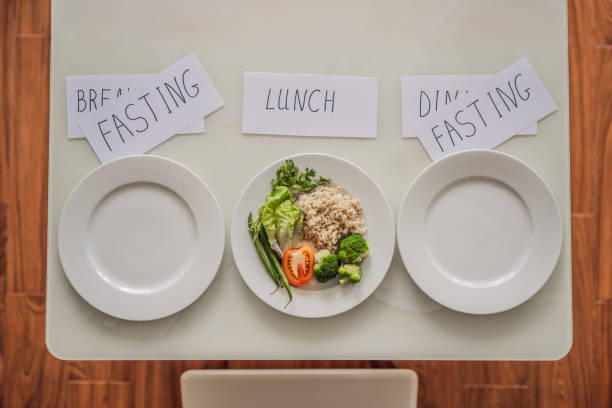
Research on eating frequency and energy regulation has consistently found that irregular meal patterns disrupt glycemic control, appetite hormones, and metabolic balance. [1]
When blood sugar drops without replenishment, the body responds with a cascade of responses that have nothing to do with weight and everything to do with survival. Shakiness. Irritability. Brain fog. Fatigue. The inability to concentrate on a task that felt simple an hour ago.
Most people attribute those symptoms to stress, to a hard day, or to not sleeping well enough. And sometimes that is part of it. But often the most immediate and correctable cause is simply that the body has not been fed.
A 2025 meta-analysis published in Frontiers in Psychiatry reviewed studies drawn from databases spanning to September 2024 and found a significant association between skipping breakfast and increased risk of depression.[2]
The biological pathway is direct. Without adequate fuel at regular intervals, the brain cannot produce or regulate the neurotransmitters that govern mood, focus, and emotional resilience. You are not just hungry. You are chemically less equipped to face the day.
The body does not separate physical nourishment from emotional and mental capacity. They run on the same fuel. When you skip a meal, you are not just skipping calories. You are skipping the raw material your mind and mood need to function.
The lie we tell ourselves about not being hungry
Many people who regularly skip meals say they are simply not hungry at that time. And to an extent, that is true. The body adapts. When meals are skipped consistently, the hunger signals that were once reliable and clear begin to quieten. The body stops sending messages it has learned will be ignored.
This is not health but accommodation. The body has learned to cope with less, and it has adjusted its signals accordingly. But coping is not the same as thriving. And a body that has learned to cope with chronic under-nourishment is one that is quietly, invisibly running on a deficit.
A scoping review examining the relationship between skipping breakfast and mental health in adolescents found that meal skipping is strongly linked to inadequate nutrient intake, which in turn contributes to the development and worsening of anxiety and depressive symptoms. [3]
The connection is not metaphorical. Food is neurological infrastructure. When you consistently under-supply it, the effects show up in the mind before they show up anywhere else.
The person who says they are not a breakfast person, or that they function fine on one meal a day, may genuinely not feel hungry. But the absence of hunger signals is not evidence that the body does not need food. It is evidence that the body has stopped asking.
What God said about regular nourishment
Long before nutrition science had language for what skipping meals does to the body, scripture treated food and regular nourishment as something God took seriously.
In 1 Kings 19, the prophet Elijah collapsed under a tree in the wilderness, burned out, and asked to die.
God’s first response was not a sermon or a rebuke. He sent an angel who touched Elijah and said, simply, “Arise and eat.”

Then, when Elijah had eaten once, the angel came again. A second time. Because the journey, God said, was too great for him.
God did not spiritualize Elijah’s exhaustion. He fed him. Twice. And then gave him rest. That sequence matters. Nourishment before the road. Food before the instruction. The body was attended to before the mission was resumed.
Ellen G. White, writing in The Ministry of Healing, states:
“Regularity in eating is of vital importance. There should be a specified time for each meal. At this time, let everyone eat what the system requires, and then take nothing more until the next meal.” —The Ministry of Healing, p. 303 [4]
She did not write that as a rigid rule for its own sake. She wrote it because she understood, ahead of her time, that the body was designed to receive nourishment on a rhythm and that disrupting that rhythm had consequences that extended beyond the physical.
Regularity in eating, she argued, supported not just the health of the body but also the serenity of mind. The two were never meant to be separated.
Why busy women skip meals more than anyone else

There is a particular kind of woman this piece is written for. She is the one who feeds everyone else first. She gets the children fed, the household moving, the work handled, and the people around her attended to. And somewhere in the middle of all of that, she forgets to feed herself. Or she remembers and decides it can wait. Or she feels, in some quiet part of herself, that pausing to eat feels indulgent when there is still so much to do.
She is not lazy. She is not undisciplined. She is often the hardest-working person in every room she enters. But she has internalized the idea, somewhere along the way, that her needs are the most negotiable ones on the list.
That is not stewardship. That is self-neglect with a productive exterior.
Nourishing your body is not a reward for finishing everything on your to-do list. It is the foundation that makes the to-do list possible.
Tweet
A body that is consistently under-fuelled will eventually communicate that in ways that cannot be ignored. Fatigue that sleep does not fix. Mood swings that feel out of proportion to the moment. A kind of flatness that prayer helps but does not fully lift. These are not spiritual failures. They are physiological signals. And they begin at the table.
How to come back to the table
The goal is not perfection. It is consistency. And it begins with a decision, not a detox or a complete overhaul, just a decision to treat regular nourishment as non-negotiable.
- Eat within the first hour of waking. This is not about a large or elaborate meal. It is about giving your body a signal, early in the day, that resources are available and survival mode is not needed. A piece of fruit, a boiled egg, a bowl of porridge. Simple and consistent is far more powerful than perfect and occasional.
- Set a time for each meal and protect it. Ellen G. White’s counsel about a specified time for each meal was not legalism. It was wisdom. When meals occur on a regular schedule, the body calibrates to that rhythm. Hunger signals return. Digestion improves. Mood stabilizes. The body functions the way it was designed to when it knows what to expect.
- Do not spiritualize skipping meals when it is simply neglect. Fasting, intentionally and prayerfully undertaken, is a spiritual discipline with deep biblical roots. Skipping lunch because the meeting ran long is not fasting. It is just hunger. And calling it discipline when it is actually neglect does not make it less costly to the body.
- Treat your meal as part of your devotional life, not separate from it. The same God who meets you in your morning prayer cares whether you eat breakfast. Nourishing the body He gave you is an act of faith. It says, “I believe this body matters.” I am worth feeding. I believe God gave me this life to steward, not to run into the ground.
The table has always been a place God shows up
From the manna in the wilderness to the loaves and fish on the hillside, God has consistently used food as a vehicle for care. He fed the hungry crowds. He broke bread with His disciples. He prepared a fire and cooked fish on the shore for the men who had been fishing all night and caught nothing.
He did not show up with a lesson before He showed up with food. He fed them first.
That same God sees the meal you have been skipping. He sees the mornings you have rushed through on an empty stomach, the lunches replaced with one more task, the dinners eaten too late or not at all. And His invitation remains the same one He extended to Elijah in the wilderness: Arise and eat. The journey is too great for you.
Come back to the table
You were made for nourishment, not just survival.
Choose one meal you consistently skip and commit to eating it every day this week. Not a perfect version of it. Just a version of it. Fruit counts. A handful of groundnuts counts. A boiled egg counts. Start there.
And when you sit down to eat it, even if only for five minutes, say a quiet thank you. Not because the food is elaborate, but because the body that receives it is worth the pause.
Feeding yourself is not a distraction from your purpose. It is part of what makes your purpose sustainable.
Citations
- Tan J et al. Association of skipping breakfast with depression: a systematic review and meta-analysis. Front Psychiatry. 2025;16:1548282.
- Naumoska T, Zafirovski K, Hanna F. The association between skipping breakfast and anxiety and depression in adolescents: a scoping review. Children. 2025;12(7):953.
- McCrory MA, Campbell WW. Effects of eating frequency, snacking, and breakfast skipping on energy regulation: symposium overview. J Nutr. 2011;141(1):144S-147S.
- White EG. The Ministry of Healing. Pacific Press Publishing Association; 1905:303.


Nourishing your body is not a reward for finishing everything on your to-do list. It is the foundation that makes the to-do list possible.
Let’s make the table great again!
Thanks Debbs.
LikeLiked by 1 person