
Some dreams take a lifetime to understand.
Joseph was seventeen when he began dreaming about the future. He could not have known that those dreams would lead through a pit, a slave market, a prison cell, and eventually a palace.
He certainly could not have imagined that one day, standing at the end of his life, he would speak with confidence about something he would never see: the departure of Israel from Egypt.
Yet Hebrews 11 does not remember Joseph primarily for his dreams, his rise to power, or even his remarkable reconciliation with his brothers.
It remembers him when he was dying.
“By faith Joseph, when he was dying, made mention of the departure of the children of Israel, and gave instructions concerning his bones” (Hebrews 11:22, NKJV).
The boy who dreamed became the man who believed.
And the man who believed eventually became an old man who could die in a foreign land while still trusting that God would take His people home.
That is the journey of Joseph’s faith. Let’s start by exploring faith just where his crisis begins: at the pit.
Faith of a dreamer in the pit
Joseph’s story begins with promise.
Genesis 37 tells us that Joseph was loved by his father, Jacob, and given a distinctive place among his brothers. God also gave him dreams that pointed towards a future he could not yet understand (Genesis 37:5–11).
But the promise was followed by a pit.
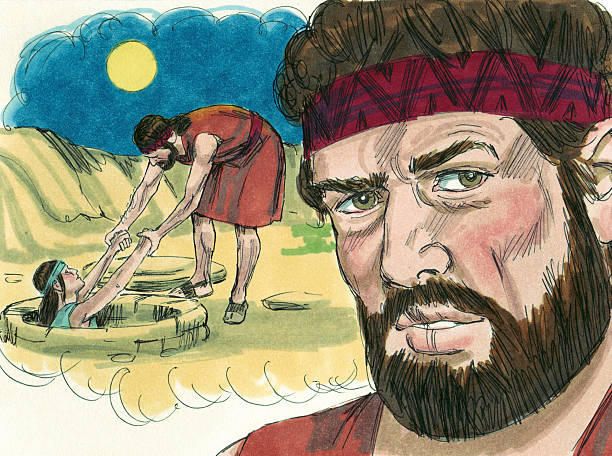
His brothers hated him. They stripped him of his special tunic and threw him into a pit. Then they sold him to travelling merchants, who carried him into Egypt as a slave (Genesis 37:23–28).
Imagine Joseph’s questions. On top of the list must have been “What happened to the promise?”
The dreams had spoken of a future in which his family would bow before him. His present reality was a slave being carried away from everything familiar.
Yet while Joseph’s circumstances had changed, God’s character had not.
Genesis 39 repeatedly uses the phrase “The LORD was with Joseph” (Genesis 39:2, 3, 21, 23).
Joseph could not see where God was taking him. But God was with him where he was. That distinction matters.
Faith does not mean we understand every chapter as we live it. Sometimes faith means continuing to trust God when the chapter we are reading seems completely inconsistent with the promise we were given.
And Joseph finds himself in the house of Potiphar, one of the people who call the shots in the government of Pharaoh.
Faith in the house
In Egypt, Joseph was purchased by Potiphar, an officer of Pharaoh. And Joseph prospered—not because slavery was good, but because God’s presence was with him.
Genesis 39 presents one of Joseph’s greatest demonstrations of faith. Potiphar’s wife repeatedly tempted him to sin. Joseph’s response was remarkably clear:
“How then can I do this great wickedness, and sin against God?” (Genesis 39:9, NKJV).
Joseph was far from home.
No family was watching. No congregation was there to hold him accountable. No earthly reward was guaranteed. Yet Joseph knew that faithfulness to God was more important than immediate advantage.
He chose obedience. And obedience cost him. He was falsely accused and thrown into prison (Genesis 39:19–20). Again, Joseph did what was right, and again, his circumstances became worse.
But again Scripture says;
“But the LORD was with Joseph” (Genesis 39:21, NKJV).
Joseph’s faith was not a formula that prevented suffering. It was a relationship with God that sustained him through suffering.
And now, how does he conduct himself in prison?
Faith in the prison
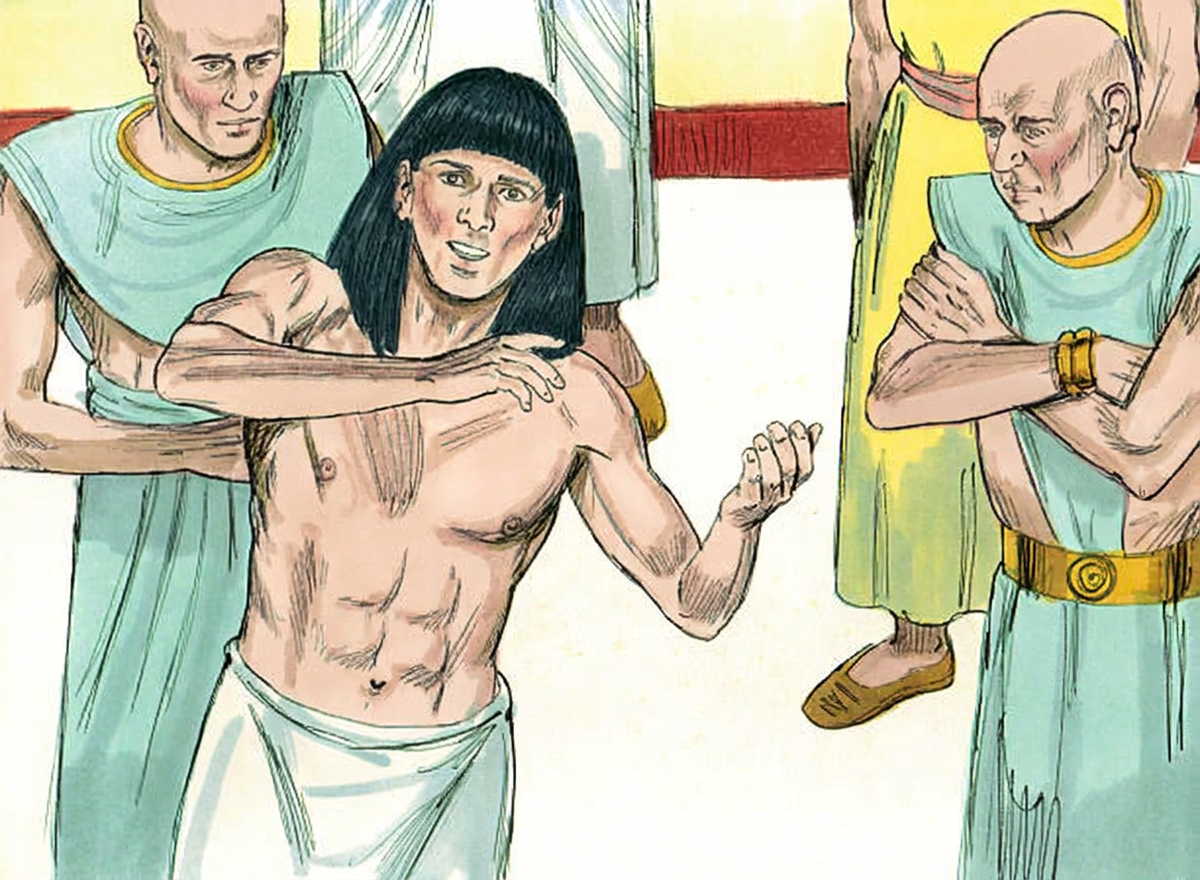
Joseph’s prison years could easily have become years of bitterness.
He had been betrayed by his brothers. He had been sold as a slave. He had been falsely accused. He had been forgotten by someone whose dream he had interpreted. Genesis 40:23 says that the chief butler “did not remember Joseph, but forgot him”(NKJV).
Two years passed (Genesis 41:1). Two more years of waiting. But Joseph continued to serve.
Eventually, Pharaoh dreamed troubling dreams that no one could interpret. The forgotten prisoner was remembered, and Joseph was brought before the king. Joseph immediately directed attention away from himself:
“It is not in me; God will give Pharaoh an answer of peace” (Genesis 41:16, NKJV).
That sentence reveals something important. Joseph had learned that his gift was not the source of his security. Instead, God was. The same God who was with him in the pit was with him in the palace. The same God who sustained him in prison was the God who would sustain him in power.
Joseph interpreted Pharaoh’s dreams, warning of seven years of plenty followed by seven years of severe famine. Pharaoh recognised Joseph’s wisdom and placed him over Egypt (Genesis 41:38–41).
The prisoner became governor. The rejected brother became the means through which God preserved many lives.
But the greatest evidence of Joseph’s faith was still ahead. Let’s see what happens when Joseph catches up with what we, the readers, know.
Faith when the pieces finally fit
Eventually, Joseph’s brothers came to Egypt seeking food. They stood before the brother they had sold years earlier. They did not recognise him, butJoseph recognised them.
Genesis 42–45 records a remarkable unfolding of providence. The dreams of Joseph’s youth were beginning to come true. His brothers bowed before him.
But Joseph had something his seventeen-year-old self could not yet possess: perspective.
He could now see that the pit had not been the end. Slavery had not been the end. The prison had not been the end.
God had been working through circumstances Joseph could not understand at the time. When Joseph finally revealed his identity to his brothers, he did not deny the evil they had done.
He simply placed that evil within the larger sovereignty of God, saying, “But as for you, you meant evil against me; but God meant it for good”(Genesis 50:20, NKJV).
Notice what Joseph did not say.
He did not say, What you did was good. It wasn’t. He said God was able to work good through what they intended for evil. That is a crucial distinction for Christian faith.
Faith does not call evil good. Faith trusts that God is greater than the evil we encounter.
And his faith even goes beyond.
Faith when the promise outlives you
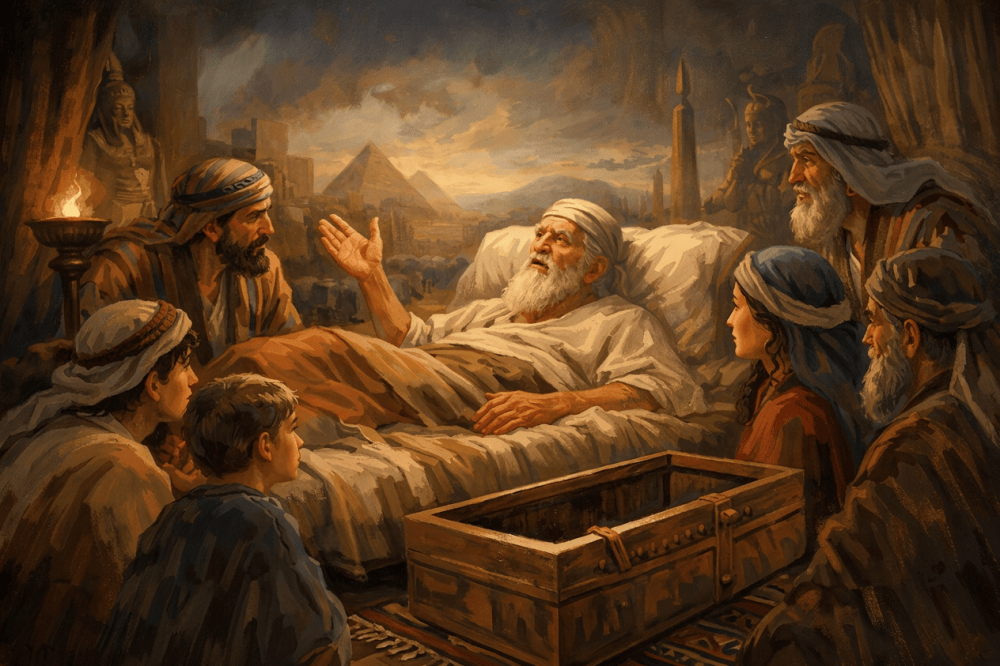
Joseph lived to see extraordinary things.
He saw his father again. He saw his family preserved. He saw his children and grandchildren. He saw the fulfillment of the dreams that had once seemed impossible.
But there was one promise Joseph would not see fulfilled.
God had promised Abraham, Isaac, and Jacob the land of Canaan. Israel was in Egypt. And Joseph knew they would not remain there forever.
Genesis 50 records Joseph’s final words.
“I am dying; but God will surely visit you, and bring you out of this land to the land of which He swore to Abraham, to Isaac, and to Jacob” (Genesis 50:24, NKJV).
Then Joseph made the Israelites swear an oath:
“God will surely visit you, and you shall carry up my bones from here” (Genesis 50:25, NKJV).
And then Joseph died.
He did not see the Exodus. He did not see the Red Sea divide. He did not see Israel leave Egypt. He did not see Canaan. But he died believing that God’s promise would be fulfilled.
That is precisely what Hebrews remembers.
Not Joseph’s success. Not his position. Not his wealth. Not even his extraordinary ability to interpret dreams. But his faith at the end.
Hebrews remembers Joseph because, when he was dying, he was still looking forward.
His bones became a declaration that Egypt is not our final home.
God has promised. God will visit. God will bring us out. And God will keep His word. His faith stood firm beyond death and the grave.
Faith beyond the grave
There is something deeply beautiful about Hebrews 11:22. Joseph’s faith reached beyond his own lifetime.
He had learned to trust God with things he could not see. Eventually, he learned to trust God with things he would never see.
That is a different level of faith.
There are promises we may never personally witness fulfilled. We may pray for children and grandchildren who will live for God long after we are gone. We may invest in ministries whose greatest fruit will appear after our generation has passed. We may teach Scripture to someone whose future usefulness for God’s kingdom we will never know. We may plant trees whose shade we will never enjoy. And we may die before seeing the return of Christ.
Yet faith says, “God’s promises do not expire when my life ends.”
Joseph’s story reminds us that our faithfulness is not measured only by what we get to see. Sometimes the greatest act of faith is to keep trusting God when we know the promise will outlive us.
From the Conflict of the Ages Series
Ellen G. White captures the significance of Joseph’s final testimony:
“When he saw that his end was near, he summoned his kinsmen about him. Honored as he had been in the land of the Pharaohs, Egypt was to him but the place of his exile; his last act was to signify that his lot was cast with Israel. His last words were, “God will surely visit you, and bring you out of this land unto the land which He sware to Abraham, to Isaac, and to Jacob.” And he took a solemn oath of the children of Israel that they would carry up his bones with them to the land of Canaan. “So Joseph died, being an hundred and ten years old: and they embalmed him, and he was put in a coffin in Egypt.” And through the centuries of toil which followed, the coffin, a reminder of the dying words of Joseph, testified to Israel that they were only sojourners in Egypt, and bade them keep their hopes fixed upon the Land of Promise, for the time of deliverance would surely come.”
— Ellen G. White, Patriarchs and Prophets, p. 240.
Joseph had spent most of his adult life in Egypt.
He had influence there. He had authority there. He had a family there. He had prospered there. But Egypt was never allowed to become his ultimate identity.
His final act pointed beyond Egypt to the promise of God.
And centuries later, when Israel finally departed, Moses remembered Joseph.
“And Moses took the bones of Joseph with him, for he had placed the children of Israel under solemn oath, saying, ‘God will surely visit you, and you shall carry up my bones from here with you’” (Exodus 13:19, NKJV).
Joseph had been dead for generations, but his faith was still speaking.
Looking unto Jesus
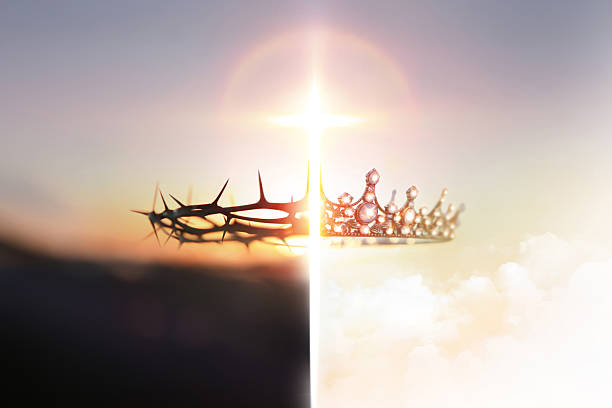
Joseph’s story ultimately points us beyond Joseph.
Joseph suffered unjustly. He was rejected by those closest to him. He was sold for silver. He was falsely accused. He suffered despite his righteousness.
Yet God used his suffering to preserve life.
In these ways, Joseph’s story provides a remarkable shadow of the greater story fulfilled in Jesus Christ.
Joseph could say, “You meant evil against me, but God meant it for good.” But at the cross, God accomplished the greatest salvation through the greatest injustice ever committed.
Humanity rejected the Son of God. Christ was betrayed, falsely accused, condemned, and crucified. Yet through that very death, God accomplished salvation.
Peter proclaimed that Jesus was delivered up according to God’s determined purpose, even though those who crucified Him were responsible for their wicked actions (Acts 2:23).
Joseph preserved physical life during the famine; Jesus gives eternal life to those who believe in Him.
Joseph’s brothers eventually bowed before him, and one day, every knee will bow before Christ (Philippians 2:10–11).
Joseph’s bones waited for the fulfillment of an earthly promise, but Christ’s resurrection guarantees something infinitely greater: “And God both raised up the Lord and will also raise us up by His power” (1 Corinthians 6:14, NKJV).
Joseph died believing God’s people would go home. Christ died and rose again to make our ultimate homecoming certain.
We too can live by Joseph’s faith today.
Living by faith today
Joseph teaches us at least four things about enduring faith:
- Faith trusts God in the pit. Your circumstances may change without God’s presence changing. Joseph went from a pit to a prison, but Scripture kept repeating, “The LORD was with Joseph.”
Do not measure God's presence by the comfort of your circumstances.
- Faith remains faithful when nobody is watching. Joseph resisted temptation because his relationship with God mattered more than the opportunity before him.
Faithfulness in private is part of faithfulness to God.
- Faith can forgive without calling evil good. Joseph acknowledged what his brothers intended. But he also trusted God to redeem what they had intended for destruction.
Forgiveness does not require pretending that wrong was right. It requires entrusting justice and redemption to God.
- Faith invests in a future it may never see. Joseph died holding onto God’s promise. What are you building that will outlive you? What truth are you teaching? What character are you modelling? What faith are you passing to the next generation? Your greatest contribution may be something whose full fruit you will never see.
Faith is willing to plant when God alone knows the harvest.
Faith focus
Faith trusts God’s promise even when we will not live to see its fulfillment.
Joseph began with dreams he did not understand. He endured circumstances he could not explain. He experienced victories he could never have manufactured. And at the end of his life, he trusted a promise whose fulfilment lay beyond his grave.
He died in Egypt. But he did not die believing Egypt was home. His faith was looking forward. And so is ours.
We may not see everything God has promised. We may not live to witness every answer to prayer. We may not see every life changed by our witness. But the promise of God does not depend upon our lifespan.
The God who was faithful to Joseph will be faithful to His people.
And one day, faith will become sight. And with Horatio Gates Spafford, we can sing that the LORD may hasten that day:
And, Lord, haste the day when my faith shall be sight,
The clouds be rolled back as a scroll;
The trump shall resound, and the Lord shall descend,
Even so, it is well with my soul
Joseph trusted God’s promise beyond his lifetime.
But the story now moves to a new generation and to a mother and father who had to trust God in the face of a king’s command.
Joseph trusted God’s promise beyond his own lifetime.
But before Moses would ever stand before Pharaoh, two parents would have to trust God with the life of their newborn son.
Pharaoh had issued a terrifying command. Moses’ parents could not change the king’s decree, but they could choose whom they would fear and whom they would trust.
What does faith look like when obeying God means defying the most powerful authority in your world?
Next, we’ll look at By Faith Moses’ Parents… Faith That Refuses Fear
By faith they overcame their world. By faith we overcome ours.
“For whatever is born of God overcomes the world. And this is the victory that has overcome the world—our faith” (1 John 5:4, NKJV).


