There are some people whose lives seem to become clearer when you reach the end of their story. Jacob is one of them.
His life was complicated.
He wanted what God had promised, but sometimes tried to obtain it in his own way. He deceived his brother. He deceived his father. He fled from home. He spent years away from the land God had promised his family.
He experienced prosperity, conflict, fear, grief, and reconciliation. He wrestled with God. He walked with a limp. He lost a son, or so he thought.
And eventually he stood before Pharaoh as an old man and described his years with remarkable honesty:
“The days of the years of my pilgrimage are one hundred and thirty years; few and evil have been the days of the years of my life, and they have not attained to the days of the years of the life of my fathers in the days of their pilgrimage” (Genesis 47:9, NKJV).
Yet when Hebrews 11 remembers Jacob, it does not choose his deception. It does not choose his wrestling. It does not choose his failures. It chooses his final posture.
“By faith Jacob, when he was dying, blessed each of the sons of Joseph, and worshipped, leaning on the top of his staff” (Hebrews 11:21, NKJV).
That is where Hebrews wants us to look. And perhaps that is where Jacob’s life makes the most sense.
Faith worships because God has been faithful.
When he was dying
Hebrews begins with a phrase we might easily overlook:
“By faith Jacob, when he was dying…”
Jacob was not a young man setting out on an adventure. Instead, he was nearing the end. His body was failing. His pilgrimage was almost finished. And yet his faith was not finished.
This is important because biblical faith is not merely for beginnings.
We often speak about faith when someone starts something new:
- Faith to leave
- Faith to begin
- Faith to build
- Faith to step out
But Hebrews shows us another kind of faith; faith that remains when the journey is almost over.
Jacob had lived long enough to discover that life does not always unfold as we expect. He had known joy and sorrow. He had seen promises fulfilled and promises delayed. He had experienced God’s protection. He had also experienced the painful consequences of his own choices.
But now, at the end, Jacob was not looking backward in despair. He was looking forward in faith.
Let’s briefly explore the journey leading him to this posture of worship.
The journey behind the worship
To understand the significance of Jacob’s final worship, we need to remember the man he had been.
Jacob was born grasping his brother’s heel. His very name became associated with the idea of supplanting or taking by the heel.
He wanted the birthright. He wanted the blessing. And he was willing to scheme for them. But God’s promise did not require Jacob’s deception.
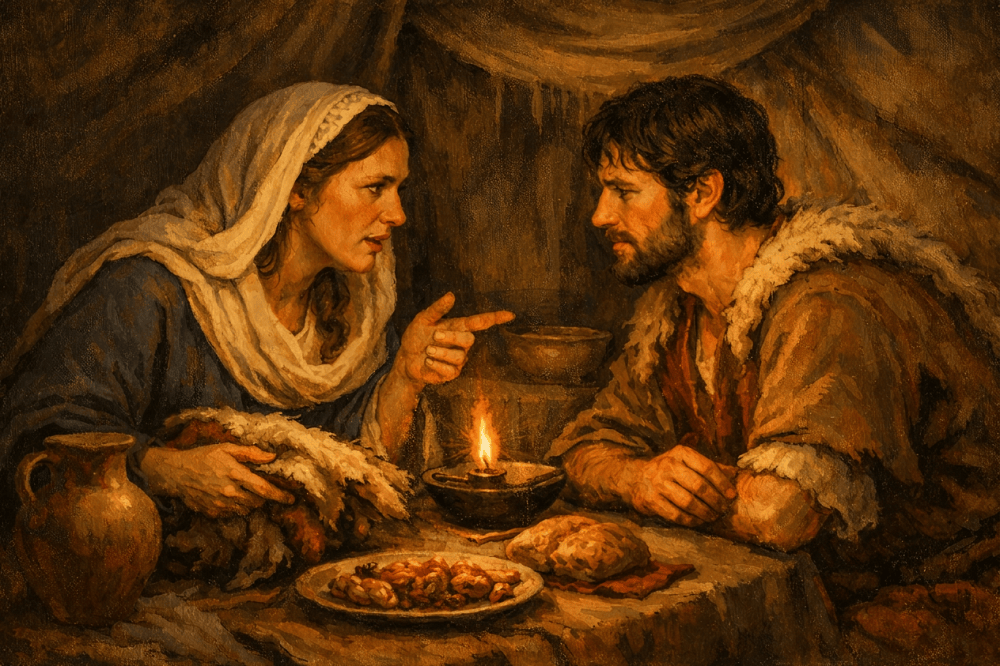
The Lord had already told Rebekah that “The older shall serve the younger” (Genesis 25:23, NKJV). And because God had made a promise, the battle changed from trying to succeed to waiting on the Lord.
Jacob did not need to manipulate the future, yet he tried. And the consequences were painful. He had to leave home, never to see Rebekah again this side of eternity.
And while on the run, he became the one who was deceived. For he served Laban for years, and he(Laban) never kept his word.
He experienced family tension after being forced into a polygamous marriage for Rachel’s sake.
He eventually returned home, but the journey back brought him face-to-face with the brother he had wronged. What a homecoming! And he met his brother limping, unable to protect himself or gain an offensive advantage.
Before this meeting, at the Jabbok River, Jacob encountered God in a way that changed him. He wrestled through the night. When morning came, Jacob received a new name:
“Your name shall no longer be called Jacob, but Israel; for you have struggled with God and with men, and have prevailed” (Genesis 32:28, NKJV).
The story is not that Jacob suddenly became a perfect man. It is that God was transforming him. The schemer was learning dependence. The grasping man was learning to surrender.
The man who once tried to secure the blessing through his own strength was learning to receive from God.
And that journey eventually led him to Hebrews 11:21. He had learnt a lesson we are slow to learn and ready to forget—learning to learn.
The man who learned to lean
There is something almost poetic about the final image. Jacob was leaning on the top of his staff.
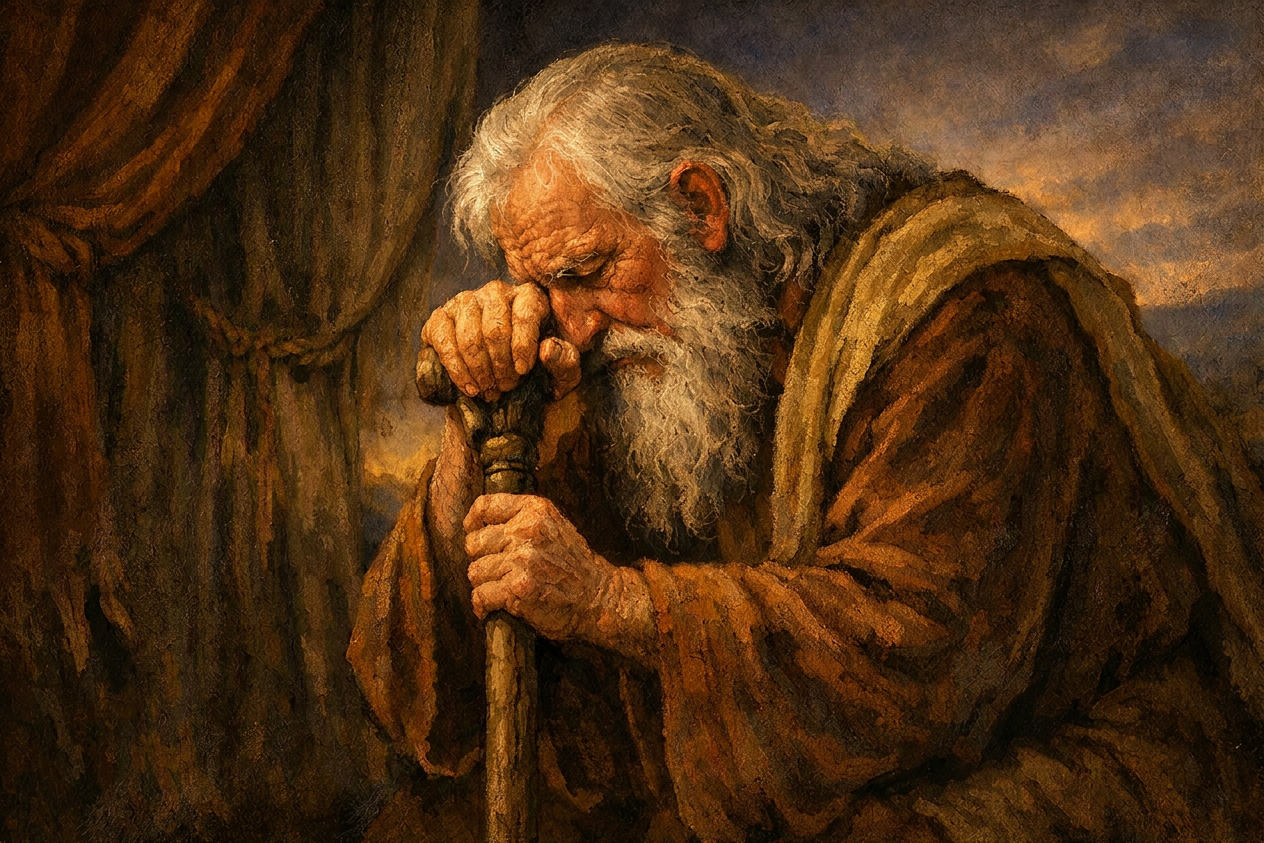
The man who had spent much of his life trying to secure things with his own hands was now an old man who needed support simply to stand. And Hebrews calls that faith.
His weakness did not disqualify his worship. His age did not diminish his faith. His physical dependence did not make him less useful to God.
If anything, the image captures something Jacob had spent his life learning:
We were never meant to carry ourselves.
The staff supported Jacob’s body, but his faith rested in God. The staff was visible, but God was not.
Yet Jacob worshipped the God he could not see. That is faith. And he then proceeded to bless—not scheme for or grab—the next generation.
Blessing the next generation
Hebrews does not merely say that Jacob worshipped. It says, “By faith Jacob… blessed each of the sons of Joseph…”
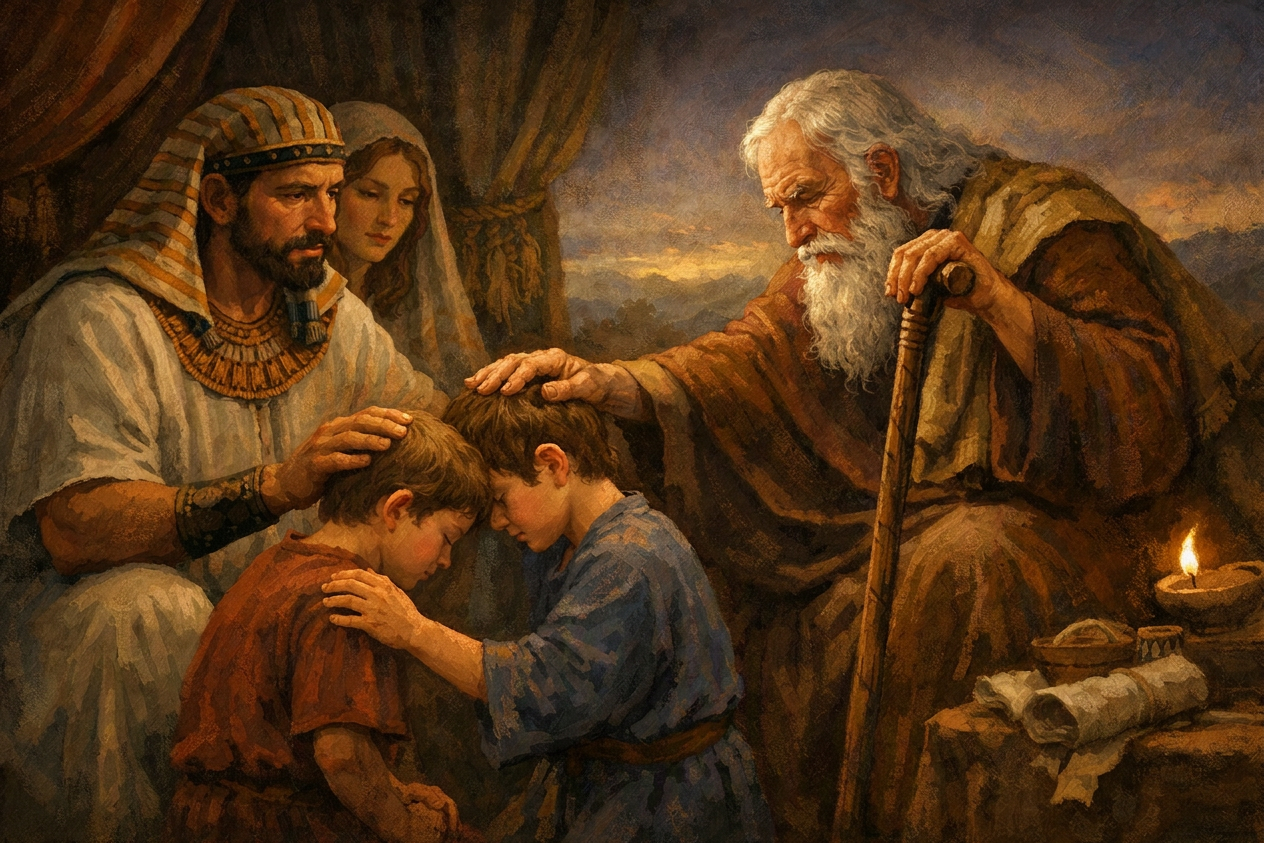
His final act of faith was directed towards the future. Joseph had brought his sons, Manasseh and Ephraim, before their grandfather. Jacob placed his hands upon them and blessed them. Joseph assumed that Jacob’s right hand should rest upon Manasseh, the firstborn. But Jacob crossed his hands and placed his right hand upon Ephraim.
Joseph tried to correct him, “Not so, my father, for this one is the firstborn; put your right hand on his head” (Genesis 48:18, NKJV).
But Jacob refused. He knew what he was doing. And then he declared:
“I know, my son, I know. He also shall become a people, and he also shall be great; but truly his younger brother shall be greater than he, and his descendants shall become a multitude of nations”(Genesis 48:19, NKJV).
Jacob was looking beyond what was immediately visible. He was blessing a future he would not personally experience. He could not see the generations that would follow. He could not see the Exodus. He could not see Israel’s history. He could not see Bethlehem. He could not see Calvary. He could not see the empty tomb. But he trusted the God who had promised.
This is faith at the end of life.
Faith does not need to see the future to trust the One who holds it.
And he worshipped
But Hebrews does not stop with the blessing. That is what makes the verse so beautiful. It adds “And worshipped…”
Jacob’s final act was not merely speaking. It was worship. The blessing flowed from worship. His confidence about the future flowed from his confidence in God. He had learned something through all the twists and turns of his life:
God could be trusted.
Not because Jacob had always been trustworthy. Not because his journey had been easy. Not because he had understood everything God was doing. But because God had remained faithful.
At Bethel, God had met him when he was fleeing. God had preserved him during his years with Laban. God had brought him safely home. God had protected him from Esau. God had provided for his family. God had restored what Jacob thought he had lost forever when Joseph was revealed to be alive.
And now Jacob could look back and see providence running through his story.
The God who had carried him through every chapter would carry the covenant forward after his death.
So Jacob worshipped. What a time to worship after a series of struggles.
Worship after the struggle
There is a particular kind of worship that can only come after you have lived long enough to discover God’s faithfulness. It is not shallow optimism.
It does not say “Everything worked out exactly as I wanted.” Jacob could not say that.
His life contained profound grief. He had believed Joseph was dead for years. He had buried Rachel. He had known family conflict. He had experienced the consequences of his own mistakes.
Yet he worshipped.
Why?
Because worship is not a declaration that life has been easy.
Worship is a declaration that God is worthy, even when life has not been easy.
That distinction matters.
Sometimes we worship because God has answered a prayer, sometimes we worship while the prayer remains unanswered.
Sometimes we worship because the door has opened, sometimes we worship while the door remains closed.
Sometimes we worship because we understand what God is doing, sometimes we worship because we do not.
Jacob’s life teaches us that worship can survive circumstances. Indeed, sometimes circumstances teach us to worship more deeply.
But is there something significant about the staff in his hand?
The staff in his hand
The details of the staff warrant another look.
Hebrews could simply have said that Jacob worshipped. Instead, it tells us that he worshipped “leaning on the top of his staff.”
The image is deeply human. Jacob was old. He was weak. He needed support. And yet his weakness did not prevent him from worshipping.
Perhaps there is encouragement here for every believer who feels that age, weakness, failure or circumstance has reduced their usefulness.
The world often measures strength by independence. Scripture measures it differently.
Paul heard Christ say:
“My grace is sufficient for you, for My strength is made perfect in weakness” (2 Corinthians 12:9, NKJV).
Jacob’s staff was a visible reminder that he was not self-sufficient. Neither are we:
- Our strength ultimately comes from God
- Our future rests with God
- Our salvation rests with God
- Our hope rests with God
And one day, whether we arrive there young or old, strong or weak, we want our final posture to be the same as Jacob’s—worship.
What did Ellen White have to say about Jacob?
From the Conflict of the Ages Series
Ellen G. White reflects on Jacob’s final years and the confidence he had gained through his long experience with God:
“Jacob’s history is an assurance that God will not cast off those who have been betrayed into sin, but who have returned unto Him with true repentance. It was by self-surrender and confiding faith that Jacob gained what he had failed to gain by conflict in his own strength. God thus taught His servant that divine power and grace alone could give him the blessing he craved. Thus it will be with those who live in the last days. As dangers surround them, and despair seizes upon the soul, they must depend solely upon the merits of the atonement. We can do nothing of ourselves. In all our helpless unworthiness we must trust in the merits of the crucified and risen Saviour. None will ever perish while they do this. The long, black catalogue of our delinquencies is before the eye of the Infinite. The register is complete; none of our offenses are forgotten. But He who listened to the cries of His servants of old, will hear the prayer of faith and pardon our transgressions. He has promised, and He will fulfill His word.”
— Ellen G. White, Patriarchs and Prophets, p. 202.
Jacob’s story is not ultimately a story about a man who never failed. It is a story about the faithfulness of a God, who continued to work in a flawed man’s life.
The same God who met Jacob at Bethel was with him in exile.
The same God who wrestled with him at Jabbok was with him in Egypt.
And the same God who had carried him through his pilgrimage brought him to the end, worshipping.
Don’t we have every reason to look unto Jesus, after seeing how He changed Jacob’s life?
Looking unto Jesus
Jacob’s story ultimately points beyond Jacob. The blessing he passed forward belonged to a covenant that was moving towards Christ.
God had promised Abraham, “In your seed all the nations of the earth shall be blessed” (Genesis 22:18 (NKJV).
That promise passed through Isaac. It passed through Jacob. It passed through Israel. But ultimately, it reaches its fulfillment in Jesus Christ.
Paul writes that “Now to Abraham and his Seed were the promises made… ‘And to your Seed,’ who is Christ” (Galatians 3:16, NKJV).
Jacob could bless the next generation because he trusted the promise. We can face our future because we know the One who fulfilled it:
- Jesus is the promised Seed
- Jesus is the One through whom the blessing reaches the nations
- Jesus is the One who remains faithful when we fail
- Jesus is the One who carries us when we cannot carry ourselves
- And Jesus is the One who gives us hope beyond the end of this life
Jacob worshipped while leaning on his staff. We can worship while leaning on Christ.
That is enough for the journey.
Living by faith today
Perhaps you are somewhere in Jacob’s story today.

Maybe you are beginning. Maybe you are struggling. Maybe you are looking back at mistakes you wish you could undo. Maybe you are carrying grief. Maybe you are wondering what your life has accomplished. Or perhaps you are simply getting older and wondering what remains for you to give.
Look at Jacob.
His most enduring picture in Hebrews is not of the young man running away. It is not of the schemer. It is not even of the man wrestling through the night. Instead, it is of an old man worshipping.
So worship.
Thank God for what He has done. Trust Him with what remains. Bless those who come after you. Tell the next generation what God has taught you. And when your strength is failing, lean:
- Lean on His promises
- Lean on His grace
- Lean on His faithfulness
- Lean on Christ
Because faith is not the absence of weakness.
Faith is knowing where to lean when weakness comes.
Faith focus
Faith worships because God has been faithful.
Jacob’s journey was not perfect, but God’s faithfulness was. His story was not free from failure, but God’s grace was greater. His future was uncertain, but God’s promise was sure.
And when Jacob reached the end, the Hebrews remembered one thing:
“He… worshipped, leaning on the top of his staff.”
May that be our testimony too.
Not that we never stumbled. Not that we understood everything. Not that life unfolded exactly as we planned. But that, through it all, we learned to trust the God who never left us.
And when we reach the end of our pilgrimage, may we still be found worshipping.
Jacob’s story ends with worship.
His son Joseph’s story will take us somewhere different. Joseph will face betrayal, slavery, false accusation, imprisonment and eventual exaltation. Yet when the Hebrews remember Joseph, it looks beyond everything he accomplished in Egypt.
It remembers a man who, by faith, looked beyond his own lifetime.
Next, we will look at Joseph… Faith Beyond the Grave.
By faith they overcame their world. By faith we overcome ours.
“For whatever is born of God overcomes the world. And this is the victory that has overcome the world—our faith” (1 John 5:4, NKJV).


Its been a while since I read such deep thought provoking presentation. I’m blessed and my faith has shifted. Thank you Child of God❤️
LikeLiked by 2 people
Amen… Blessings. Send the light
LikeLiked by 1 person