Preparation is rarely celebrated.
We applaud the finished building but seldom think about the years spent laying its foundation. We admire the harvest but forget the patient labour of sowing and watering. We honour the graduate without seeing the countless hours of study that preceded the ceremony.
The greatest acts of preparation often take place before anyone else understands why they matter.
That was Noah’s life.
When God called him to build an ark, there were no gathering storm clouds, no overflowing rivers, and no visible signs of an approaching flood. To his neighbours, the project must have appeared unnecessary, unreasonable, and perhaps even laughable. Oh yes! Building an Ark in a world without rain!
Yet Noah did not build because he saw rain. He built because he heard God.
That single decision distinguishes biblical faith from ordinary human reasoning. Faith does not wait until circumstances make obedience sensible. It trusts the God who knows tomorrow and acts upon His word today.
Hebrews captures Noah’s remarkable testimony in one verse:
"By faith Noah, being divinely warned of things not yet seen, moved with godly fear, prepared an ark for the saving of his household, by which he condemned the world and became heir of the righteousness which is according to faith" (Hebrews 11:7, NKJV).
Everything Noah accomplished began with one simple reality: he believed what God said.
When God warns about what we cannot see
The writer of Hebrews tells us that Noah was “divinely warned of things not yet seen.”
Those few words are remarkable. Noah had never witnessed a worldwide flood. Nothing in his experience could have prepared him for such an announcement. Human logic could neither explain nor verify God’s warning.
Yet Noah accepted God’s word as truth before he saw any evidence that it would happen.
This is one of the defining characteristics of biblical faith. Faith does not depend upon visible proof before it obeys. Rather, it depends upon the character of the One who speaks.
For Noah, God’s warning was sufficient evidence.
That principle continues throughout Scripture. Abraham left without knowing where he was going. Moses chose affliction over Egypt’s treasures because he looked beyond the visible. Rahab trusted Israel’s God before Jericho’s walls had fallen.
Faith always rests upon God’s revelation rather than human observation. As believers, we often wish God would first show us the outcome before asking for our obedience. Noah reminds us that God usually works the other way around. He speaks. We trust. Then we see.
But what did Noah do when he believed what God said?
Moved with Godly fear
Hebrews adds another important phrase:
“…moved with godly fear…“
This was not the fear of panic. It was the reverent awe that recognises God as holy, truthful, and sovereign. Noah understood that God’s warnings are as trustworthy as His promises.
Our generation often speaks much about God’s love while giving little thought to reverence. Yet Noah teaches us that genuine faith embraces both. He trusted God’s mercy enough to build the ark, but he also respected God’s holiness enough to believe His warning. Reverence and faith are not enemies. They are companions. The more we understand who God is, the more seriously we take His Word.
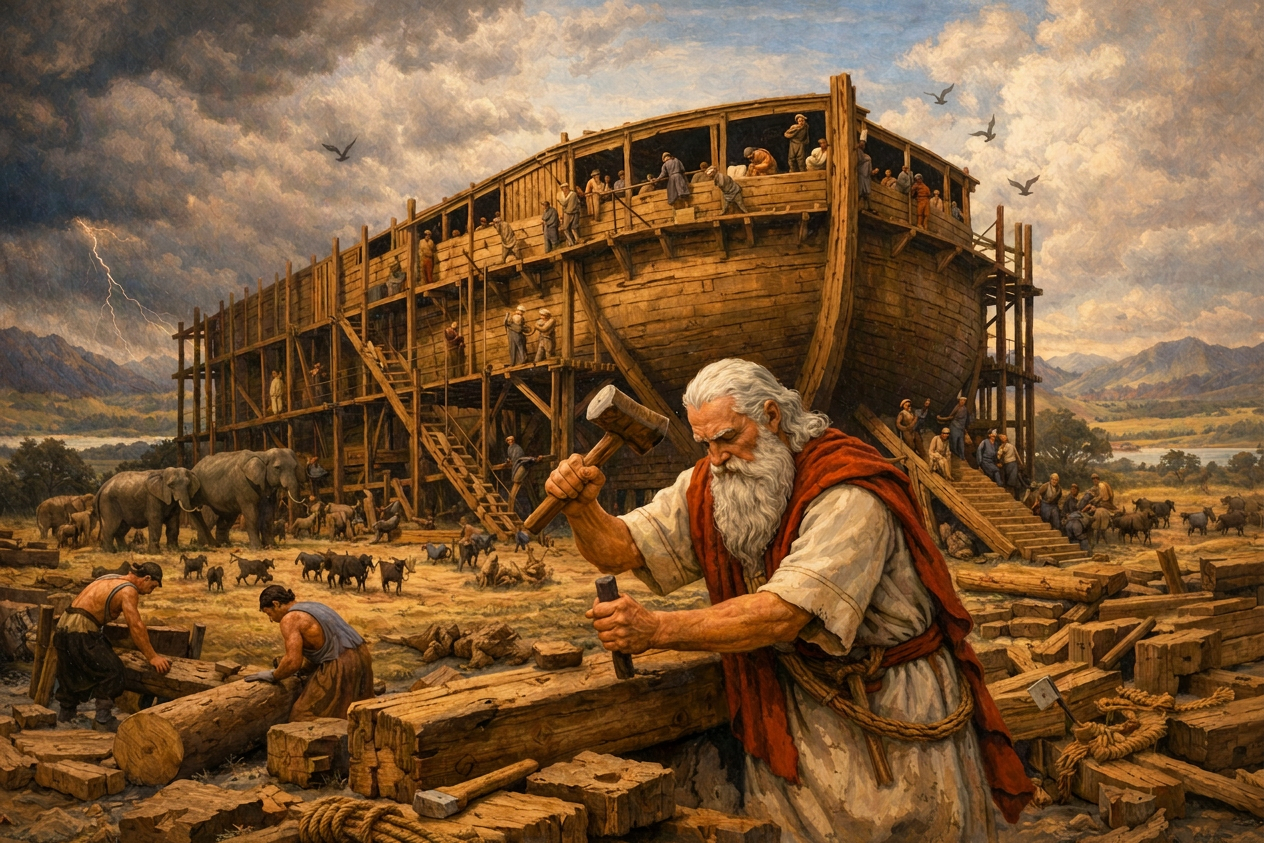
Imagine the years Noah spent building the ark. Every strike of the hammer was an act of faith. Every beam that was lifted declared confidence in God’s promise. Every day that passed without rain presented another opportunity to abandon the project. How often must Noah have been questioned? How frequently was he misunderstood?
Scripture tells us that Noah was “a preacher of righteousness” (2 Peter 2:5, NKJV). While he built the ark, he also proclaimed God’s coming judgement.
His life and his message became one. The ark was not merely a construction project. It was a sermon in timber. For decades, Noah’s faith stood before the world as an invitation to believe God’s word.
Sadly, the world preferred sight over faith. When the rain finally came, it was too late to begin believing. Faith always obeys while the door of grace remains open.
The text also talks about something significant about Noah’s act of faith. He made an Ark for his household. What does this mean? Let’s learn that next.
An ark for his household
Hebrews says Noah “prepared an ark for the saving of his household.”
This does not mean his family’s salvation was automatic because of Noah’s faith. Rather, Noah’s obedience created the place where his family could respond to God’s gracious provision.
What a powerful reminder for parents, grandparents, and spiritual leaders today. We cannot choose faith for others, but we can create homes where faith is lived, taught, and modelled. Noah’s greatest achievement was not constructing an ark. It was leading his family into it.
In a culture moving rapidly away from God, faithful families do not happen by accident. They are built one act of obedience at a time.
And there is much more, that he condemned the world. What does that mean? Let’s learn.
He condemned the world
Hebrews makes a surprising statement:
“…by which he condemned the world…“
Noah did not condemn the world through angry speeches or self-righteous judgement. His obedience exposed the unbelief of those around him. Every board placed upon the ark testified that someone believed in God. Every day his neighbours ignored God’s warning, they revealed the condition of their own hearts.
Ellen White emphasizes this principle in her book True Revival:
“The work of every true Christian is to represent Christ, to reflect light, to elevate the standard of morals, and by words and influence consecrated to God, to compel the careless and reckless to think of God and eternity. The world would gladly drop eternity out of their reckoning, but they cannot succeed so long as there are those who represent Christ in their practical life.” –True Revival, p. 74.1 (Ellen Gould White)
The same principle remains true today. A life shaped by faith quietly challenges a world that prefers independence from God. Faith does not need to shout. It simply needs to remain faithful.
And the Bible still has another thing to say about Noah–an heir of righteousness by faith. Let’s unpack that next.
Heir of the righteousness which is according to faith
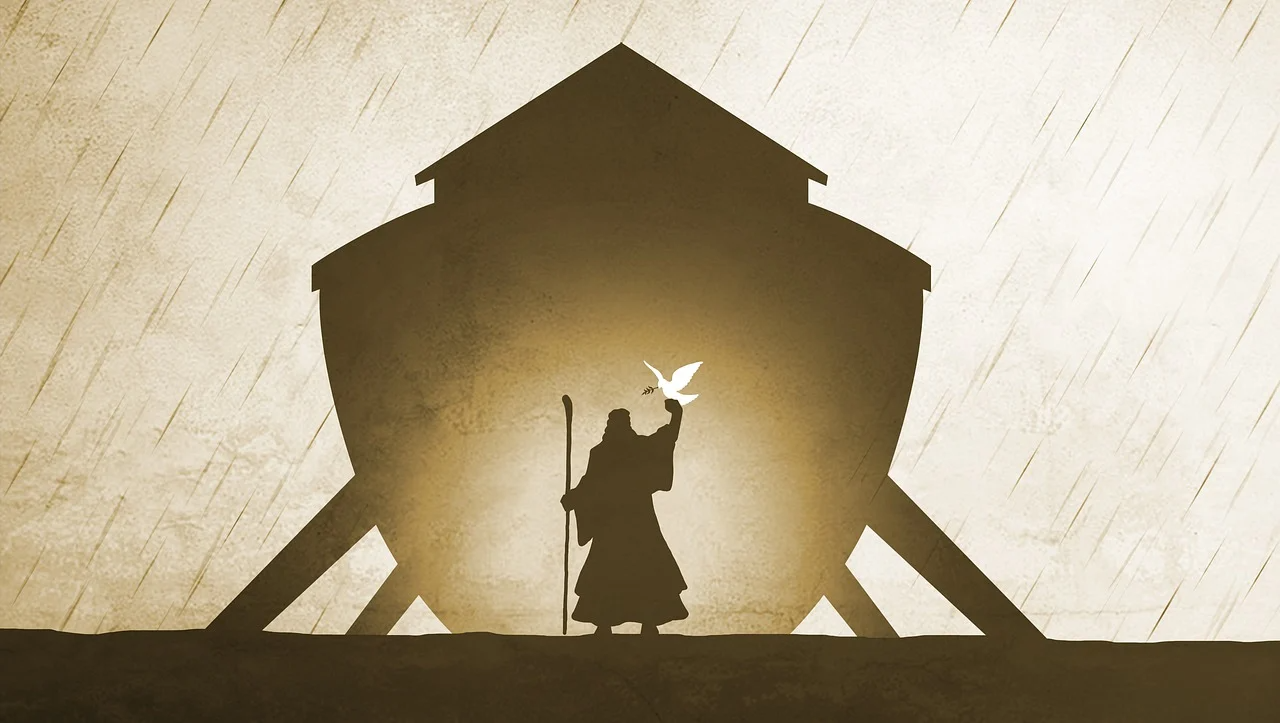
The final description of Noah is perhaps the most important. He “became heir of the righteousness which is according to faith.”
Noah was not accepted because he built an ark. He built the ark because he already trusted God. His obedience was the evidence of faith, not its substitute.
This theme echoes throughout Scripture. From Abel to Abraham, from David to the apostles, righteousness has always been received through faith in God’s gracious provision.
The ark did not save Noah because it was well-built. It saved him because it was God’s appointed means of salvation.
And this still plays in the life of the faithfuls today.
Living by faith today
Few of us will ever be asked to build an ark, but every believer is called to prepare for a future that God has promised.
Jesus compared the days before His return to the days of Noah:
“But as the days of Noah were, so also will the coming of the Son of Man be. For as in the days before the flood, they were eating and drinking, marrying and giving in marriage, until the day that Noah entered the ark, and did not know until the flood came and took them all away, so also will the coming of the Son of Man be” (Matthew 24:37–39, NKJV).
People were occupied with ordinary life, unaware that judgement was approaching until the flood came. The lesson is not that ordinary activities are sinful. Instead, it is that a life absorbed only with the present can become blind to eternity.
Faith lives differently. It prepares. It listens. It obeys. Even when the world sees no reason to do so.
Let’s now see how Noah’s story is covered in the Conflict of the Ages Series.
From the Conflict of the Ages Series
Ellen White beautifully captures Noah’s unwavering trust:
“By faith Noah, being warned of God of things not seen as yet, moved with fear, prepared an ark to the saving of his house; by the which he condemned the world, and became heir of the righteousness which is by faith.” Hebrews 11:7. While Noah was giving his warning message to the world, his works testified of his sincerity. It was thus that his faith was perfected and made evident. He gave the world an example of believing just what God says. All that he possessed, he invested in the ark. As he began to construct that immense boat on dry ground, multitudes came from every direction to see the strange sight and to hear the earnest, fervent words of the singular preacher. Every blow struck upon the ark was a witness to the people.” — Patriarchs and Prophets, p.95.1
Noah’s credibility rested not merely in what he preached but in how faithfully he obeyed. His life gave substance to his message.
And above every act of faith, Noah’s life points all of us to Jesus.
Looking unto Jesus
Noah’s ark points us to a greater refuge.
Just as God provided one ark through which people could be saved from judgement, He has provided one Saviour through whom the world may be saved from sin. The invitation remains open. Christ is greater than the ark because He does not merely preserve life—He gives eternal life.
While Noah entered the ark by faith, we enter into Christ by faith. While the ark carried eight people safely through the waters of judgement, Jesus carries all who trust in Him through the judgement of sin into everlasting life.
Ultimately, Noah’s story is not about remarkable craftsmanship. Rather, it is about remarkable trust. He believed God before the first drop of rain ever fell.
May we believe Christ before the fulfilment of every promise we are still waiting to see. For faith has never been about denying reality. It has always been about believing that God’s reality is greater than the one before our eyes.
Faith prepares before the rain.
Faith focus
Faith obeys God’s Word today because it trusts God’s tomorrow. Indeed, as hymn writer Alfred Henry Ackley wrote in 1928, God’s tomorrow is a day of gladness and will be better than today.
By faith, they overcame their world. By faith we overcome ours.
"For whatever is born of God overcomes the world. And this is the victory that has overcome the world—our faith" (1 John 5:4, NKJV).
In our next article, we will meet Abraham, a man who heard God’s call to go without knowing where the journey would lead. His story will teach us that faith does not always show us the destination. Instead, it simply trusts the One who calls us to begin the journey.


One thought on “By Faith Noah… Preparing Before the Rain”