
What if the most dangerous place in your life is not the road you drive on, the neighbourhood you walk through, or the workplace you clock into, but your own home?
According to the National Safety Council, the home injury death rate has increased 190% since 1999, and in 2024 alone, over 30 million people experienced a medically consulted injury at home, more than injuries from public spaces, workplaces, and road accidents combined. The place you return to every evening for rest and safety is, statistically, where you are most at risk.
So here is the question worth sitting with: when did you last look around your home, not as a familiar space you navigate on autopilot, but as an environment that either supports your health or quietly undermines it? Nearly 80% of deaths that occur at home are preventable, which means most of them did not have to happen. A cluttered floor, a loose rug, an unlabeled chemical under the sink: ordinary things, overlooked daily, with consequences that are anything but ordinary.
This is not about perfection. It is about intentionality and about understanding that the space you come home to every day is either working for your health or quietly working against it.
We will cover:
- Why your home is less safe than you think
- What clutter does to your brain and body
- The most common home hazards and how to address them
- Building a simple routine that keeps your space safe and calm
- Bottomline
Let us start with why the home, the place that feels most familiar and most safe, is where most preventable injuries actually happen.
Why your home is less safe than you think

Here is a number worth pausing on: in 2023, over 125,000 people died from preventable injuries in the home in the United States alone, accounting for more than three-quarters of all preventable injury-related deaths that year.[1] Falls and poisoning were the leading causes, followed by fires and choking. These were not freak accidents. They were the result of ordinary, preventable conditions: clutter on the floor, poor lighting, unsecured chemicals, and the absence of a smoke detector.
Research from community-based studies echoes this pattern. One study found that in most homes where domestic accidents occurred, objects were scattered across the floor, and basic safety fixtures like grab bars and door stoppers were simply absent.[2] Small oversights, repeated daily, are what create the conditions for accidents.
The kitchen, the bathroom, and the staircase are the three highest-risk areas in any home. But the risk does not stay contained to those rooms. A cluttered passageway is a fall waiting to happen. An extension cord running across a doorway is a trip hazard every single time someone walks past it. The familiar nature of these spaces is precisely what makes them dangerous: we stop seeing them clearly.
But the case for a clean, orderly home goes beyond physical safety. It reaches into something less visible, and just as real.
What clutter does to your brain and body
A UCLA study tracking women in their homes found something striking: those who described their living spaces as cluttered or filled with unfinished projects had measurably higher cortisol levels throughout the day than those who described their homes as restful and organized.[3]
Cortisol is the body’s primary stress hormone, and when it stays elevated over time, it disrupts sleep, weakens immune function, and increases the risk of anxiety and depression.
Neuroscientists at Princeton University have shown that physical clutter competes for your brain’s attention, even when you are not consciously looking at it.[4]
Your brain has to work harder to filter out the visual noise, leaving you more fatigued and less focused by the end of the day. A UK-wide survey found that nearly two-thirds of respondents said clutter increased their stress, while almost three-quarters said a tidy home helped them concentrate better.
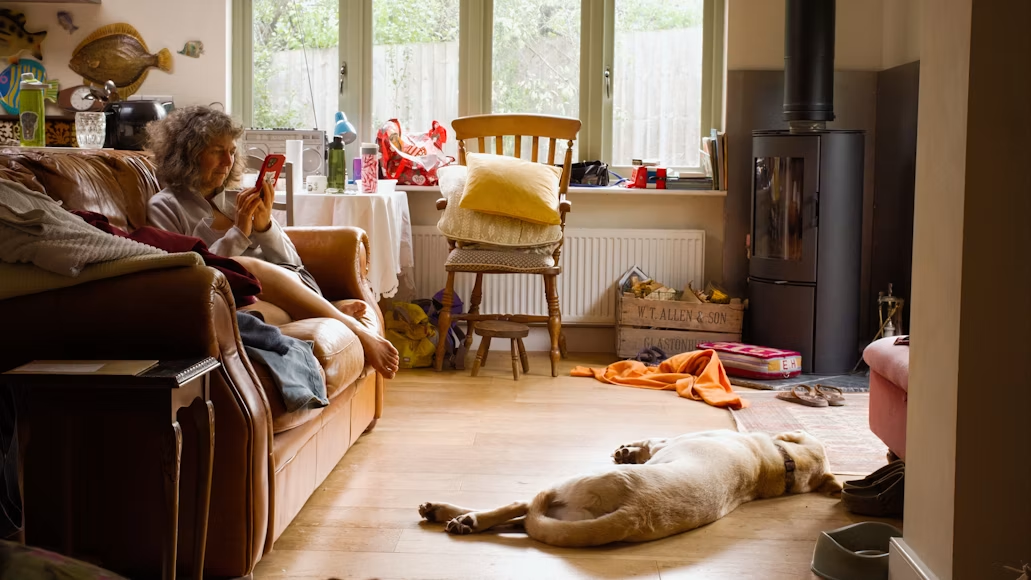
Research published in the Journal of Environmental Psychology found that subjective clutter, how cluttered a person perceives their home to be, was a significant predictor of overall well-being.[5] The messy corner you keep meaning to sort is not just a to-do item. It is a low-level stress signal your brain receives every time you walk past it.
Your bedroom deserves particular attention here. Sleep specialists consistently link cluttered sleeping environments to poorer sleep quality and a higher likelihood of insomnia. When your bedroom is visually chaotic, your brain struggles to shift into rest mode, because the clutter registers as unfinished business. A calm, ordered bedroom is not a luxury. It is a basic condition for restorative sleep.
So we have established the stakes: safety on one side, mental and physical well-being on the other. Now, let us get specific about where the hazards actually live and what to do about them.
The most common home hazards and how to address them
You do not need to renovate your home or spend money to make it significantly safer. Most hazards are addressed through awareness and small, consistent action.
Falls: the floor matters more than you think
- Keep floors clear of shoes, bags, cables, and any item that has no fixed place. If it is on the floor regularly, give it a home somewhere else.
- Secure loose rugs with non-slip mats underneath. Loose edges are one of the most common trip hazards in the home.
- Ensure staircases and corridors are well-lit, including at night. A small motion-sensor nightlight in a hallway can prevent an injury in the dark.
Kitchen and fire safety
- Never leave cooking unattended on an open flame. Most kitchen fires begin this way.
- Keep flammable items such as dish towels, paper, and plastic bags away from the cooker and other heat sources.
- Install a smoke detector if you do not have one, and test it every few months. This single step can mean the difference between a contained incident and a tragedy.
Chemicals, medicines, and poisoning risks
- Store cleaning products, pesticides, and medicines in a fixed, clearly labelled location, out of reach of children. Never decant chemicals into unmarked containers.
- Dispose of expired medication properly. Keeping unused medicines in the home increases the risk of accidental or intentional misuse.
Bathroom safety
- Place a non-slip mat inside and outside the shower or bathtub. Wet floors account for a significant share of bathroom falls.
- Keep the floor clear of clothing, towels, and toiletry items. A clutter-free bathroom is a safer bathroom.
Let’s now see how to build a routine that keeps your space safe.
Building a simple routine that keeps your space safe and calm
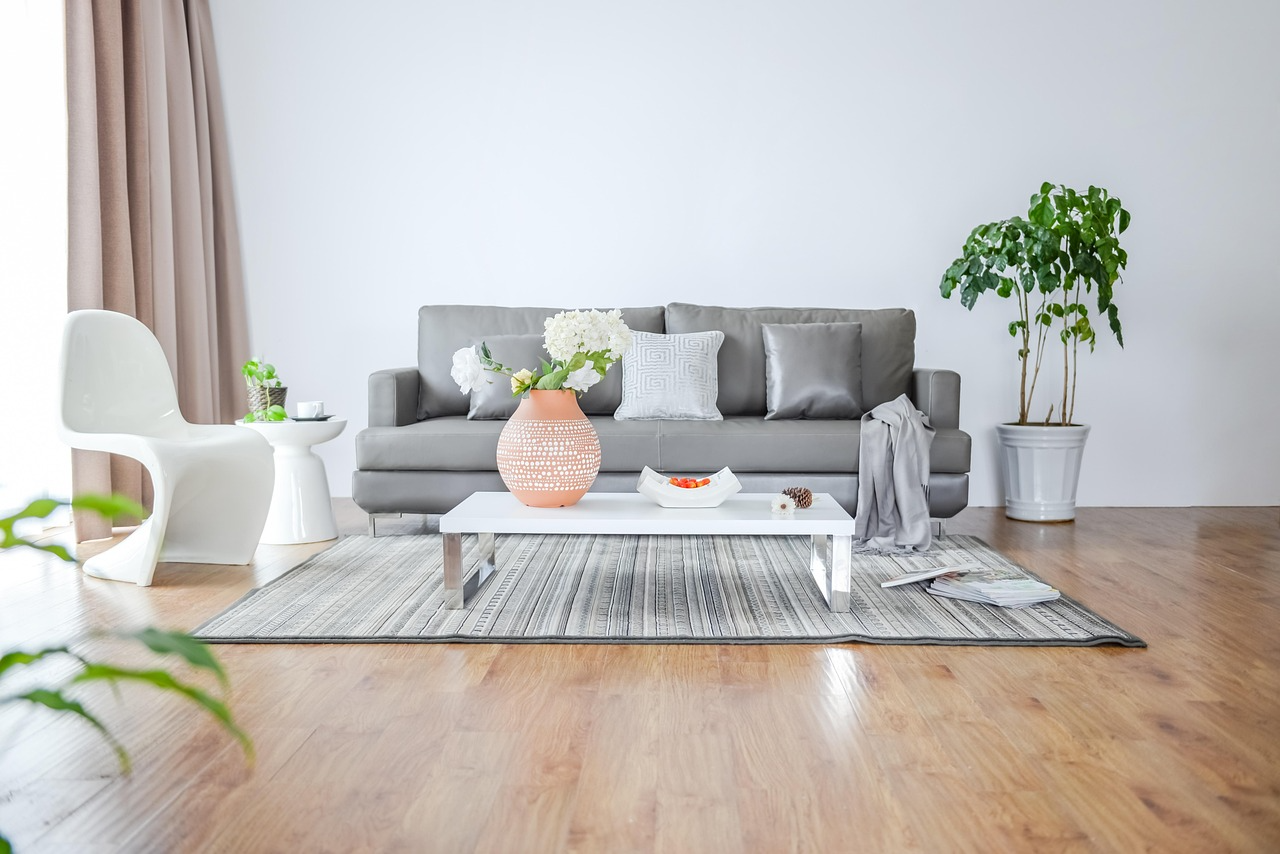
A safe home is not the result of one big clean. It is the result of small, consistent habits that keep disorder from accumulating in the first place. Here is a simple framework to work with.
Daily (10 minutes or less):
- Clear floors and surfaces before you sleep. A quick pass through each room takes minutes but resets the space entirely.
- Return items to their designated places. The discipline of “a place for everything and everything in its place” is one of the most practical safety habits you can build.
- Check that the stove is off and that no fire hazards are left unattended before bed.
Weekly:
- Do a proper wipe-down of kitchen surfaces, the bathroom floor, and high-touch areas. Hygiene and safety share the same territory.
- Identify one area that has been accumulating clutter and address it. Do not try to sort the whole house. One corner at a time, done consistently, changes the whole home.
Monthly:
- Check smoke detectors and any first-aid supplies. Know what you have and where it is before you need it.
- Walk through your home with fresh eyes, the way a visitor would see it, and note any hazards you have stopped noticing.
Research from the University of Connecticut found that removing or reducing clutter directly lowers the stress it generates, leading to improved mood, reduced anxiety, and greater personal confidence.
You do not need a Pinterest-worthy home. You need a safe one and a calm one. And most of the time, those two things are the same thing.
Tweet
Bottomline
Your home is more than a physical space. It is the environment your nervous system settles into at the end of every day, the place your body recovers, your mind unwinds, and your family moves through without thinking. When it is disordered, your brain knows it, even when you have stopped consciously seeing it. When it is safe and calm, it quietly supports everything else you are trying to build.
The good news is that the gap between where your home is now and where it needs to be is almost never as wide as it feels. A cleared floor, a secured rug, a labelled medicine cabinet, a nightly ten-minute reset: these are not dramatic interventions. They are small acts of stewardship, repeated consistently, that compound into a home that is genuinely good for you.
Start with one room. Start with one corner. Start tonight. The space you live in shapes the life you live, and you have more say over that than you think.
“She watches over the affairs of her household and does not eat the bread of idleness” (Proverbs 31:27, NIV).
Citations
- National Safety Council. Injury Facts: Home and Community. 2023. injuryfacts.nsc.org.
- Saini R, et al. Prevalence and pattern of domestic accidents. J Family Med Prim Care. 2020;9(1):372-377. PMC7001614.
- Saxbe DE, Repetti R. No place like home: home tours correlate with daily patterns of mood and cortisol. Pers Soc Psychol Bull. 2010;36(1):71-81.
- Roster CA, Ferrari JR, Jurkat MP. The dark side of home: Assessing possession clutter on subjective wellbeing. J Environ Psychol. 2016;46:32-41.
- McMains S, Kastner S. Interactions of top-down and bottom-up mechanisms in human visual cortex. J Neurosci. 2011;31(2):587-597.


