When was the last time you got stuck with something long enough to wonder if it was even working? Let’s paint this picture together.
It’s on a quiet Sunday evening. Debbie is meal prepping for the week. She portions everything carefully, fills her water bottles, and sets her alarm for 6am. Monday she follows through. Tuesday too. By Friday she has not missed a single thing on the list. She steps on the scale Saturday morning with quiet hope. The number has not moved. Not even slightly. She sits on the edge of the bed for a moment, not crying exactly,but just deflating. Then she gets up, drinks her water, and starts again. Because what else do you do?

That particular experience, doing the right things and seeing nothing, is one of the most quietly discouraging places a person can live. It is more common than anyone admits. This piece is for the person in that place right now. Trust me its not a pep talk or a new routine, I would love to consider it something steadier: an honest look at what is actually happening, and what God says about seasons when the harvest is delayed.
Here is what we’ll talk about:
- The body changes before you can see It
- What stress does to a body that is trying to heal
- Faithfulness is not the same as results
- When consistency feels like foolishness
- What to do when you feel stuck
- Little exercise
- The work you cannot yet see
Let’s start by understanding the bodily changes.
The body changes before you can see It
One of the most discouraging things about health change is how invisible the early work is. A landmark study published in the European Journal of Social Psychology by researcher Phillippa Lally found that new health behaviors take anywhere from 18 to 254 days to become automatic, with the median sitting at 66 days. [1]
Not 21 days, as the popular myth claims. Sixty-six days on average, and up to eight months for more complex habits like exercise.
This is not a failure of willpower. It is biology. The brain is literally rewiring itself beneath the surface, building new neural pathways through repetition. The work is happening. It is just happening in a place you cannot yet see.
Scientists call this the plateau of latent potential. The change is accumulating invisibly, like water heating toward a boil. At 211 degrees it is still just very hot water. At 212 degrees it becomes steam. Every degree before that still mattered. Every single one.
What if you’re not behind? What if you’re simply at 211 degrees?
What stress does to a body that is trying to heal
Here is something that does not get talked about enough. Chronic stress does not just affect your mood. It actively works against the physical changes you are trying to make.
Research published in Cells on the role of cortisol in chronic stress found that sustained elevation of the stress hormone cortisol disrupts almost every major body system. It raises blood sugar, breaks down muscle tissue, impairs immune function, and interferes with metabolism.[2] In practical terms, this means a person can be eating well, sleeping reasonably, and exercising consistently, and still not see expected results simply because their stress load is too high for the body to shift out of survival mode.
This is important because most people who are trying to change and not seeing results tend to blame their discipline. The real question is often not whether they are doing enough. It is whether they are carrying too much.
Stress is not a character flaw. But it is a physiological reality that the body cannot simply override through effort alone. And God, who designed the body, understood this. That is why rest is not presented in scripture as a reward for productivity but as a command.
Psalm 127:2 says: “In vain you rise early and stay up late, toiling for food to eat, for he grants sleep to those he loves.(NIV)“ The body needs permission to rest. Not just at night, but in the deeper sense of releasing the anxiety that keeps the nervous system locked in high alert.
Faithfulness is not the same as results
There is a temptation when results are slow to confuse the absence of visible change with the absence of progress. These are not the same thing.
In scripture, faithfulness and outcomes are treated as separate categories. Joseph was faithful for thirteen years before his circumstances changed. Abraham walked in covenant for decades before the promised child arrived. The disciples fished all night and caught nothing, and yet they were still fishing at dawn when Jesus appeared on the shore.
God consistently honors the posture of a person who keeps showing up, especially when showing up costs something.
Ellen G. White writes in Steps to Christ: “They do not feel or know that they are doing anything great. They are not required to weary themselves with anxiety about success. They have only to go forward quietly, doing faithfully the work that God’s providence assigns, and their life will not be in vain.”[3]
Read that again slowly. Not weary themselves with anxiety about success. Just go forward quietly and faithfully. That is not passivity. That is a specific kind of trust that is harder than hustling.
When consistency feels like foolishness
A systematic review of health habit formation studies involving over 2,600 participants found that the factors most strongly associated with successful habit formation were not intensity or ambition.[4] They were consistency, simplicity, and a stable context in which to repeat the behavior. Showing up. In the same way. Over and over again. Even when nothing seems to be happening.
This is spiritually familiar. It is what prayer looks like before the answer comes. It is what fasting looks like before the breakthrough arrives. It is what obedience looks like when the reward is not yet visible.
Galatians 6:9 does not say the harvest will come when you have worked hard enough. It says the harvest will come if you do not give up. The condition is not performance. It is endurance.
“Let us not become weary in doing good, for at the proper time we will reap a harvest if we do not give up.” Galatians 6:9.
What to do when you feel stuck
Staying faithful in the plateau does not mean staying passive. There are a few grounded things that can carry you through the season when effort outpaces evidence.
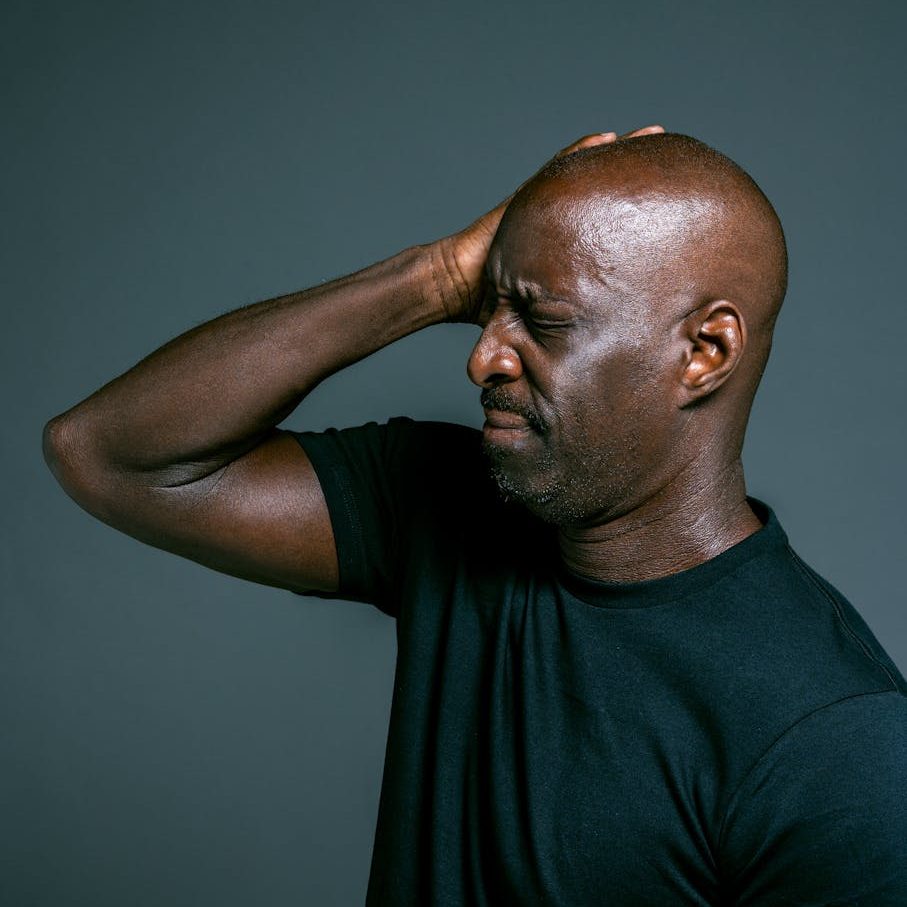
Lower the stakes of each individual day. The goal is not to have a perfect day. The goal is to have a consistent week. Missing one day does not derail the process. Research confirms that a single missed repetition has almost no impact on long-term habit formation. What matters is that you return.
Check what you are carrying, not just what you are doing. If your routine is solid but your stress load is not, your body may be in a physiological state that actively resists change. Sleep, prayer, and genuine rest are not optional additions to a health plan. They are the foundation of one.
Measure faithfulness, not outcomes. For this season, ask yourself each evening not whether you saw results but whether you showed up. That shift in measurement changes everything about how sustainable the effort feels.
Let your spiritual disciplines and your physical ones speak to each other. The same God who sustains your faith in the waiting is sustaining your body in the process. Bring your discouragement to Him the way you would bring any other honest prayer. He is not surprised by it.
Little exercise
Write down one thing your body is doing right that you have not acknowledged. Not a result. A behavior. Getting up earlier. Drinking more water. Choosing to rest instead of pushing through. Acknowledge the faithfulness, not just the fruit.
Then read Galatians 6:9 every morning this week. Not as a motivational quote. but as a promise. Because it is one.
The harvest is coming. Do not stop planting.
The work you cannot yet see
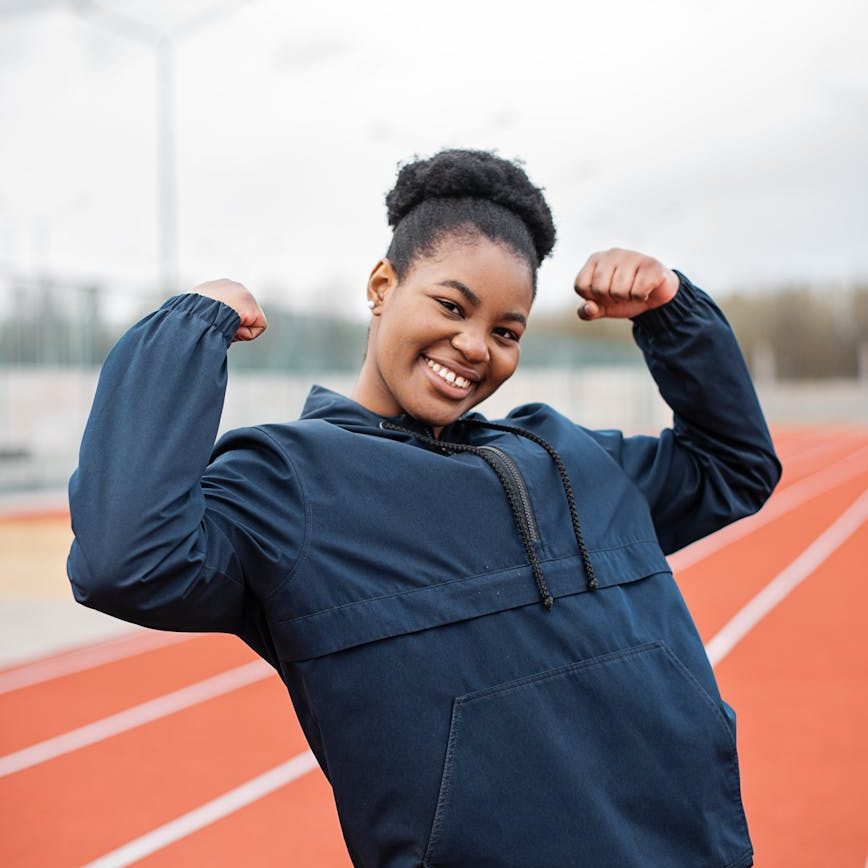
There is a version of health and wellness that is only about what shows up on the outside. This blog has never been about that version.
The kind of change that lasts is built slowly, invisibly, in the repeated small decisions that nobody applauds. It is built in the mornings when you chose well even though last week felt like a waste. It is built in the prayers prayed over a body that does not yet look the way you hoped. It is built in the act of trusting that God sees what you cannot.
He does see it. “For God is not unjust; he will not forget your work and the love you have shown him as you have helped his people and continue to help them.” Hebrews 6:10.
The work you are doing is not invisible to Him. Keep going.
Citations
1. Lally P, van Jaarsveld CHM, Potts HWW, Wardle J. How are habits formed: modelling habit formation in the real world. Eur J Soc Psychol. 2010;40(6):998-1009.
2. Kroll JL et al. The role of cortisol in chronic stress, neurodegenerative diseases, and psychological disorders. Cells. 2023;12(23):2726.
3. Batacan RB Jr et al. Time to form a habit: a systematic review and meta-analysis of health behaviour habit formation and its determinants. Healthcare. 2024;12(23):2488.
4. White EG. Steps to Christ. Review and Herald Publishing Association; 1892:83.


For the mornings when getting out of bed becomes a struggle.
Nice read💙
LikeLike