Have you ever looked back on your life and thought, “If only I could undo that decision”? You’re not alone. Many people carry the weight of past mistakes—whether it’s a broken relationship, financial misstep, or a season of spiritual wandering.
The truth is, your past doesn’t have to define your future. And with God’s help, it won’t.
In this article, we’ll explore what the Bible really says about second chances—and how you can begin again with hope and purpose.
You’ll discover:
No matter what your past looks like, God’s plan for your life is still alive. Ready to find out how to move forward with faith? Let’s dive in.
The biblical truth about guilt, grace, and growth
It’s easy to feel trapped by the consequences of poor decision-making.

Maybe you acted impulsively or made an emotional decision. Or, your decision-making process was clouded by peer pressure, confirmation bias, or even loss aversion. But here’s the good news: the Bible is filled with stories of people who made bad decisions and yet experienced God’s grace, redemption, and purpose.
Think of David, who committed adultery and orchestrated a murder, yet was still called a man after God’s own heart. Think of Peter, who denied Jesus three times but later became a bold leader of the early church. These are not perfect people. They are examples of how guilt doesn’t disqualify us from growth. In fact, grace is the foundation for growth.
When we bring our past mistakes to God with a heart of reflection and repentance, He offers forgiveness and a new path forward. Guilt may point out where we’ve gone wrong, but grace shows us where we can go next.
Once you understand that grace allows you to grow, the next step is to break the identity-shaping grip of shame. Let’s explore how to stop letting shame define your future.
How to stop letting shame shape your identity
Shame is sneaky. Unlike guilt, which says, “I did something wrong,” shame whispers, “I am something wrong.”

This inner voice can sabotage your ability to make better decisions by convincing you that you’re destined to repeat the same bad choices.
But the Bible tells us something different:
"Therefore, if anyone is in Christ, he is a new creation; old things have passed away; behold, all things have become new" (2 Corinthians 5:17, NKJV).
Your identity is not tied to your worst moment. It’s rooted in your values and priorities, especially when aligned with God’s truth.
One way to break the cycle is through reflection and journaling. By processing your past with honesty and self-compassion, you gain clarity. Journaling helps identify cognitive biases and emotional patterns—such as overthinking or decision fatigue—that may have led to poor choices.
Building self-control and discipline starts with acknowledging the truth: You are not your past.
Once shame loses its grip, you can focus on practical steps to rebuild your future. And that begins by learning how to make better decisions from this point forward.
Simple, powerful steps to rebuild your life on God’s promises
If you’ve made wrong decisions before, you might hesitate to trust your own judgment. But rebuilding your life isn’t about perfection; it’s about committing to a wiser, faith-guided decision-making framework.
Here are a few steps that can transform your future:
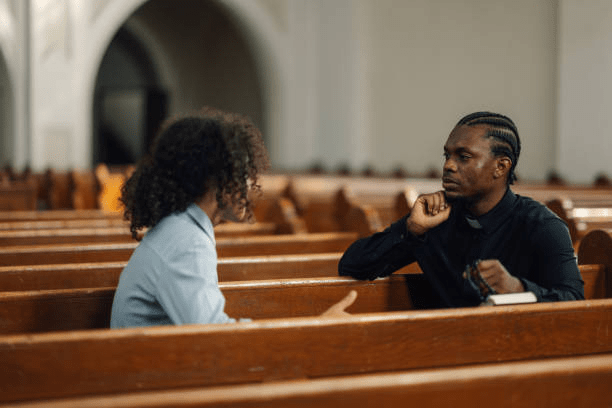
- Seek advice and counseling. Proverbs 11:14 reminds us, “Where there is no counsel, the people fall; But in the multitude of counselors there is safety” (NKJV). Never underestimate the value of spiritual mentors, Christian counselors, or wise friends.
- Use a checklist or decision framework. Outline your choices and assess each one with biblical principles, considering long-term versus short-term thinking. What are the second-order consequences? What is the opportunity cost? Doing a simple cost-benefit analysis helps clarify trade-offs.
- Practice discipline and self-control. These fruits of the Spirit help combat emotional decision-making and impulsivity. When you build habits rooted in God’s Word, your decisions naturally begin to align with His will.
- Guard against cognitive traps. Watch for common mental pitfalls, such as confirmation bias or overthinking. Critical thinking and prayer help you stay anchored in truth.
Now that we’ve explored practical tools for decision-making, let’s be encouraged by those who walked this road before us and found redemption.
Stories of people in Scripture who turned their lives around, and how you can too
The Bible is not a book of perfect people. Instead, it’s a book of redeemed people.

Jonah ran away from his calling, yet God used him to spark revival in Nineveh. Rahab was a prostitute, yet became part of Jesus’ genealogy. The Prodigal Son wasted everything but was still welcomed home.
These examples illustrate a vital truth:
God doesn’t cancel people for their past. He redirects them.
Tweet
When you reflect on these stories, you realize that poor decision-making doesn’t have to end your story. It can begin a new chapter. What made their transformation possible?
They:
- Reflected on their choices
- Acknowledged their regrets
- Embraced God’s forgiveness
- Took action aligned with their renewed values and priorities
Their lives remind us that change is possible when we surrender our regrets to God and move forward in faith.
Their lives were changed through God’s Word. Now, let’s look at Bible verses that can anchor your hope for a better tomorrow.
Encouraging Bible verses to renew your hope for the future
When you’ve made a bad decision, Scripture can be the anchor that steadies you.
Here are a few verses to meditate on as you rebuild:
- “And we know that all things work together for good to those who love God, to those who are the called according to His purpose” (Romans 8:28, NKJV). Even your past can be used for good.
- “Do not remember the former things, nor consider the things of old. Behold, I will do a new thing, now it shall spring forth; shall you not know it? I will even make a road in the wilderness and rivers in the desert” (Isaiah 43:18-19, NKJV). God is not finished with you.
- “If any of you lacks wisdom, let him ask of God, who gives to all liberally and without reproach, and it will be given to him” (James 1:5, NKJV). You can always ask God for wisdom in your decision-making.
- “Brethren, I do not count myself to have apprehended; but one thing I do, forgetting those things which are behind and reaching forward to those things which are ahead, I press toward the goal for the prize of the upward call of God in Christ Jesus” (Philippians 3:13-14, NKJV). Your focus should be forward.
- “The steps of a good man are ordered by the Lord, and He delights in his way. Though he fall, he shall not be utterly cast down; for the Lord upholds him with His hand” (Psalm 37:23-24, NKJV). You may stumble, but you are not abandoned.
You can bloom again
A promising future is not reserved for those who never make mistakes. It’s available to anyone willing to reflect, seek wisdom, and realign with God’s plan. You can choose a new path today. No matter your past decisions, there’s grace for the present and hope for your future.
So take a deep breath, revisit your values and priorities, and embrace the journey ahead. You are not your worst choice. With God, your next decision can be your best yet.
When you feel lost and broken, look to the one who put your pieces back together again.

 The Cleaver
Amen
LikeLiked by 2 people
Amene and Amen
LikeLike
Amen. Great message
LikeLiked by 1 person
Amen… Send the light 🕯️
LikeLike
amen…so powerful
LikeLiked by 1 person
Dunamis… Send it far and wide
LikeLike
Amen
LikeLiked by 1 person
‘A promising future is not reserved for those who never make mistakes’….Powerful messages here.
Thank you Barack.
LikeLiked by 1 person
We all can bloom again 🙏
LikeLike
Great piece. Reading this truly felt personal, as though it was written directly for me. It is such a powerful reminder that our past mistakes do not define who we are or where God can take us. Thank you for sharing such timely and uplifting wisdom. May God continue using you mightily to pour out knowledge, encouragement, and hope to many lives.
LikeLiked by 1 person
Power… We all can bloom again
LikeLike