
Have you ever set your phone down after a few minutes of scrolling and felt strangely heavy, even though nothing bad actually happened to you? Have you ever sat in church, heard someone’s testimony of a breakthrough, and felt smaller instead of encouraged? Have you ever looked at a friend’s wedding, promotion, or new house and quietly wondered what is wrong with your own life?
If any of that sounds familiar, you are not alone. And there is a name for what keeps happening in those moments: social comparison.
This article is about why comparison feels so heavy, what it actually does to your body while it works on your spirit, and what Scripture already said about this long before anyone had a timeline to scroll through.
We will cover:
- What social comparison actually is, and why it feels so personal
- Why comparison is rarely confined to social media
- What happens to your health when comparison becomes a habit
- What God already said about measuring your life against someone else’s
- Practical ways to retrain your eyes this week
- Bottomline
Ready to stop measuring your race by someone else’s mile markers? Let us start with what is actually happening when comparison takes hold.
What social comparison actually is, and why it feels so personal

Comparison rarely announces itself with warning. It arrives disguised as ordinary scrolling, an ordinary glance at someone else’s timeline, an ordinary update from someone you have not spoken to in months.
Psychologists describe social comparison simply: people evaluate themselves by comparing themselves to others, often without meaning to. It is not new, and it is not a personal flaw. It is, in fact, an old wiring in us that long predates any app.
What has changed is the scale and speed. Where you once compared yourself mainly to neighbors, classmates, or relatives, a single scroll now hands you a curated highlight reel of thousands of people at once, each one edited, filtered, and posted at their best possible moment. Researchers call this an upward comparison, measuring yourself against people who appear better off, and studies consistently show that heavy use of social platforms increases exactly this kind of comparison.
The feeling that follows, the quiet ache, the sudden dissatisfaction with a life that felt fine ten minutes earlier, is not weakness or pettiness. It is a documented psychological response, and it is worth understanding rather than simply feeling guilty about.
Understanding what comparison is matters. But where it shows up matters just as much, because it is rarely confined to the place we blame the most.
Why comparison is rarely confined to social media
It is tempting to make this entirely about phones. But comparison has always found a way in, long before screens existed.
It shows up in church corridors, where someone’s testimony of breakthrough can make your own waiting season feel like failure instead of formation. It shows up at family gatherings, where a cousin’s wedding, baby, or new job quietly becomes the measuring stick for whether your twenties are “going well.” It shows up in ministry, where someone else’s gifting looks louder, more visible, more celebrated than your own quiet faithfulness. It shows up in classrooms and staff rooms, where a colleague’s results or a coursemate’s grades become an unspoken referendum on your worth.
Comparison does not need Wi-Fi. It only needs an audience, real or imagined. The phone simply provided a faster, more consistent supply of material.
This matters because if you only “fast” from social media but leave the comparing habit itself unaddressed, it will simply relocate to the next available mirror. The deeper work is not about the platform. It is about the pattern.
That pattern, left unaddressed, does not stay confined to your feelings. It moves into your body.
What happens to your health when comparison becomes a habit
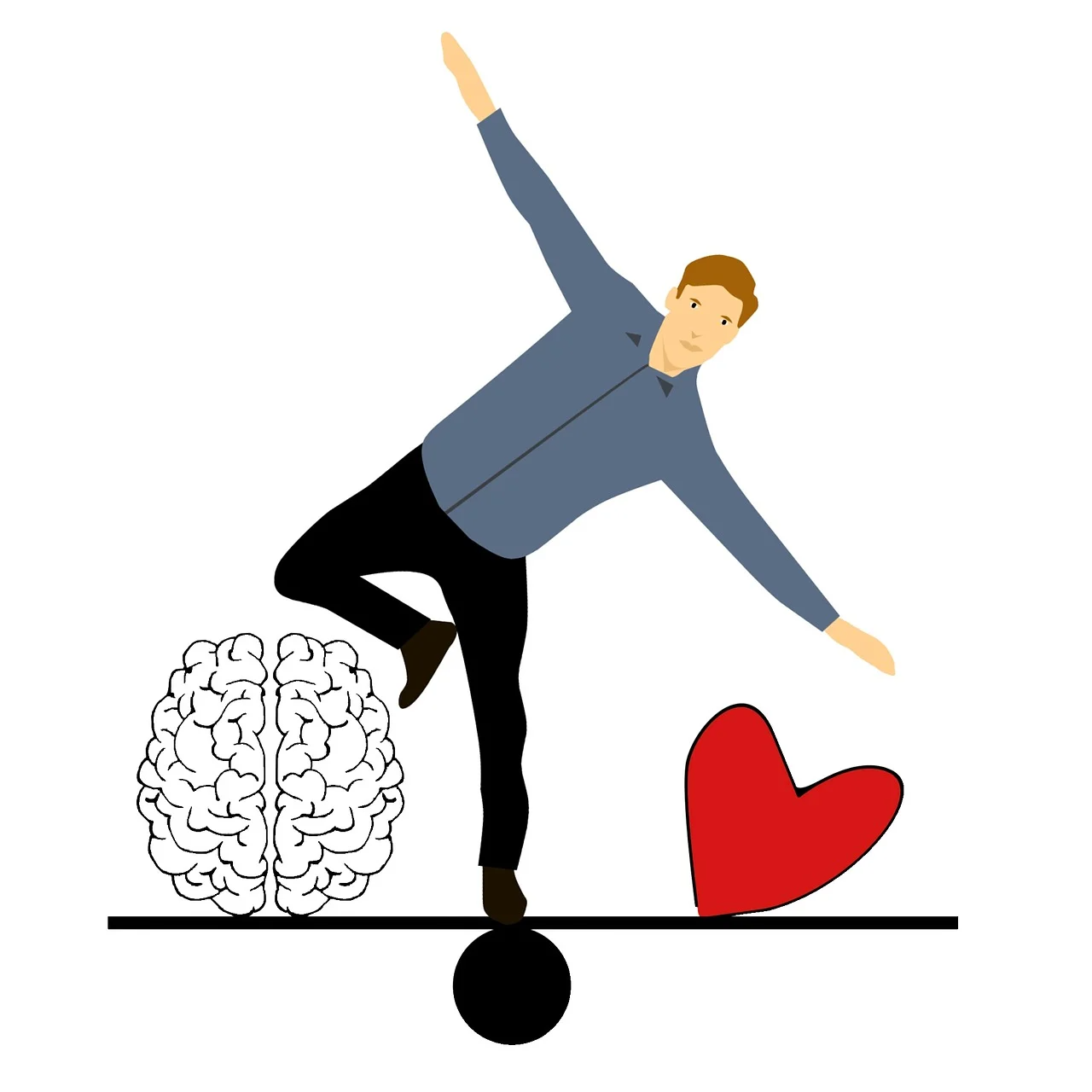
Here is what your body already knows, even when your mind has not caught up: comparison is not only an emotional event. It is a physical one.
When you perceive yourself as falling short, your body responds the way it would to any threat. It activates a stress response, releasing cortisol, the hormone meant for short bursts of danger, not nightly scrolling sessions or slow-simmering envy. Sustained activation of this stress system has been linked to disrupted sleep, lowered immune function, and a harder time regulating mood and appetite over time.[1]
Researchers studying chronic social comparison stress have even found that prolonged exposure can leave the body’s stress-response system unable to return to normal, like an alarm that keeps ringing long after the danger has passed.[2]
The research on social media use specifically is sobering on this point. Frequent social comparison is closely linked to higher rates of anxiety and depression, an effect that is especially pronounced among young women between twelve and twenty-four.[3]
Comparison has also been linked to lower self-esteem and a harder relationship with body image, the very body you are meant to steward, not punish.[4]
In other words, the exhaustion that follows a long scroll, or a long evening of measuring your life against someone else’s, is not weakness. It is your body responding honestly to something it was never designed to carry night after night.
This is precisely why Scripture’s instruction to guard your heart and mind is not only spiritual poetry. It is, quite literally, health counsel.
What God already said about measuring your life against someone else’s
Paul wrote to the Galatians with words that read almost shockingly current:
“Each one should test their own actions. Then they can take pride in themselves alone, without comparing themselves to someone else” (Galatians 6:4, NIV).
Test your own work. Not someone else’s wedding photos. Not someone else’s promotion. Your own. This single instruction quietly dismantles the entire architecture of comparison culture, because comparison only functions when you borrow someone else’s race to measure your own.
Paul says something similar elsewhere, almost as a warning. Those who measure themselves by themselves, and compare themselves among themselves, are not wise (2 Corinthians 10:12). There is a kind of foolishness in handing your sense of worth over to a metric you did not choose and cannot control: someone else’s timeline.
Ellen G. White addresses the same root issue, the suspicion and discontent that grow once comparison and jealousy are given room in the heart:
“Jealousy and suspicion, once allowed a place, will sow themselves broadcast, like thistledown.”
–Testimonies for the Church, vol. 5, p. 58
Thistledown spreads on its own, carried by the smallest breeze, taking root wherever it lands. Comparison behaves the same way. Left unchecked, it does not stay contained to one relationship, one season, or one social media account. It spreads quietly into how you see your whole life.
None of this means ambition is wrong, or that noticing good things happening for others is sinful. Scripture calls you to rejoice with those who rejoice. The danger is not noticing. The danger is measuring.
Understanding the problem and what God already said about it is one thing. What does it actually look like to practice a different way of seeing, starting this week?
Practical ways to retrain your eyes this week

Comparison rarely loosens its grip through willpower alone. It loosens through practice, small, repeated choices that retrain your eyes over time. Try these this week.
- Name it the moment it happens. The next time your chest tightens after seeing someone’s update or hearing someone’s good news, pause and say it plainly, even just in your mind: “This is comparison, not truth about my life.” Naming a thing correctly is the first step to no longer being ruled by it.
- Take one daily comparison fast. Choose a single hour, perhaps the hour after you wake or the hour before you sleep, and keep it free of other people’s highlight reels. Use it instead for prayer, journaling, or simply being present to your own life.
- Write your own actual chapter. At the end of each day this week, write one true sentence about something that happened in your race: your studies, your students, your relationship, your small obligations. Galatians 6:4 calls you to test your own work. You cannot test what you never paused to notice.
- Bring your eyes back to gratitude, deliberately. Gratitude is not a denial of struggle. It is a redirection of attention, away from someone else’s harvest and toward the seeds already growing in your own field.
- Guard your body, not just your spirit. If a particular app, account, or even a recurring conversation consistently leaves you anxious or low, treat that as health information, not just an emotional preference. Muting, unfollowing, or limiting time is not weakness. It is wise stewardship of a body that belongs to God and reacts honestly to what you feed it.
These practices, repeated consistently, do more than manage a bad mood. They retrain the eyes to see your own life clearly again.
Bottomline
You were not created to run their race, the one with the engagement announcement, the early promotion, or the visible ministry platform. You were given your own, with your own obstacles, your own pace, and your own finish line known only to God.
The classmate who seems “ahead” is not actually ahead. She is simply elsewhere, running a course assigned to her, not to you. And you, even in a season that may feel slow, ordinary, or unremarkable, are exactly where you are meant to be in training.
So the next time the scroll starts, or the testimony lands a little too close to a wound, or the family gathering brings out that familiar ache, you have a choice that Scripture prepared you for long before any of these platforms existed. Test your own work. Run your own race. And trust that the One who marked it out for you has never once been comparing you to anyone else.
Citations
- Tomas C, Newton J, Watson S. A review of hypothalamic-pituitary-adrenal axis function in chronic fatigue syndrome. ISRN Neurosci. 2013;2013:784520.
- Mason JW, Giller EL, Kosten TR, Ostroff RB, Podd L. Urinary free-cortisol levels in posttraumatic stress disorder patients. J Nerv Ment Dis. 1986;174:145-149.
- Arenz A, Meier A, Reinecke L. Social Comparison on Social Media and Mental Health: A Scoping Review. Beitr Jahrestag Fachgruppe Rezeptions Wirkungsforsch. 2023:7-40.
- Saiphoo AN, Vahedi Z. A meta-analytic review of the relationship between social media use and body image disturbance. Comput Human Behav. 2019;101:259-275.


