
“Then God came to Balaam and said, “Who are these men with you?”” (Numbers 22:9, NKJV).
Context
By the time we reach Numbers 22, Israel has journeyed through wilderness, rebellion, discipline, and mercy. A new generation now stands poised on the edge of the Promised Land. Their presence alone is enough to unsettle the surrounding nations.
One such ruler is Balak, king of Moab. Watching Israel’s steady advance, he is gripped with fear. Military strength will not be enough, he believes. He needs something spiritual and supernatural. So he sends messengers to a well-known diviner named Balaam, offering payment in exchange for a curse upon Israel.
Balaam is no pagan novice. He speaks of the Lord. He hears from God. He knows enough truth to respond in the language of obedience. Yet when the envoys arrive with rewards in their hands, he does not dismiss them outright. Instead, he invites them to stay the night.
And that is when God comes with a question:
“Who are these men with you?”
As in so many divine questions, this is not for information. It is a revelation. God is not asking because He does not know. He is asking because Balaam needs to know what he is doing.
To expose this creeping compromise and tensions with loyalty to God, we’ll cover:
- Context
- When temptation knocks politely
- “Who are these men with you?”
- The danger of divided loyalty
- Who or what is standing at your door?
- Conclusion
Let’s begin by examining the subtle knock of temptations.
When temptation knocks politely
The men who arrive at Balaam’s door do not come with threats. They come with honour and payment:
“So the elders of Moab and the elders of Midian departed with the diviner’s fee in their hand, and they came to Balaam and spoke to him the words of Balak” (Numbers 22:7, NKJV)
The offer is flattering. Influence. Recognition. Reward. Balaam’s name is respected enough that a king seeks his services.

Here is the subtlety of temptation: it rarely appears openly rebellious. It often comes dressed in opportunity.
Balaam’s first mistake is not agreement. It is accommodation. He invites the men to lodge overnight while he “consults” the Lord. But the moral issue is already clear. God had promised to bless Israel. Why entertain a request to curse what God has blessed?
Before Balaam can finalise anything, God intervenes with a question that pierces the scene.
“Who are these men with you?”
God’s question draws attention to association.
It is not framed as: What are they offering?
Nor: What are you planning to do?
But: Who are these men with you?
Scripture repeatedly underscores the shaping power of influence. Psalm 1 begins with a progression—walking, standing, sitting—with the ungodly. Association precedes alignment.
“Blessed is the man
Who walks not in the counsel of the ungodly,
Nor stands in the path of sinners,
Nor sits in the seat of the scornful;
But his delight is in the law of the Lord,
And in His law he meditates day and night.
He shall be like a tree
Planted by the rivers of water,
That brings forth its fruit in its season,
Whose leaf also shall not wither;
And whatever he does shall prosper.
The ungodly are not so,
But are like the chaff which the wind drives away.
Therefore the ungodly shall not stand in the judgment,
Nor sinners in the congregation of the righteous.
For the Lord knows the way of the righteous,
But the way of the ungodly shall perish” (Psalm 1:1-6, NKJV)
By asking this question, God exposes the first step toward compromise: proximity to what opposes His will.
The issue is not merely hospitality. It is loyalty. These men represent an agenda contrary to God’s declared purpose. Balaam may not yet have agreed to curse Israel, but he has allowed space for the possibility.
The question lingers in the room: Why are they here at all?
As the narrative unfolds, it becomes clear that the greater danger is not external pressure but internal division.
The danger of divided loyalty
Balaam attempts to appear obedient:
“Then Balaam answered and said to the servants of Balak, 'Though Balak were to give me his house full of silver and gold, I could not go beyond the word of the Lord my God, to do less or more.” (Numbers 22:18, NKJV)
His words sound noble. But the story reveals that his heart is not settled. When a second, more prestigious delegation arrives, Balaam again inquires of the Lord—though God’s will had already been made clear (Numbers 22:12).
It is not obedience to pray for what God has made himself clear about. If it is contrary to God’s revealed will, praying about it is not a demonstration of obedience, but rebellion.
The New Testament later interprets Balaam’s path with sobering clarity:
“Woe to them! For they have gone in the way of Cain, have run greedily in the error of Balaam for profit, and perished in the rebellion of Korah” (Jude 11, NKJV)
Even Peter had some warnings to give while referring to this account:
“They have forsaken the right way and gone astray, following the way of Balaam the son of Beor, who loved the wages of unrighteousness” (2 Peter 2:15, NKJV)
Balaam wanted both obedience and reward. He wanted to serve God without forfeiting advantage. But divided loyalty is unstable ground.
God’s question in verse 9 was merciful. It was preventive. It was an opportunity for Balaam to examine his motives before desire hardened into deception.
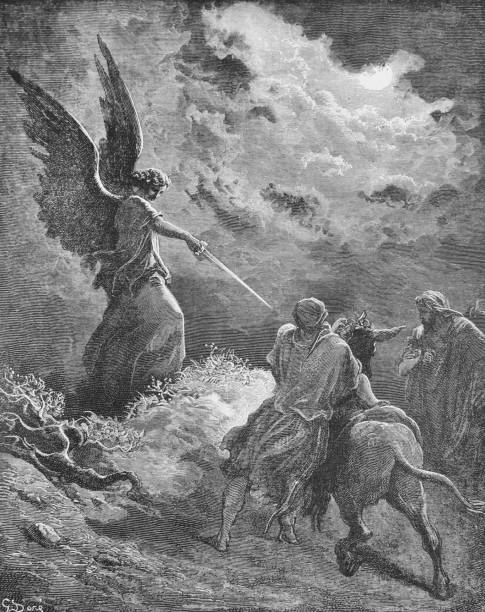
Yet Balaam presses forward, and the story moves toward greater tension, including the unforgettable encounter with a speaking donkey and a drawn sword (Numbers 22:22–35).
The question God asked at the beginning echoes throughout: Who are these men with you?
And this question comes our way too.
Who or what is standing at your door?
Balaam’s story is not merely about ancient prophecy or royal intrigue. It is about the quiet negotiations of the heart.
Temptation does not always demand immediate betrayal. Sometimes it simply asks to stay the night.
Who or what are we allowing close enough to influence our thinking? What voices are we entertaining under the guise of consideration? What invitations do we justify because they appear profitable, respectable, or harmless?
God’s question is not accusatory. It is protective. He confronts early, before compromise becomes collapse.
The men at Balaam’s door represented more than a political request. They represented an alternative allegiance.
And that is always the real issue.
Conclusion
“Who are these men with you?” It is a question about influence. About proximity. About loyalty.
We may not face kings offering silver and gold, but we face quieter offers—status, security, advancement, acceptance. We tell ourselves we are only listening, only considering, only praying about it.
But sometimes the holiest response is refusal at the door.
God’s question to Balaam reaches into every generation:
- What influences are you entertaining?
- What compromises are you rationalising?
- Who stands close enough to shape your decisions?
Before actions unfold and consequences follow, God speaks gently into the night:
“Who are these men with you?”
It is a question meant to guard the heart and to call us back to undivided loyalty before the path turns dangerous.
To learn more about the power of influence and association, read Choosing Friends: Why You Must Get it Right as You Age.


One thought on “Questions God Asks #17: Who Are These Men With You?”