
“Therefore we also, since we are surrounded by so great a cloud of witnesses…” (Hebrews 12:1, NKJV).
When many readers encounter the phrase “the cloud of witnesses”, the imagination often drifts toward a stadium scene. We think of crowds cheering, banners waving, applause erupting as runners surge toward the finish line. It is an attractive image, comforting even. We like the idea of encouragement from the sidelines.

But Hebrews is doing something far richer—and far more demanding—than describing spiritual spectators.
If the cloud of witnesses were merely fans, what then of those who never finished first? What of those who endured hardship, loss, delay, rejection, and even death, without ever seeing the fulfilment of God’s promises in their lifetime? Such may attract no applause.
The answer lies in the context. As Carson puts it:
“A text without a context is a pretext for whatever you want it to mean.” —Don A. Carson
Hebrews 12 does not stand alone. It rises directly out of Hebrews 11—the great catalogue of men and women who ran the race of faith with endurance, often without applause, recognition, or visible success.
The “cloud of witnesses” are not spectators of your race. They are forerunners who have already run theirs.
Let’s start by understanding the content of our text.
Context Matters: Hebrews 11 Sets the Scene
Hebrews 12 begins with the word “Therefore.” That single word anchors everything that follows to what came before. And what came before is Hebrews 11, the chapter often called the “Hall of Faith.”
But Hebrews 11 is not a celebration of winners standing on podiums. It is a testimony of endurance under pressure.

Consider the list:
- Abel worshipped faithfully and was murdered.
- Noah obeyed God in isolation and ridicule.
- Abraham lived as a stranger, never fully inheriting what was promised.
- Moses chose reproach over privilege.
- Others “were tortured… mocked… imprisoned… destitute… afflicted” (Hebrews 11:35–37, NKJV).
The chapter concludes with a startling summary:
“And all these, having obtained a good testimony through faith, did not receive the promise” (Hebrews 11:39, NKJV).
These were not people who “won” by earthly standards. But they were people who endured.
Understanding the context reshapes the imagery entirely. Once Hebrews 11 reframes success as endurance rather than triumph, the phrase “cloud of witnesses” begins to take on a deeper, more demanding meaning.
What Does “Witnesses” Really Mean?
The Greek word behind “witnesses” (marturon) does not primarily mean spectators. It means testifiers—those whose lives bear witness to something true.
The cloud of witnesses does not shout encouragement from the stands; they speak through their stories. Their testimony is preserved on the track, not on the touchline or the stands.
Their lives testify that:
- God is faithful even when outcomes are delayed.
- Obedience matters even when results are invisible.
- Endurance is possible even when strength feels spent.
Their testimony answers the unspoken question every runner eventually asks:
“Is it worth continuing?”
The answer, echoing from generation to generation, is yes.
If the witnesses testify through their lives rather than their applause, then their relevance becomes intensely personal. Their stories do not merely inform us; they confront our own moments of weariness and doubt.
You Are Not the First to Feel What You Feel
One of the greatest dangers in seasons of transition, delay, or difficulty is the isolation of perspective. We begin to believe our struggle is unique, our fatigue exceptional, our discouragement unusual.
The cloud of witnesses corrects that illusion.
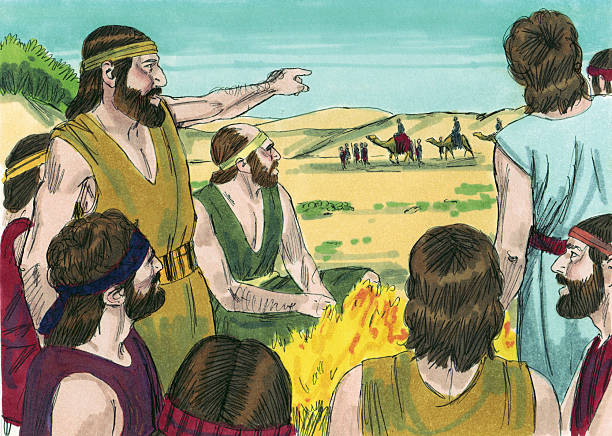
- Abraham waited decades for a promise.
- Joseph endured betrayal, injustice, and years of obscurity.
- David waited through long seasons of displacement before kingship.
- Jeremiah preached faithfully with little visible response.
- The prophets suffered rejection.
If you are tired, confused, waiting, misunderstood, or tempted to step off the track, you are not alone. Furthermore, you are in good company.
Recognising this shared human experience leads to a vital shift:
Endurance is no longer about isolation or heroism, but about belonging to a long, faithful line of runners.
Tweet
Witnesses, Not Winners
Hebrews never claims that these men and women finished first. It claims that they finished faithful.
That distinction matters.
While modern culture celebrates visibility, speed, applause, and rankings, scripture celebrates faithfulness. The cloud of witnesses teaches us that the race of endurance is not about outperforming others; it is about remaining loyal to God through the distance assigned to you.
Some ran fast, others ran slowly. Some stumbled, others bled. And some even died before the finish line came into view.
Yet Scripture records them all as witnesses.
This distinction exposes a tension between biblical faith and modern definitions of success, one that forces us to reconsider what it truly means to finish well.
Their Lives Remove Our Excuses
The presence of witnesses is both comforting and confronting.
Comforting, because they show us endurance is possible.
Confronting, because they remove our excuses.
They endured without:
- Modern conveniences
- Clear timelines
- Complete revelation
- Immediate feedback
- Guaranteed outcomes
And yet Hebrews declares:
“God having provided something better for us, that they should not be made perfect apart from us” (Hebrews 11:40, NKJV).
If they endured with partial light, how much more can we endure with fuller understanding?
Yet Scripture does not leave us merely challenged; it directs us beyond the witnesses themselves to the ultimate source of endurance.
The Cloud Does Not Replace Christ
It is crucial to notice that Hebrews 12 does not end with the witnesses.
It moves us forward:
“…let us run with endurance the race that is set before us, looking unto Jesus, the author and finisher of our faith” (Hebrews 12:1-2, NKJV).
The witnesses testify. Jesus sustains.
The witnesses show what endurance looks like. Jesus provides the power to endure.
They ran their races looking forward. We run ours looking back to a completed cross and an empty tomb.
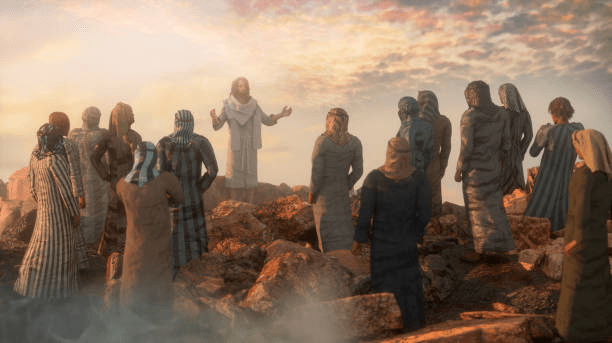
With Christ as our focus and the witnesses as our reassurance, the race becomes both possible and meaningful, even when the path feels long.
What the Cloud Says to You Today
If the cloud of witnesses could speak in one collective voice, their message might sound something like this:
- “Keep going. We were tired too.”
- “Trust God. We didn’t see everything either.”
- “Let go of the weights. They slowed us down.”
- “Faithfulness matters more than speed.”
- “The finish is worth it, even if you can’t see it yet.”
- “Cheer up! You’re in good company.”
They do not urge you to run harder than God requires. They urge you to run steadily.
These testimonies do more than comfort us; they reposition our understanding of progress, community, and faithfulness.
Running in Continuity, Not Competition
The race of endurance is not a solo event. It is a relay across generations. Faith is passed forward not by perfection, but by perseverance.
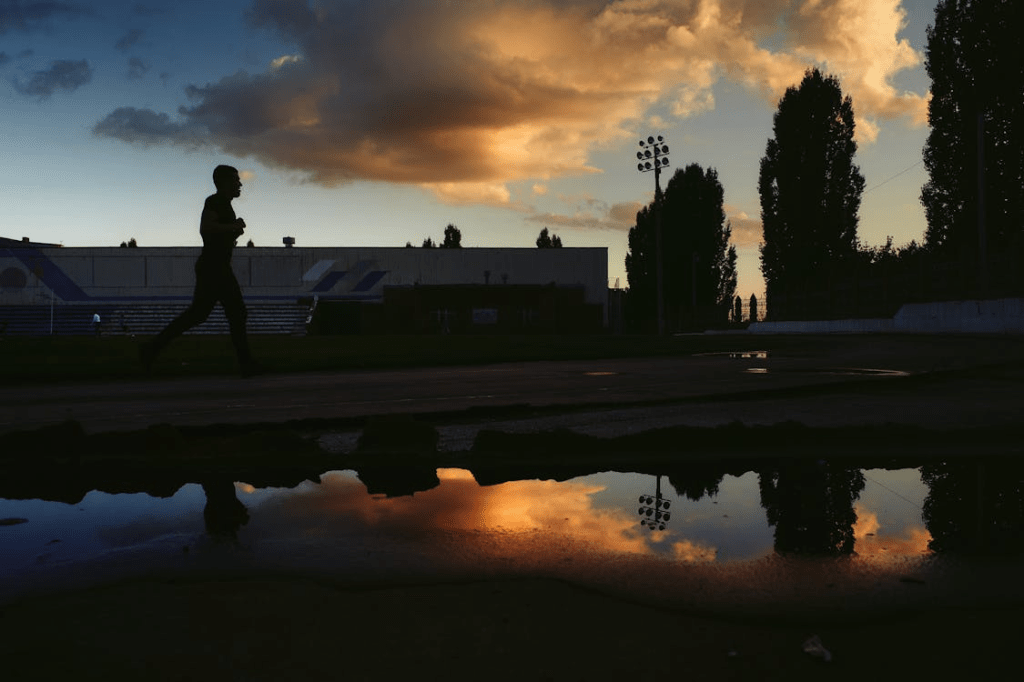
As relay runners do so in teams, we also receive the baton to pass to the next racer, even with more precision. And yet, our pace, even if it is like that of a marathon runner, brings no interference as long as we faithfully pass the baton to the next waiting team member.
When you choose to keep running:
- You join the story
- You strengthen the testimony
- You become part of the cloud for those who come after you
Your endurance today becomes someone else’s encouragement tomorrow.
Seen this way, endurance becomes generational, quietly shaping lives beyond our own and extending the witness of faith into the future.
A Quiet but Powerful Assurance
Perhaps the most comforting truth in Hebrews 12 is this:
“You are not being evaluated by spectators; you are being surrounded by witnesses.”
Tweet
They do not mock your pace. They do not shame your struggle. They simply testify: “We ran too. And God was faithful.”
You’re in Good Company
If you are standing on the track today—hesitant, weary, uncertain—Hebrews offers a gentle but firm encouragement.
You are not alone, late, strange, or forgotten.
You are surrounded by a cloud of witnesses—men and women who dared to run with endurance before you. Their lives testify that faith can survive waiting, suffering, uncertainty, and delay.
So lay aside every weight, fix your eyes on Jesus, and run.
You are in very good company if you choose to run the race of endurance.

 The Cleaver
Be a witness for Christ.
LikeLiked by 2 people
Amen
LikeLike