
We are all in a race. Yet, just like in athletics, many start, but some give up and run off the track along the way before reaching the finish line. Doesn’t it pay then to run with endurance?
The Bible makes it clear:
“Therefore we also, since we are surrounded by so great a cloud of witnesses, let us lay aside every weight, and the sin which so easily ensnares us, and let us run with endurance the race that is set before us, looking unto Jesus, the author and finisher of our faith, who for the joy that was set before Him endured the cross, despising the shame, and has sat down at the right hand of the throne of God” (Hebrews 12:1-2, NKJV)
Life is not a straight sprint; it is an uneven, unpredictable race. Some seasons feel like smooth tracks where momentum comes easily. Other seasons wind through valleys, switchbacks, and uphill climbs where progress is slow and strength feels thin.
Many of us begin with enthusiasm, only to discover that partway through the journey, the pressure of transition, disappointment, or waiting wears down the resolve we once had.
Hebrews 12:1–2 speaks directly to people living in the “middle miles”—people who are still running, but tired; committed, but stretched; hopeful, but tested. It not only provides comfort but also offers a strategy for capacity-building. It is a call to develop resilience rooted not merely in self-improvement but in a God-anchored perspective.
This passage invites us to see life through the metaphor of a race. And like any athlete knows, succeeding in a long-distance race requires more than speed. It demands endurance; a cultivated, intentional, trained resilience that sustains us to the finish.
Let’s explore how this text helps us run well, starting with the cloud of witnesses.
You are not running alone
Hebrews opens this chapter with a reminder: “we are surrounded by so great a cloud of witnesses.”
In context, this refers to the faithful men and women of Hebrews 11. The faithful like Abraham, Moses, Rahab, Joseph, and many others who held onto God’s promises through circumstances far more uncertain than most of us will ever face.

The picture is not of spectators judging our performance, but of examples whose lives testify to the possibility of endurance. They show us that people with flaws, doubts, and failures can still finish well. Their stories teach a crucial truth:
“Perseverance is cultivated over time, not downloaded in a moment.”
Tweet
In seasons of transition—changing careers, relocating, stepping into new roles, navigating relational upheavals—isolation can distort our thinking. We begin to believe others are advancing while we are stalling; that others are strong while we are weak. The Bible counters that lie: you are part of a long line of runners who made it through uncertainty because God sustained them. Their journey is proof that yours is not impossible.
And as you run, there is every benefit of letting go of unnecessary weights.
Letting go is a growth strategy
The writer then turns practical:
“Let us lay aside every weight, and the sin which so easily ensnares us…”
Runners do not show up to a marathon wearing backpacks and boots. They strip down to essentials. Not everything is sin, but anything can become an “additional weight”.
Ellen White puts it even clearer:
“The path to eternal life is steep and rugged. Take no additional weights to retard your progress.” —Adventist Home. p.67
Weights may include:
• Unhealthy comparisons
• Unrealistic expectations
• Guilt over past decisions
• The pressure to meet everyone’s demands
• Commitments that drain more than they develop
• Fear of disappointing others
• Compulsive busyness
• Anything that consumes energy but gives no strength
One of the greatest capacity-builders in life is the discipline of subtraction:
Growth does not come only from adding skills, taking courses, or expanding responsibilities. Sometimes real growth comes from learning to let go of what is unnecessary so that the essential work can be done with clarity and focus.
Tweet
Then there is “the sin that easily ensnares.” Temptation rarely arrives with a warning bell. It “easily” entangles—quietly, subtly, gradually. For some, it is resentment; for others, pride; for others, self-reliance disguised as competence. Sin drains endurance because it divides our loyalty, saps our emotional energy, and obscures our vision.
And the worst of it all, everything gained by sin is seasonal. It can never prepare us for the endurance life demands from us.
The call to lay aside is not punitive. It is an invitation to freedom. God is not asking us to carry less so that He can burden us with guilt; He asks us to carry less so that we can run better.
Endurance is not passive; it is trained
“Let us run with endurance the race that is set before us…”
Endurance in Scripture is not merely surviving hardship. It is the capacity to remain faithful, focused, and steady under pressure. It is a trained strength—like a muscle built through repeated challenge.
Transitions often test endurance in ways we did not anticipate. Waiting for results, waiting for clarity, waiting for healing, waiting for breakthrough—this is the terrain where patience thins and hope feels costly.
But Scripture teaches that endurance is forged precisely in these moments.
“...we also glory in tribulations, knowing that tribulation produces perseverance; and perseverance, character; and character, hope” (Romans 5:3-4, NKJV).
Trials do not merely reveal our capacity; they expand it.
Your present challenge is not just a setback to overcome. It is a gymnasium for your soul. The pressure you feel is not evidence of your weakness but an indication that your strength is being developed.
Let’s now explore the importance of the direction of our eyes as we run the race of life.
The direction of your eyes determines the condition of your heart

The core of Hebrews 12:1-2 lies in a single phrase: “looking unto Jesus, the author and finisher of our faith.”
This is the decisive shift. Endurance is not maintained by staring at the track, the obstacles, or even the finish line itself. It is sustained by fixing our gaze on Jesus, who began our faith and promises to bring it to completion.
When transitions feel disorienting, where you look determines how you run.
Looking to Jesus brings clarity:
• He endured misunderstanding, so that you can endure seasons where you feel unseen.
• He endured betrayal so that you can endure relational disappointments.
• He endured suffering so that you can face hardship with hope.
• He endured the cross “for the joy set before Him” so that you can remember that present pain does not erase future joy.
• He “sat down at the right hand of God” so that you can trust the One who finished His race will help you finish yours.
Looking to Jesus is not passive contemplation; it is an intentional reorientation of the heart. It means interpreting your circumstances through His character rather than interpreting His character through your circumstances.
And while at it, don’t forget that joy is part of endurance.
Joy is part of endurance
Jesus endured the cross “for the joy that was set before Him.”
Joy was not the absence of difficulty. Instead, it was the certainty of purpose. He could face the cross because He saw beyond it.
Likewise, your endurance is strengthened when you understand why you are running. People crumble not because the race is too long but because they lose sight of its meaning.
Ask yourself:
• What is God forming in me through this season?
• What has He placed before me that is worth persevering for?
• What character, what calling, what future impact lies on the other side of this struggle?
Joy is not naïve positivity. It is the settled conviction that God is at work in ways not yet visible but certain.
And the finish line is worth every effort.
The finish line is real and worth it
The text concludes this section by reminding us that Jesus now sits at the right hand of God—the place of authority, completion, and triumph. He finished His race. This is not merely theological information; it is a promise.
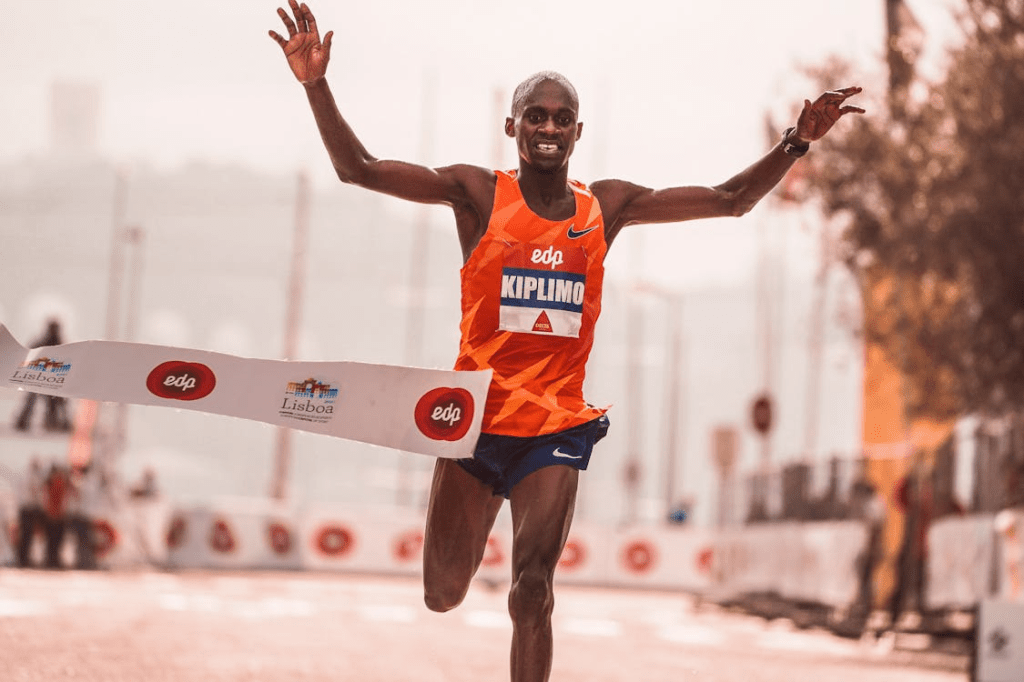
If Christ finished, those who look to Him will finish also.
If He endured, He can empower you to endure.
If He is seated in victory, your story will not end in defeat.
Life transitions may obscure the path, but they cannot erase the finish line. The God who sets the race also sustains the runner.
Keep running
You are in a race, not against people, not against time, but toward purpose.
The difficulty of the middle miles does not mean you have failed; it means you are being formed. You are surrounded by witnesses, strengthened by the Spirit, and invited to shed every weight that keeps you from running freely.
Fix your eyes on Jesus. Let Him define your pace, your direction, and your hope. The One who authored your faith will not abandon it mid-story. He is the finisher—and He will see you through the transitions, the uncertainties, and the long stretches where progress feels slow.
Keep running. Keep trusting. The finish line is ahead, and it is worth every step.

 The Cleaver
Thanks always senior for the wonderful messages…They give me hope daily
Would you mind one day compiling everything into a published book …It can be the best seller ☺️ and invite us on the day of it’s launch!
LikeLiked by 1 person
Thanks Engineer…
Something is cooking, we’re waiting for it.
LikeLike
Praying for the best then
LikeLike
Thanks. Amen
LikeLiked by 1 person
Really enriching and motivating. Thank you brother for this piece it’s worthy reading. Let’s keep the focus.🙏
LikeLiked by 1 person
Amen… Let’s run with endurance… The race that is before us …
LikeLike