Consistency is appreciated at work, in human relationships, and in the way we handle issues. Yet it is essential to note that consistency only means something when it is positive and adds value.
Consistency on the negative side can be interpreted as rigidity and being opposed to growth. And unfortunately, this looks more like the household attitude of fallen human nature.

In this instalment of “The Question God Asks, God confronts a people who are consistent, but only in disobedience and distrust.
To explore this question, we’ll cover:
- Context
- God’s commandments before Sinai
- The struggle between provision and trust
- “How long?” The patience of God
- Obedience as freedom, not burden
- How long do you want to walk the path of rebellion?
Context
“And the Lord said to Moses, ‘How long do you refuse to keep My commandments and My laws?’” (Exodus 16:28, NKJV).
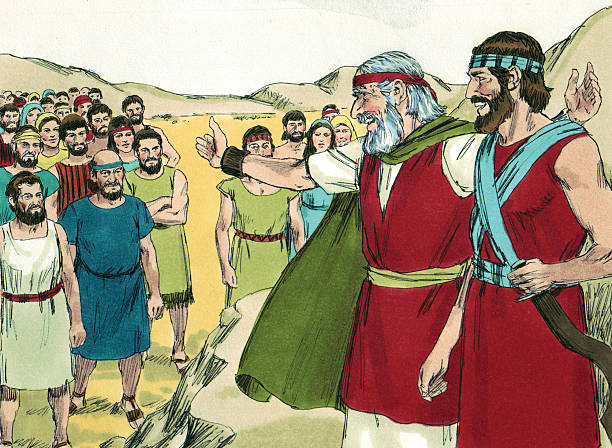
After demonstrating His power in their miraculous deliverance from Egypt, the children of Israel were still struggling to trust God. When they were caught in the mountain fastness with the Egyptian army pursuing them, God simply said, “Go forward,” and when Moses stretched the Lord’s rod, the sea parted.
This was to be a lesson that God can be trusted. Unfortunately, like all fallen men and women, they were slow to learn and ready to forget it.
At Marah, when the waters were bitter, the Bible records, “And the people murmured against Moses, saying, What shall we drink?” (Exodus 15:24, KJV).
In the wilderness of Sin, when they craved the flesh pots of Egypt, the Bible records, “And the whole congregation of the children of Israel murmured against Moses and Aaron in the wilderness: And the children of Israel said unto them, Would to God we had died by the hand of the Lord in the land of Egypt, when we sat by the flesh pots, and when we did eat bread to the full; for ye have brought us forth into this wilderness, to kill this whole assembly with hunger.” (Exodus 16:2-3, KJV).
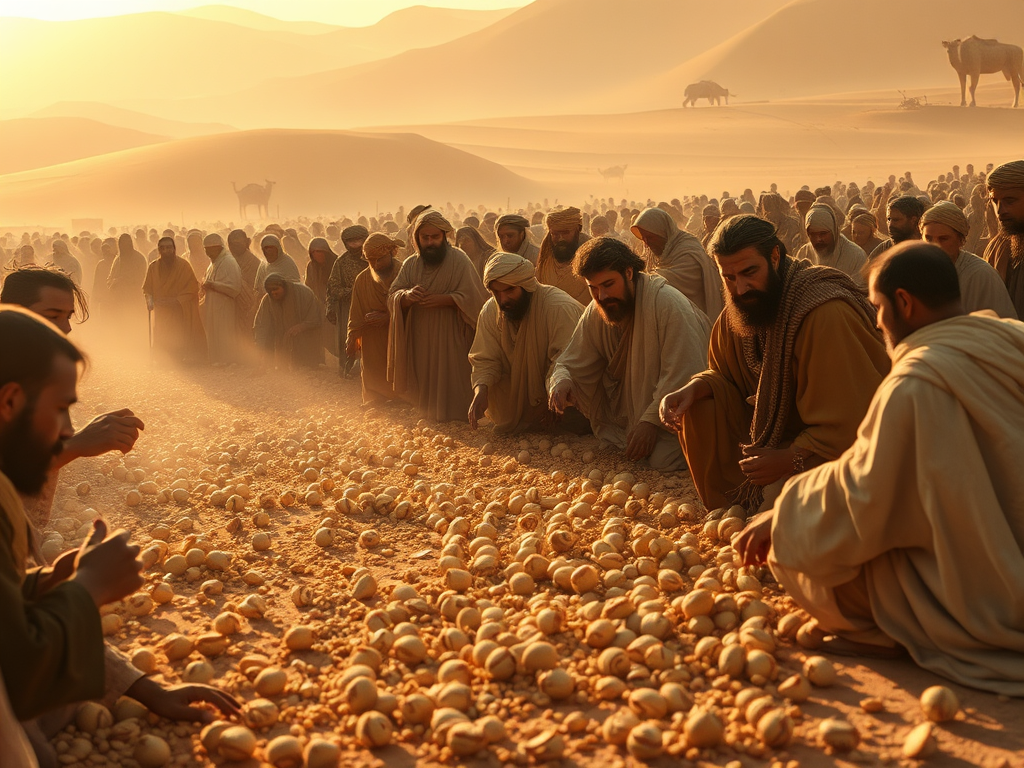
God responded to their murmuring by providing quails and bread from heaven (which the Israelites called manna) (Exodus 16:15). It was a daily miracle, a visible token of His care and faithfulness. But even in the face of such abundant provision, Israel struggled with trust and obedience.
The instruction regarding the daily provision of manna was quite explicit
“Let every man gather it according to each one’s need, one omer for each person, according to the number of persons; let every man take for those who are in his tent” (Exodus 16:16, NKJV).
But did they follow?
“And Moses said, 'Let no one leave any of it till morning.” Notwithstanding, they did not heed Moses. But some of them left part of it until morning, and it bred worms and stank. And Moses was angry with them” (Exodus 16:19-20, NKJV).
On Friday, the Israelites gathered twice as much bread as everyone’s daily need. This they did in anticipation of the Sabbath rest, and Moses affirmed it when the rulers of the congregation enquired of him (Exodus 16:22-26).
After this explicit instruction, problems arose:
“Now it happened that some of the people went out on the seventh day to gather, but they found none. And the Lord said to Moses, “How long do you refuse to keep My commandments and My laws? See! For the Lord has given you the Sabbath; therefore He gives you on the sixth day bread for two days. Let every man remain in his place; let no man go out of his place on the seventh day”(Exodus 16:27-29, NKJV).
When some went out on the Sabbath to gather manna—against God’s clear command—He asked a piercing question: “How long do you refuse to keep My commandments and My laws?”
This was more than frustration over food. It was a question about loyalty, trust, and covenant. God was shaping a people to walk in His ways, but their hearts resisted.
God’s commandments before Sinai
It is striking that God uses the words “commandments and laws” even before the Ten Commandments are given at Sinai in Exodus 20.
This shows that God’s law was not an invention at Sinai. It was a reflection of His eternal character, known and binding from creation itself.
- The Sabbath, established at creation (Genesis 2:1–3), was already recognized as holy.
- God’s words here reveal that Israel’s disobedience was not about mere ritual, but about relationship. To disregard His word was to distrust His care.
Ellen White comments:
“God requires that His holy day be as sacredly observed now as in the time of Israel. The command given to the Hebrews should be regarded by all Christians as an injunction from Jehovah to them. The day before the Sabbath should be made a day of preparation, that everything may be in readiness for its sacred hours. In no case should our own business be allowed to encroach upon holy time. God has directed that the sick and suffering be cared for; the labor required to make them comfortable is a work of mercy, and no violation of the Sabbath; but all unnecessary work should be avoided. Many carelessly put off till the beginning of the Sabbath little things that might have been done on the day of preparation. This should not be. Work that is neglected until the beginning of the Sabbath should remain undone until it is past. This course might help the memory of these thoughtless ones, and make them careful to do their own work on the six working days.” —Patriarchs and Prophets, p. 296
God’s question presses into the heart of the matter: “How long will you test Me, by treating My word as optional?”
The struggle between provision and trust
Israel’s disobedience was not simply a scheduling mistake. It revealed a deeper struggle.
- They feared there might not be enough food.
- They tried to secure themselves beyond God’s instruction.
- They relied on their own planning instead of His promise.
Obedience, in this case, was not about restriction but about trust. By resting on the seventh day, Israel declared that God’s word was enough, His provision sufficient, His promises reliable.
The same struggle is ours. How often do we resist God’s commands because we fear He will not provide if we obey?
“How long?” The patience of God
God’s question contains both sorrow and patience: “How long do you refuse to keep My commandments and My laws?”
This is not a first offense. It is a repeated pattern. God’s “How long?” echoes through Scripture:
- “How long will you falter between two opinions?” (1 Kings 18:21)
- “How long shall I bear with this evil congregation?” (Numbers 14:27)
- “How long, O you sons of men, will you turn my glory to shame?” (Psalm 4:2)
Each time, God appeals not only to the mind but to the heart. He longs for a people who obey not reluctantly, but joyfully.
Obedience as freedom, not burden
God’s law is not given to crush, but to free. Israel was not being asked to earn salvation, but to trust the God who had already saved them from Egypt. It is a mistake to try keeping God’s law before accepting His salvific offer.

As Jesus would later say:
“If you love Me, keep My commandments” (John 14:15, NKJV).
Obedience is not legalism when it flows from love. It is the natural response of redeemed people to a faithful God.
How long do you want to walk the path of rebellion?
God’s question still echoes: “How long do you refuse to keep My commandments and My laws?” In our lives today, it takes many shapes:
- How long will we doubt His provision?
- How long will we delay obedience?
- How long will we treat His word as optional rather than life-giving?
At the Red Sea, God said, “Go forward.” In the wilderness, He said, “Rest.” Both were calls to trust Him.
The question is not whether God will provide; He has already shown Himself faithful. The question is whether we will believe His word enough to walk in it.
When we do, obedience ceases to be a burden and becomes a declaration of freedom:
We trust the God who saves.

 The Cleaver
What a beautiful message of both caution and encouragement: how long will you refuse to obey? This shows God’s great longsuffering, patiently waiting for us to return to Him.
LikeLiked by 1 person
O yes… how long are we going to kick against the pricks? The sooner we submit the better
LikeLike