There are times when we feel ready for specific tasks and assignments, especially those that align with our training or profession. And there are times when what comes our way feels so out of place with our prior training or qualifications.
Unfortunately, in most cases, our training does not align with God’s purpose for our lives. In such cases, through training, we often get disqualified for our God-ordained purpose.
Yet, amidst all this, God doesn’t give up on us. He orchestrates circumstances that qualify us to be used to achieve our greater life’s purpose through His providence. It could come through opportunities to unlearn and relearn, calling us to face our fears, or assigning us duties we feel unqualified for, where we can only succeed by relying on Him.
Moses is in that space, and God’s presence makes all the difference.
We’ll cover:
- Context
- Excuses at the Burning Bush
- The God Who Formed Our Frailty
- Trusting the Voice That Calls
- From Resistance to Reliance
- It Is All in God’s Hands
Context
“So the Lord said to him, ‘Who has made man’s mouth? Or who makes the mute, the deaf, the seeing, or the blind? Have not I, the Lord?’”
(Exodus 4:11, NKJV)
Moses had run out of arguments—or so it seemed.
Standing before the burning bush, he had already protested God’s call on multiple fronts:
Who am I to go?
What will I say?
What if they don’t believe me?
Now he raises one more objection:
“O my Lord, I am not eloquent... I am slow of speech and slow of tongue.” (v. 10)
And in response, God does not give Moses a pep talk. He does not promise to improve his speaking skills. He asks a question:
“Who has made man’s mouth?”
It is not merely rhetorical. It is theological.
This twelfth question in our ‘Questions God Asks‘ series brings us face-to-face with the tension between human weakness and divine calling—and invites us to believe that our limitations do not hinder God’s sufficiency.
Excuses at the Burning Bush
Moses’ hesitation is familiar. God’s call often meets us at the intersection of our deepest fears and greatest inadequacies. For Moses, it was his speech—some scholars suggest a stutter, others a general lack of rhetorical polish in the Egyptian language. Either way, he felt unqualified.
But God’s call doesn’t wait for us to feel ready. It meets us as we are. God seemed to be asking Moses, “Are you looking at your weakness, or My power?” When we focus on ourselves, we will always find a reason to excuse ourselves from divine assignments.
Moses focused on his mouth. God shifts the focus to the One who made it. “Who has made man’s mouth?” God now asks.
God is not offended by Moses’ struggle. He’s offended by the implication that human limitations can override divine commissioning.
Could it be that there were some realities Moses did not want to confront? He left Egypt a murderer, and maybe he was still afraid of his life…Or something else. But he chose to focus on what he could not do anything about: his speech.
The God Who Formed Our Frailty
The question reaches back to creation: Who made man’s mouth?
This is the language of Genesis. The God who formed Adam from the dust is the One who gives speech, hearing, and sight. But the second half of the question adds complexity:
“Or who makes the mute, the deaf, the seeing, or the blind?”
This verse has puzzled some. Is God claiming responsibility for disability and brokenness? Not in a deterministic or cruel sense. Instead, God affirms that He is sovereign, even over what we perceive as weakness.
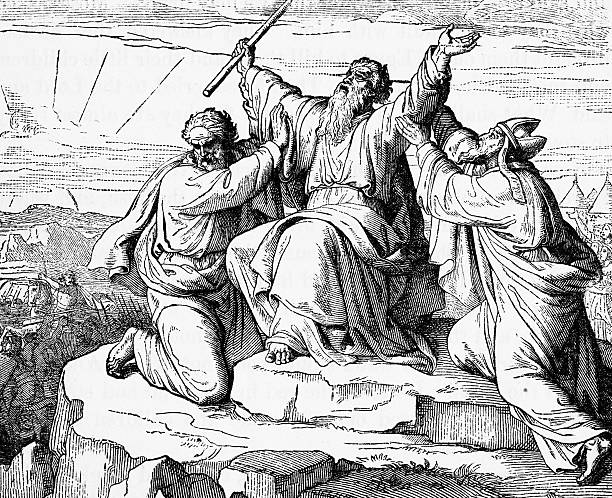
In a fallen world, brokenness exists—but even there, God is not absent.
He works not only despite our limitations, but often through them.
As the Lord would later tell Paul, “My grace is sufficient for you, for My strength is made perfect in weakness” (2 Corinthians 12:9, NKJV), and Paul thus testifies, “Therefore most gladly I will rather boast in my infirmities, that the power of Christ may rest upon me.”
In those moments we feel inadequate, or pressed to the very end of our abilities, we should remember that, “…man’s extremity is God’s opportunity” (The Acts of the Apostles, p.145).
Trusting the Voice That Calls
At the heart of this question is a challenge: Will you trust the One who formed you?

God does not deny Moses’ limitations in speech. He simply declares that they are not an obstacle to His plan. Because the call does not depend on the instrument, but on the One who wields it.
And then God makes a promise:
“Now therefore, go, and I will be with your mouth and teach you what you shall say” (Exodus 4:12, NKJV).
This is grace: God not only calls, He equips.
As Ellen White wrote:
“It is not the capabilities you now possess or ever will have that will give you success. It is what the Lord can do for you. We need to have far less confidence in what man can do and far more confidence in what God can do for every believing soul. He longs to have you reach after Him by faith. He longs to have you expect great things from Him. He longs to give you understanding in temporal as well as in spiritual matters.”
—Christ’s Object Lessons, p. 146
God does not need a polished speaker. He needs a willing servant.
From Resistance to Reliance
Despite this divine assurance, Moses still pleads: “Please send someone else.” (v. 13)
God’s anger is kindled, not because Moses is weak, but because he refuses to trust in Him.
“Weakness is never a barrier with God. Unwillingness is.”
Tweet
Even so, God provides Aaron as a helper. Grace meets failure once again.
Moses would go on to speak—not with perfect words, but with power. The man who claimed he couldn’t speak well became the voice through which the law, the plagues, the covenant, and the name of God were declared.
This is the pattern:
God calls, we resist, God questions, we wrestle, God sends anyway.
It Is All in God’s Hands
God’s question to Moses is still His question to us: “Who made man’s mouth?”
- Who made your voice?
- Who shaped your story?
- Who knows the limits of your strength—and the depths of His own?
The real issue is not ability but trust. Not polish, but surrender.
So ask yourself:
- What excuses have I made for resisting God’s call?
- Have I limited God to what I think I can do?
- Will I trust the One who formed me to also speak through me?
The One who made your mouth will fill it.
The One who gave you life will provide you with words.
And the One who calls you will never send you alone.
When God calls you to do an assignment, look not for excuses, for you will always find one, and the enemy will multiply them. Instead, look to Him who created you. The one who has chosen the foolish things of the world to put to shame the wise. The one who has chosen the weak things of the world to put to shame the things which are mighty.

 The Cleaver
Wow very profound and encouraging. God does not call the qualified, He qualifies the Called. Praise God!
LikeLiked by 1 person
Amen… Just as I am, without one plea…
LikeLike