When someone asks a question about what we have, we become disturbed. Are they keen on weighing us to see where to put us, or even know how much respect we deserve?
While it can be an opportunity to brag, when we have grabbed some gusto, it almost looks like a mockery or exposure when what we objectively have is something we dare not place on the table or identify with.
However, as we will see here, the situation changes when God is the one asking the question. His blessings make all the difference in whatever we have in our hands—be it Goliath’s sword or the little boy’s lunch.
Let’s learn this in God’s dealings with Moses on Mount Sinai.
We’ll cover:
- Context
- The Rod of Routine
- When the Ordinary Becomes Instrumental
- The God Who Uses What We Yield
- So, What Is in Your Hand?
Context
“So the Lord said to him, “What is that in your hand?” He said, “A rod.”
(Exodus 4:2, NKJV).
When the time came when God wanted to save the children of Israel from their bondage in Egypt, he appeared to Moses in Horeb. After giving Moses instructions that he was the one He wanted to employ in this huge assignment, Moses began a series of questions, doubting his suitability for the assignment at hand.
Moses had many questions.
Who am I to go to Pharaoh?
What if they don’t believe me?
What if I can’t speak well?
But then, God asks a question of His own. Moses was doing well in asking questions. God decided to meet him on his own ground.
“What is that in your hand?”
Even if he wanted to brag, there was nothing really to brag about. He had dispensed with wealth and glory that Egypt had promised, and chose the path of affliction with God’s people. Apart from his wife and two sons, he only had his shepherd’s staff. That was his net worth!
A shepherd’s staff. Nothing more. A symbol of ordinary life in the wilderness. Yet in that moment, it becomes the key to Moses’ calling, not because of its power, but because of the One who asks the question.
God asked Moses to cast it on the ground, and it became a serpent, and he fled. But when he reached and caught it by the tail, as instructed by the Lord, it became a rod in his hand. He had used it as a rod for forty years in Midian, but now God had another assignment for him. The very rod he had gained experience in using to shepherd Jethro Reuel’s flock was now to be used to shepherd God’s people and perform signs and wonders before Pharaoh.
In this eleventh entry of Questions God Asks, we consider what it means for God to call us not in our strength, but in our weakness; not with what we wish we had, but with what’s already in our hands.
The Rod of Routine
At this point in the story, Moses has been in Midian for forty years. The man who once lived in Pharaoh’s palace is now tending sheep in the desert.
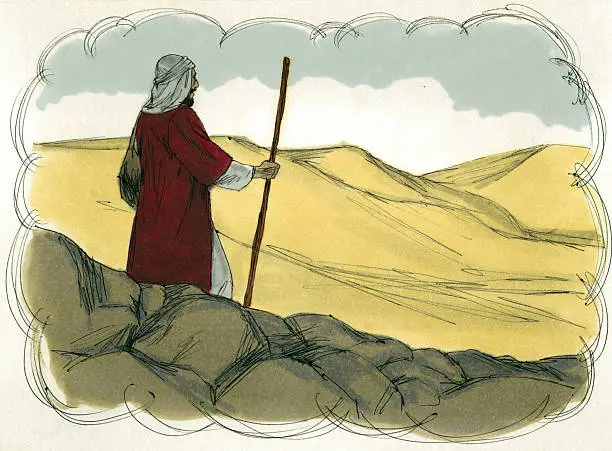
The rod he carries is not a scepter. It is not a sword. It is a tool of survival and guidance—a shepherd’s companion. To Moses, it likely symbolized failure and limitation. It marked the passage of time, the distance from Egypt, and the smallness of his new life.
And yet, that is precisely what God asks about.
“What is that in your hand?”
God does not ask for what Moses once had. He does not ask for what Moses thinks he needs. He does not ask for what Moses is waiting for to materialize. He asks about what he already holds, right now.
This is the grace of God: He begins with what we have, not with what we lack.
When the Ordinary Becomes Instrumental
Moses answers plainly: “A rod.”
But when Moses throws it down at God’s command, it becomes a serpent. And when he picks it up again, it becomes a rod once more, but no longer just his rod. From this moment on, Scripture refers to it as “the rod of God” (Exodus 4:20).
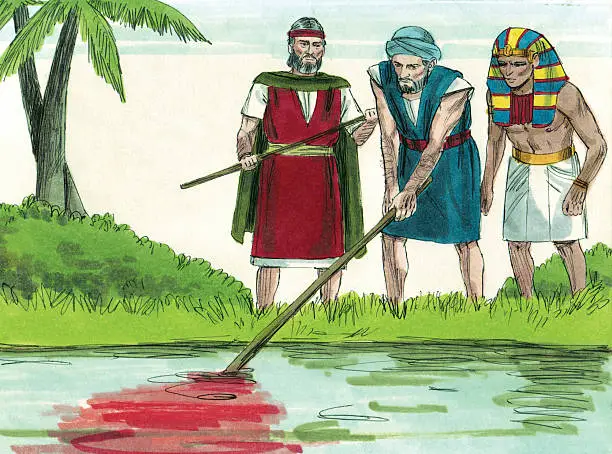
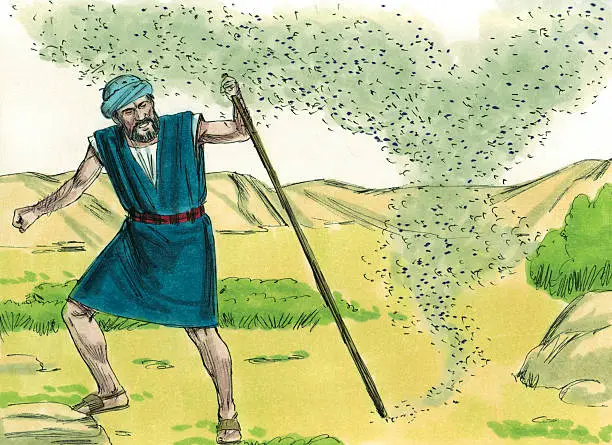
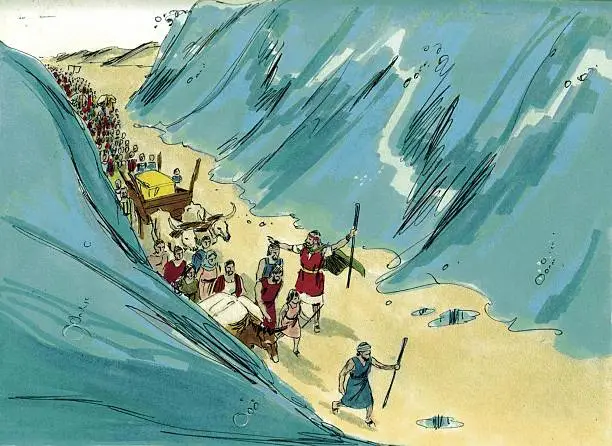
That same staff would part seas, strike rocks, and stretch over battlefields. It was still a piece of wood, but in God’s hand, it became a channel of divine power. God had elevated it to a prominent position, and now it serves as an instrument of power and conquest.
This is how God works. He does not need your strength. He asks for your surrender.
As He did with Jacob’s identity, asking, “What is your name?” and with Abraham’s trust, “Shall I hide from Abraham what I am doing?”, so here He asks, “What is that in your hand?”
He will not use what we pretend to have. He will only use what we honestly give. There is no deal we’re waiting for to change our worth; God wants to work with what we have just now, before anything else comes to make things better.
The God Who Uses What We Yield
Moses felt unqualified, unskilled, and unprepared. Yet God’s question redirects his focus from inadequacy to availability. In our apparent inadequacy, there is yet something that God can use to change both our lives and those of those who interact with us for the better.
This is where calling begins—not in confidence, but in consecration. It is God’s anointing that makes the difference.
The Scripture is dotted with such stories:
- David’s sling defeats a giant
- A widow’s oil fills many jars
- Five loaves and two fish feed thousands
- A cross, the Roman tool of shameful death, becomes the tree of life
In each case, God asks not, “What do you have to offer the world?” but rather, “Will you trust Me with what you already hold?”
As Ellen White reminds us:
“The humblest and poorest of the disciples of Jesus can be a blessing to others. They may not realize that they are doing any special good, but by their unconscious influence they may start waves of blessing that will widen and deepen, and the blessed results they may never know until the day of final reward.”
—Steps to Christ, p. 82
And while at it, it is essential to realize that divine intervention does not mean slothfulness and lack of diligence on our part. Moses was diligent with whatever little (a shepherd’s staff) he had.
What then is true humility and relying upon divine power?
“The spirit of the slothful servant we are often fain to call humility. But true humility is widely different. To be clothed with humility does not mean that we are to be dwarfs in intellect, deficient in aspiration, and cowardly in our lives, shunning burdens lest we fail to carry them successfully. Real humility fulfills God’s purposes by depending upon His strength.” —Christ’s Object Lessons, p. 363
So, What Is in Your Hand?
This question still echoes in the hearts of God’s people today.
Not, what do you wish you had? Not, what are you still waiting for? Not, what are you working towards? But rather:
“What is in your hand?”
Whatever it is you have in your hand, God wants to rewrite your story with it. It can be a conversation, a talent, or a burden. It could even be a weakness, a testimony, or a story. God is interested in it and would want to qualify it as an instrument of power.
Sometimes what we see as a limitation is precisely what God intends to use. He does not need polish. He asks for presence. Not status, but surrender.
And when we give Him what we hold—however humble—it becomes something more. The choice is ours, whether or not we will bring it to Him.
Moses didn’t need a better resume. He needed a better view of God. The rod in his hand was not powerful. But the One who asked about it was.
And so it is with us.
We, like Moses, often stand before God with excuses and fears. But before we speak, He asks:
“What is that in your hand?”
So ask yourself:
- What have I dismissed as too small for God to use?
- What gift, scar, or tool am I already holding?
- Will I lay it down, so God can lift it up?
God never wastes what is surrendered. And He still turns sticks into symbols of salvation.

 The Cleaver
Let us surrender our limitations and weaknesses and so trust in God to transform us and use us for his own purpose.
LikeLiked by 1 person
Amen… When we surrender God begins to work in, with and for us
LikeLike