
In our last article, Do the Hard Texts Teach Eternal Torment?, we examined several passages often used to support the idea of eternal conscious torment and found that, in their context, many describe final destruction rather than endless suffering.
Yet one passage still raises questions for many readers: the story of the rich man and Lazarus.
In this well-known account, Jesus describes a rich man suffering in flames while a poor man named Lazarus rests in comfort beside Abraham. At first glance, the story offers a vivid picture of the afterlife.
But before drawing conclusions, we need to ask an important question:
Was Jesus giving a literal description of life after death, or telling a parable with a deeper message?
To explore this in-depth, we’ll cover:
- The story itself
- Recognizing the parable
- The real focus of the story
- Does the story describe the afterlife?
- Why this story still matters
- Looking ahead
Let’s start by understanding the story.
The story itself
The account appears in the Gospel of Luke:
“There was a certain rich man who was clothed in purple and fine linen and fared sumptuously every day. But there was a certain beggar named Lazarus, full of sores, who was laid at his gate” (Luke 16:19–20, NKJV).
After both men die, their situations are dramatically reversed. Lazarus is carried to “Abraham’s bosom,” while the rich man finds himself in torment.
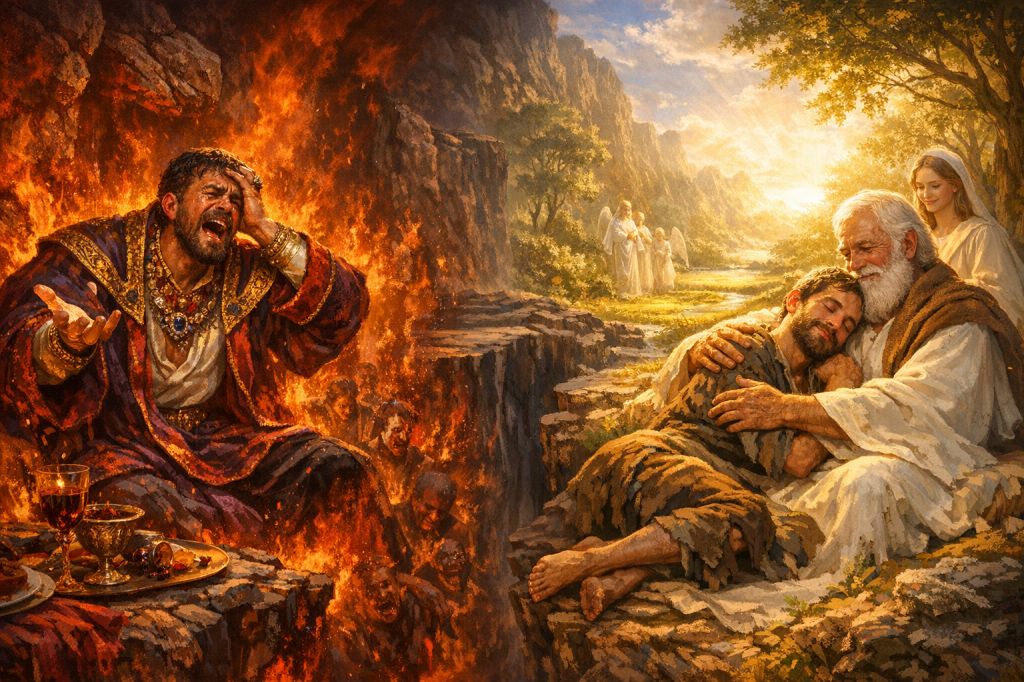
The rich man asks for relief and pleads that Lazarus be sent to warn his brothers. Abraham refuses, saying:
“They have Moses and the prophets; let them hear them” (Luke 16:29, NKJV).
The story concludes with a striking line:
“If they do not hear Moses and the prophets, neither will they be persuaded though one rise from the dead” (Luke 16:31, NKJV).
Now, let’s recognize an important fact about why this account is nothing more than a parable.
Recognizing the parable
The first step in understanding this passage is recognising its literary setting.
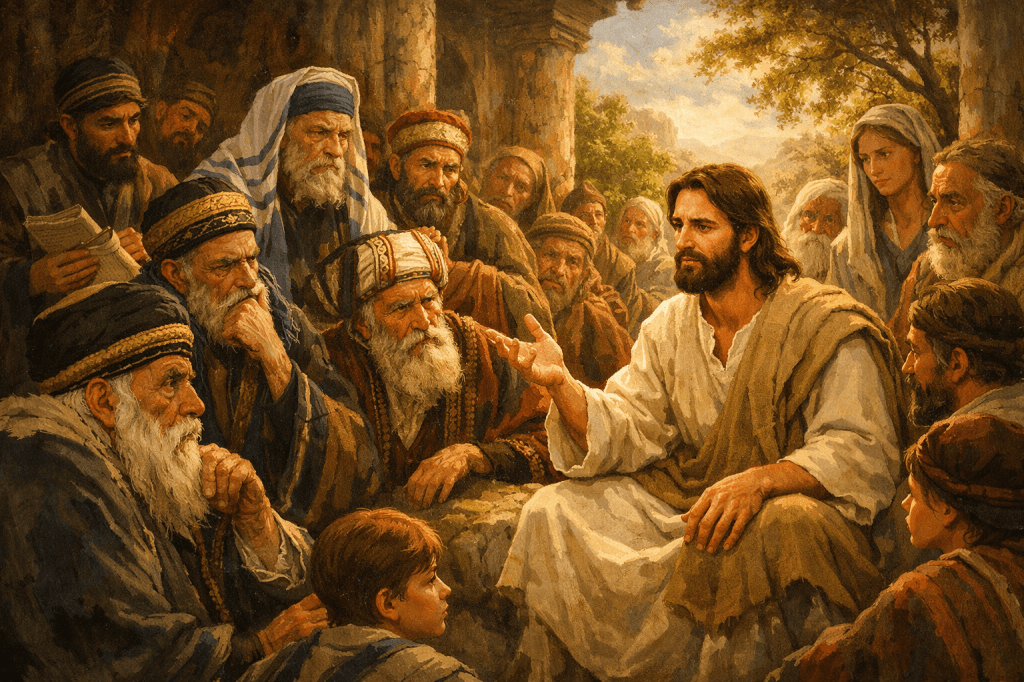
Luke’s Gospel contains many parables in this section; stories Jesus used to communicate spiritual truths. Just before this account, we find the parables of:
- the lost sheep
- the lost coin
- the prodigal son
- the unjust steward
Each uses narrative imagery to make a moral or theological point.
The story of the rich man and Lazarus follows this same pattern. It functions as a teaching story directed primarily at the religious leaders who were listening.
Luke even tells us the immediate audience:
“Now the Pharisees, who were lovers of money, also heard all these things, and they derided Him” (Luke 16:14, NKJV).
The story directly confronts their attitudes toward wealth, privilege, and Scripture.
Parables often use imagery familiar to the audience without intending to teach the literal details of that imagery.
For example, in the parable of the trees choosing a king (Judges 9:8–15), trees speak and debate among themselves. No one assumes the story is teaching botany.
Similarly, the imagery of “Abraham’s bosom” reflects a Jewish expression for honour and closeness at a banquet. It is not elsewhere described in Scripture as a literal location where the dead reside.
The point of the story lies not in mapping the geography of the afterlife, but in delivering its moral warning.
Let’s now dig deeper into the focus of the story.
The real focus of the story
The key message appears near the end.
The rich man asks that Lazarus be sent to warn his brothers. Abraham replies, “They have Moses and the prophets; let them hear them” (Luke 16:29, NKJV).
The rich man insists that a miracle would convince them. But Abraham responds, “If they do not hear Moses and the prophets, neither will they be persuaded though one rise from the dead” (Luke 16:31, NKJV).
This statement reveals the heart of the story. The problem is not a lack of evidence, but a refusal to listen to the Scriptures already given.
The religious leaders who rejected Jesus would soon witness something remarkable: a man named Lazarus raised from the dead (John 11). Yet many still refused to believe.
So, does the story describe the afterlife? Let’s explore that next.
Does the story describe the afterlife?
If the story were intended as a literal description of the afterlife, it would raise several difficulties.
For instance:
- The rich man and Lazarus appear close enough to converse across a gulf.
- A drop of water on a fingertip is requested as relief for flames.
- The righteous are depicted resting within sight of the suffering wicked.
Taken literally, the scene becomes difficult to reconcile with the broader biblical teaching about death, resurrection, and final judgment.
But when understood as a parable—using vivid imagery to make a moral point—these tensions disappear.
The message becomes clear: privilege without compassion leads to ruin, and ignoring God’s revealed word has eternal consequences.
When we read this story alongside the broader teaching of Scripture, a consistent picture remains.
Elsewhere, the Bible describes death as sleep, the dead as resting in the grave, and judgment as occurring at the resurrection. Nothing in the story requires overturning that larger pattern.
Instead, the parable warns that the opportunity to respond to God’s word exists now, during this life.
And this story still matters.
Why this story still matters
The parable of the rich man and Lazarus is not primarily about the mechanics of the afterlife. It is about responsibility.
The rich man’s tragedy was not simply wealth, but indifference. Day after day, he ignored the suffering at his gate.
The story reminds readers that faithfulness is not measured by status, but by how we respond to God’s word and to those in need.
Looking ahead
One final question remains in our exploration of hell and judgment.
If the wicked ultimately face the “second death,” what does the Bible mean when it says the wicked will be destroyed “forever,” or that their punishment is “eternal”?
Does “eternal” describe duration, or final result?
In the next article, we will examine the biblical meaning of eternal punishment and what it reveals about the justice of God.
This article is part of an ongoing series exploring death, resurrection, judgment, and hope by reading Scripture carefully and allowing the Bible’s broader story to guide our understanding.

 The Cleaver
The parable of the rich man and Lazarus is not primarily about the mechanics of the afterlife. It is about responsibility.
The rich man’s tragedy was not simply wealth, but indifference. Day after day, he ignored the suffering at his gate.
LikeLiked by 1 person
O Yes…. He maintained indifference to the cry of the poor
LikeLike