
Life often feels like a long-distance race. Such a race requires stamina, clarity, and resilience.
Scriptures paint this picture vividly:
“Let us lay aside every weight, and the sin which so easily ensnares us, and let us run with endurance the race that is set before us…” (Hebrews 12:1–2, NKJV).
If endurance is the pace, and discipline the engine, then the next essential ingredient is this: unburdening yourself.
You cannot run well when weighed down. And in life, our weights are rarely physical. They are emotional, mental, relational, and sometimes spiritual. Many of them are subtle. They feel familiar, comfortable, even harmless. Yet they slow us, tire us, and quietly steal the momentum needed to reach the finish line.
This article explores what weights look like today, the psychology behind why we carry them, and how to intentionally lay them aside so you can run your race with endurance and clarity.
We’ll cover:
- The Ancient Race Analogy
- The Two Categories of Weights
- Modern Weights That Slow You
- The Psychology of Attachment
- Practical Framework for Laying Aside Every Weight
- The Paradox: Some Weights Look Like Blessings
- The Freedom of Running Light
- The Race Ahead
Let’s begin by understanding the ancient race analogy.
The Ancient Race Analogy
When the author of Hebrews used the phrase “lay aside every weight,” the first-century audience instantly recognised the imagery. Runners in Greek and Roman athletic competitions stripped down to the essentials. Everything unnecessary had to go. Weight meant drag. Drag meant defeat.

In the same way, endurance isn’t only about what you add to your life (like discipline, skills, networking, relationships). Sometimes, and in most cases, it has to do with what you remove.
Endurance is not just a muscle; it’s also a margin.
To successfully shed off unnecessary weight, we must first understand what these weights are.
The Two Categories of Weights
Hebrews 12 makes an important distinction:
- Weights
- Sin that easily ensnares
Sin is a clear spiritual hindrance, as anything that violates God’s will and damages the soul.
But weights are different. They are not necessarily evil or immoral. They are simply anything that slows your growth, drains your energy, or diverts your focus away from the path God sets before you.
Ellen White adds a sobering thought on this:
“Every practice that weakens physical or mental strength unfits man for the service of his Creator.”
— Mind, Character, and Personality, Vol. 2, p. 445
This quotation reinforces the biblical call to release anything—even seemingly small habits—that hinders clarity, integrity, or spiritual progress.
Weights are not always wicked. Instead, they are simply unhelpful. They add no value to the one in a race and essentially become baggage.
Sin and weights slow you down and make endurance harder. So, what are some of the modern weights that slow us down?
Modern Weights That Slow You

Some of the modern weights that slow us down and complicate endurance include:
- Mental and emotional clutter
- Overthinking
- Regret and rumination
- Fear of failure
- Perfectionism
- Emotional fatigue
Research confirms that mental clutter weakens decision-making, drains emotional energy, and reduces performance.
Studies in cognitive psychology and neuroscience show that mental clutter reduces decision quality and drains emotional energy, weakening performance (Baumeister et al., 1998; Sweller, 1988; Vohs et al., 2013).
- Unhealthy relationships
Some relationships drain more than they nourish. Endurance thrives in an uplifting “cloud of witnesses,” not a crowd of discouragers (Heb. 12:1). Identify and break toxic relationships.
- Overcommitment and poor boundaries
Too many obligations stretch you thin. Overcommitment leaves little capacity for endurance.
- Habits That Drain Energy
- Doom-scrolling
- Late-night screens
- Comparison loops
- Disorganisation
These are not sinful, but they are heavy.
- Fear-Based Comfort Zones
Comfort often becomes the most deceptive prison. What feels safe can slowly stifle growth.
But, while at it, let us explore why we tend to hold on to weights, even if they cost us much.
The Psychology of Attachment
If weights slow us down, why do we cling to them?
- Familiarity feels safe – The brain likes predictability—even when predictability hinders progress.
- Emotional identity – Sometimes people identify with their burdens. Releasing them feels like losing part of themselves.
- Cognitive biases – Loss aversion makes us more afraid of letting go than we are motivated to gain something better.
- Social influence – Environment shapes behaviour. When a community normalises certain weights, we absorb them unconsciously.
- Lack of clarity – When you aren’t clear on where you’re going, everything feels important.
Clarity cuts clutter.
After dealing with all these, how do we now lay aside every weight practically?
Practical Framework for Laying Aside Every Weight
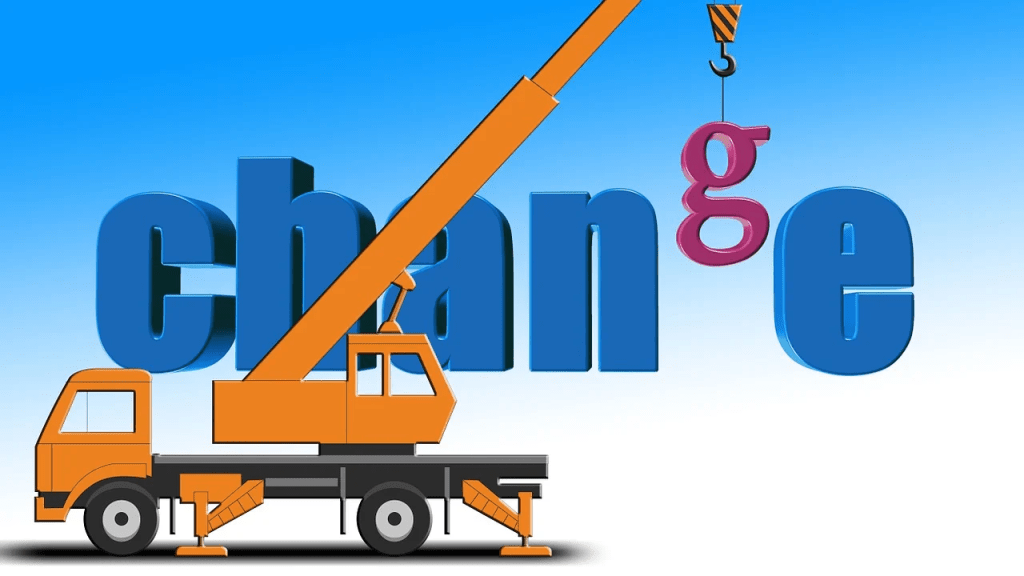
Laying aside weights is intentional, not impulsive. Here’s a workable framework:
- Identify the weight
Ask yourself, “What drains my energy more than it contributes to my growth?
- Classify it as weight or sin?
Sin requires repentance. A weight requires release.
- Evaluate the cost:
What is this weight costing you in peace, clarity, relationships, or opportunity?
- Replace, don’t only remove:
Behavioural science shows that habits must be replaced to be removed sustainably. This is because habits are cue-driven and automatic; trying to eliminate them without inserting a new routine usually leads to relapse (Wood & Neal, 2007).
Studies confirm that lasting change occurs when individuals swap an old behaviour for a new one that satisfies the same cue–reward loop (Neal, Wood, Labrecque, & Lally, 2012). In short, sustainable transformation requires replacement, not resistance.
- Build weight-free environments
Shape your physical, digital, and social spaces to support focus rather than friction.
- Set mini milestones
Small wins generate stamina. Every weight removed increases endurance.
- Fix your eyes on Jesus
Hebrews 12:2 calls us to look “unto Jesus, the author and finisher of our faith.” Focus fuels endurance, endurance fuels progress, and progress makes the heart lighter.
As you handle the weights, don’t forget the confusion of weights that masquerade as blessings.
The Paradox: Some Weights Look Like Blessings
Some weights are subtle and will travel so close to blessings and opportunities. Give them no chance to ruin you slowly.
A weight can be a good thing carried into the wrong season, such as:
- A role that once stretched you but no longer fits
- A relationship that belonged to the past, not the future
- A dream that needs reshaping
- A commitment that drains more than it develops
Wisdom discerns when “good” becomes “no longer helpful.”
And finally, here comes the freedom.
The Freedom of Running Light
God is still in the business of saying, “Let my people go!”

When you lay aside weights, you experience:
- Mental clarity
- Emotional stability
- Greater personal consistency
- Renewed spiritual focus
- Sustainable pace
- True endurance
And if you forget everything, remember:
“Progress often happens not by doing more, but by carrying less.”
Tweet
The Race Ahead
Scripture does not call us to limp through life’s journey; it calls us to run with endurance. That race becomes joyful, purposeful, and sustainable when the unnecessary is stripped away.
The crucial question now is not “Am I capable of running?” But instead, “What must I release so that I can run well?”
Endurance increases when the heart is light, the mind is clear, and the path is uncluttered.
Run light. Run free. Run with endurance.
Reference List
- Baumeister, R. F., Bratslavsky, E., Muraven, M., & Tice, D. M. (1998). Ego depletion: Is the active self a limited resource? Journal of Personality and Social Psychology, 74(5), 1252–1265.
- Sweller, J. (1988). Cognitive load during problem solving: Effects on learning. Cognitive Science, 12(2), 257–285.
- Vohs, K. D., Redden, J. P., & Rahinel, R. (2013). Physical order produces healthy choices, generosity, and conventionality, whereas disorder produces creativity. Psychological Science, 24(9), 1860–1867. https://doi.org/10.1177/0956797613480186
- Neal, D. T., Wood, W., Labrecque, J. S., & Lally, P. (2012). How do habits guide behavior? Perceived and actual triggers of habits in daily life. Journal of Experimental Social Psychology, 48(2), 492–498. https://doi.org/10.1016/j.jesp.2011.10.011
- Wood, W., & Neal, D. T. (2007). A new look at habits and the habit–goal interface. Psychological Review, 114(4), 843–863. https://doi.org/10.1037/0033-295X.114.4.843

 The Cleaver
2 thoughts on “Laying Aside Every Weight to Run With Endurance”