There is hardly anyone alive who does not yearn for success.
From childhood, we are trained to measure ourselves by grades, accomplishments, promotions, wealth, or influence. Nations celebrate “success stories,” parents dream of their children’s “success,” and individuals set goals that they hope will define their lives as “successful.”
But what kind of success really matters?
The Bible does not deny our longing for success. In fact, it speaks directly to it. Yet it makes a vital distinction: not all success is good. There is a kind of success that is empty, destructive, and ultimately leads to loss.
There is also what Scripture calls “good success”—the kind of success God Himself desires for His people.
In this article, we will explore this biblical contrast through two passages: Joshua 1:8, which introduces the concept of “good success,” and Psalm 106:15, which warns of a success that brings spiritual leanness.
We’ll cover:
- What Is Good Success? (Joshua 1:8)
- The Danger of Empty Success (Psalm 106:15)
- Worldly Success vs. Godly Success
- How to Pursue Good Success
- The Gospel Connection
- Which Success Will You Choose?
What Is Good Success? (Joshua 1:8)
When Joshua stood on the threshold of leading Israel into the Promised Land, the responsibility must have felt overwhelming.

He was following in the footsteps of Moses—the prophet, lawgiver, and deliverer of Israel. At this pivotal moment, God spoke directly to Joshua, giving him the key not just to leadership but to life itself:
“This Book of the Law shall not depart from your mouth, but you shall meditate in it day and night, that you may observe to do according to all that is written in it. For then you will make your way prosperous, and then you will have good success.” (Joshua 1:8, NKJV)
Notice the pattern:
- The Word must dwell in us. “Shall not depart from your mouth” suggests continual recitation, reflection, and conversation centred on God’s Word. Success begins with a life shaped by Scripture.
- Meditation fuels obedience. “Meditate in it day and night” is not a passing glance but a deep, ongoing pondering. This meditation is practical, and it leads to doing “all that is written.”
- Obedience opens the way for God’s blessing. “For then you will make your way prosperous, and then you will have good success.” The prosperity promised here is not first financial or military, but holistic—life under God’s favour, in step with His purposes.
The Hebrew phrase translated “good success” (הַשְׂכֵּֽל, haskel) literally means to act wisely, to have insight that leads to right action.
Thus, “good success” is not simply achieving our goals but living with divine wisdom, walking in obedience, and fulfilling God’s calling.
What about the empty and ensnaring success? Let’s see it in the next section.
The Danger of Empty Success (Psalm 106:15)
While Joshua 1:8 shows us God’s blueprint for success, Psalm 106:15 provides a sobering warning:
“And He gave them their request, but sent leanness into their soul.” (Psalm 106:15, NKJV)
This verse refers to the Israelites in the wilderness who grew weary of God’s daily provision of manna. They craved meat, and God granted their request (Numbers 11:31-34). But what seemed like a blessing soon turned into judgment, for their unchecked desires exposed their unbelief and greed.
Ellen White gives a sobering comment on this incident:
“God gave the people that which was not for their highest good, because they persisted in desiring it; they would not be satisfied with those things that would prove a benefit to them. Their rebellious desires were gratified, but they were left to suffer the result. They feasted without restraint, and their excesses were speedily punished. “The Lord smote the people with a very great plague.” Large numbers were cut down by burning fevers, while the most guilty among them were smitten as soon as they tasted the food for which they had lusted.” – Patriarchs and Prophets. p. 382
Here we see the peril of success without God’s approval. Outwardly, they got what they wanted—meat in abundance. Inwardly, they suffered spiritual famine: “leanness into their soul.”
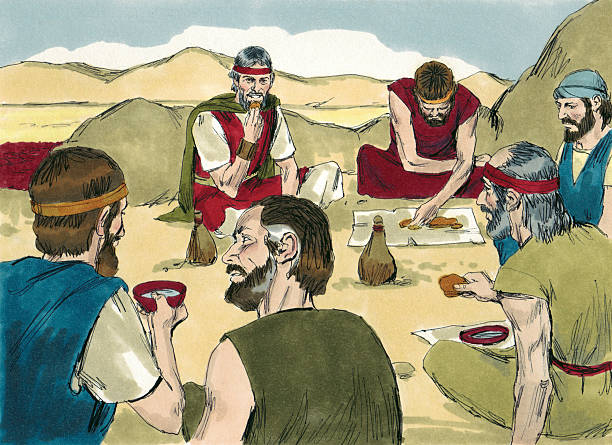
This is a haunting picture. It reminds us that success defined by immediate gratification can be ruinous. Sometimes God allows us to obtain what we crave, but the cost is inner barrenness.
The world often applauds such success—promotion, wealth, influence, power—yet Scripture warns that such gains can come with hidden loss. Especially, if we pursue them while neglecting God’s approval or going against His will to acquire them.
Jesus Himself raised the ultimate question:
“For what will it profit a man if he gains the whole world, and loses his own soul?” (Mark 8:36, NKJV)
So how do the two successes compare?
Worldly Success vs. Godly Success
When we compare Joshua 1:8 and Psalm 106:15, a clear contrast emerges:
- Worldly success:
- Defined by outward achievement.
- Driven by desire and human ambition.
- May bring material gain, but leaves the soul lean.
- Can be a curse in disguise.
- Godly (good) success:
- Defined by faithfulness to God’s Word.
- Rooted in meditation and obedience.
- Produces peace, integrity, and spiritual fruit.
- Brings prosperity that endures into eternity.
Jesus summarised this in Matthew 6:33:
“But seek first the kingdom of God and His righteousness, and all these things shall be added to you” (NKJV).
The principle is simple:
When God is first, every other good gift finds its proper place. When God is pushed aside, even blessings can become curses.
Tweet
So, how do we pursue this good success that the Scripture recommends?
How to Pursue Good Success
If “good success” is possible—and promised—how do we pursue it?
Joshua 1:8 gives us the foundation, but let us unpack practical steps for today:
- Daily immersion in God’s Word. Success begins with meditation “day and night.” Set aside regular time not just to read but to ponder, memorise, and apply Scripture.
- Obedience in action. Meditation without obedience is self-deception (James 1:22). Ask: How can I live this truth today?
- Choosing integrity over shortcuts. The world tempts us with faster, easier paths to achievement. Good success demands faithfulness even when no one is watching.
- Evaluating goals by eternal value. Before setting ambitions, ask: Will this honour God? Will it strengthen my soul or starve it?
- Prayerful dependence. Success in God’s eyes is not self-made but Spirit-led. Joshua’s victory in Canaan depended on God’s presence, not his military strategy. So too our lives.
The Gospel Connection
Ultimately, the call to “good success” is fulfilled in Christ.
Jesus is the perfect Joshua—the true leader who perfectly meditated on and obeyed the Word of God. His life embodied success not by worldly standards (He was poor, rejected, crucified) but by eternal ones. Through His obedience, He secured salvation and eternal life.

In Him, we are invited to redefine success: not climbing the world’s ladder, but following in His steps of humility, faith, and obedience. Our greatest success is to know Him (Philippians 3:8-10).
In Christ, we are more than conquerors; outside of Him, we’re destined to fail.
Which Success Will You Choose?
Success is inevitable—everyone will succeed at something. The real question is whether our success will be “good” or “empty.” Will it enrich our souls or hollow them out?
Joshua 1:8 promises: “Then you will make your way prosperous, and then you will have good success.” Psalm 106:15 warns: “And He gave them their request, but sent leanness into their soul.”
These two texts stand as bookends of possibility: fullness or emptiness, blessing or barrenness.
The choice lies before us. Will we chase the world’s applause and find our souls starved? Or will we walk in God’s Word, obey His commands, and discover the richness of good success?
“The path where God leads the way may lie through the desert or the sea, but it is a safe path.” – Patriarchs and Prophets, p. 290.
May we choose God’s path. For there, and only there, is success that lasts both for time and for eternity.

 The Cleaver