In a world shaken by deception, corruption, and broken trust, people often ask: Is there anything we can still depend on?
Leaders fail, institutions crumble, and ideologies collapse. Yet one book continues to endure across the centuries—the Bible. But can we really trust it?
The Bible’s reliability can be considered from two angles: the evidence that supports its claims and the transforming power it demonstrates in human lives. When both are examined, the case for trusting Scripture is compelling.
We’ll cover:
- The Bible’s Own Testimony
- Jesus’ Trust in Scripture
- The Evidence of Fulfilled Prophecy
- Confirmation from Science and History
- The Unity of Scripture
- The Power to Transform Lives
- The Messiah in Prophecy
- The Bible’s Relevance Today
- Conclusion
The Bible’s Own Testimony
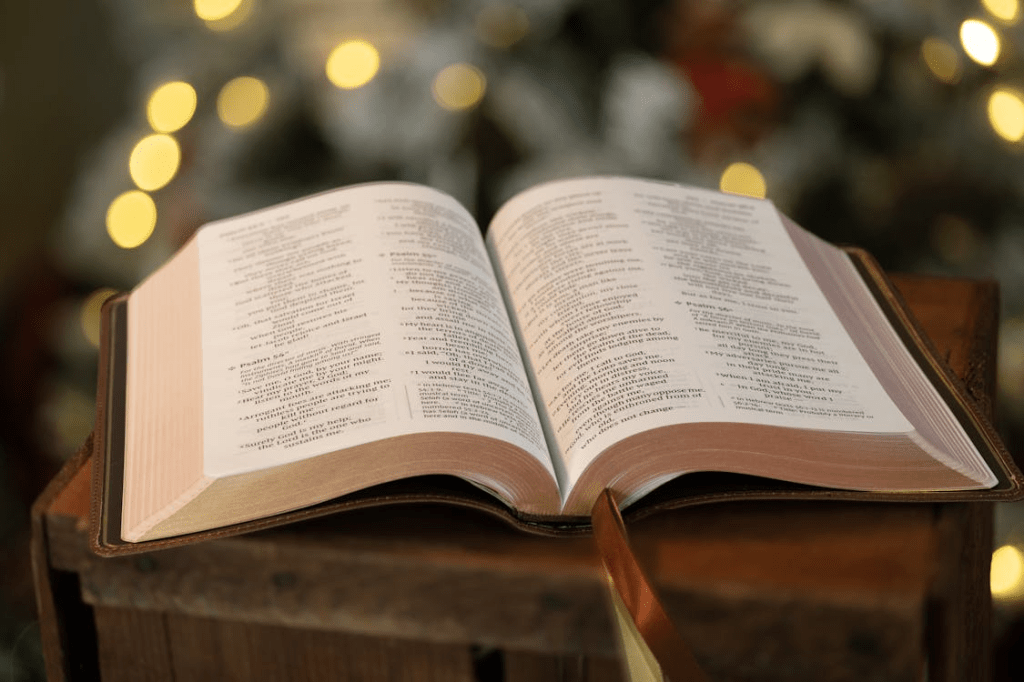
The Bible does not present itself as merely human wisdom. It boldly claims divine origin:
- “All Scripture is given by inspiration of God” (2 Timothy 3:16, NKJV).
- “Prophecy never came by the will of man, but holy men of God spoke as they were moved by the Holy Spirit” (2 Peter 1:21, NKJV).
- Jesus Himself declared, “The Scripture cannot be broken” (John 10:35, NKJV).
These are extraordinary claims. If true, the Bible is unlike any other book. It is the voice of God Himself. If false, its authority collapses. Therefore, the question of trust is not optional but essential.
Let’s now look at how Jesus regarded the Bible.
Jesus’ Trust in Scripture
Even for skeptics, the historical figure of Jesus of Nazareth is hard to dismiss. The Gospels show that Jesus placed His full confidence in the Bible of His day—the Old Testament. In facing temptation, He repeatedly countered Satan with the words, “It is written” (Matthew 4:4, 7, 10). In prayer, He affirmed, “Your word is truth” (John 17:17, NKJV).
If the One whom millions regard as Lord and Savior grounded His life on Scripture, we are faced with a challenge: either follow His example of trust or deny His authority altogether.
We are now ready to examine the evidence of Bible prophecies.
The Evidence of Fulfilled Prophecy

One of the strongest apologetic evidences for the Bible is prophecy. Unlike vague predictions, biblical prophecies are precise and verifiable:
- Four successive world empires—Babylon, Medo-Persia, Greece, and Rome—are predicted in Daniel 2 and 7 and fulfilled in history. This is the world’s political history, spanning approximately 2500 years, presented in chronological order.
- Cyrus, named by Isaiah more than 100 years before his birth, as the conqueror of Babylon (Isaiah 45:1–3).
- Babylon’s permanent desolation (Isaiah 13:19–20; Jeremiah 51:37), which stands true to this day.
- The rise of moral decline in the last days (2 Timothy 3:1-5).
Prophecy is not guesswork; it is history written in advance, confirming the Bible’s divine authorship.
But wait, what about science and history? Do they root for the reliability of the Bible? Let’s see.
Confirmation from Science and History
While the Bible is not a science textbook, it contains statements far ahead of their time:
- The earth “hangs on nothing” (Job 26:7).
- The earth is a sphere (Isaiah 40:22).
- Air has weight (Job 28:25).
Historically, archaeology has repeatedly confirmed the accuracy of Scripture. Once-mocked nations, such as the Hittites (Deuteronomy 7:1), have been confirmed. Kings such as Belshazzar (Daniel 5:1) and Sargon (Isaiah 20:1), once thought fictional, are now recognized in ancient records. The more evidence surfaces, the stronger the Bible’s historical credibility becomes.
Have you also considered the cohesion of the Bible? It is another powerful argument for its divine origin.
The Unity of Scripture
The Bible was written over 1,500 years, by about 40 authors from diverse backgrounds—shepherds, kings, prophets, fishermen, and a physician—across three continents and in three languages (Hebrew, Aramaic, and Greek). Yet, it tells one harmonious story: God’s plan of salvation.
Human authors, separated by centuries, could not have fabricated such unity. The only explanation is that the true Author is the Holy Spirit (2 Peter 1:21). This remarkable coherence stands as evidence of divine inspiration.
Let’s now examine one of the most compelling arguments for scripture, and the reason why we need it, really: transformed lives.
The Power to Transform Lives
Arguments and evidence may convince the mind, but the Bible’s greatest proof lies in its power to change the heart.
- The immoral become pure (1 Corinthians 6:9-11).
- The fearful become courageous (2 Timothy 1:7).
- The broken find healing and hope (2 Corinthians 5:17).
History tells of entire tribes transformed by the gospel, of addicts set free, and of skeptics turned into believers. Unlike a mere textbook of facts, the Bible is living and active (Hebrews 4:12), bringing new life to those who accept its message.

Let’s look at a few of these powerful cases:
Note: You can find the reference for these stories in order at the end of the article
Entire Tribes Transformed by the Gospel
- The South Pacific (Fiji, Tonga, Samoa, Papua New Guinea)
Missionary records from the 19th century show entire tribes abandoned cannibalism and tribal warfare after embracing Christianity. For example, in Fiji, missionary Thomas Baker (Methodist, mid-1800s) and his colleagues witnessed radical changes in village life as people embraced Scripture, gave up polygamy, and replaced violence with peace. - Hawai‘i (early 19th century)
When missionaries arrived in 1820, the Hawaiian people practiced idolatry and human sacrifice. Within a generation, through the preaching of the gospel, idols were abandoned, literacy flourished (Bible translation was central), and Christianity became the foundation of Hawaiian society.
Addicts Set Free
- The Oxford Group / AA roots
In the early 20th century, the Christian revivalist Oxford Group emphasized confession, reliance on God’s Word, and obedience to Christ. From it grew Alcoholics Anonymous (AA), whose founders credited biblical principles, especially the Sermon on the Mount, for their recovery approach. Thousands of alcoholics experienced deliverance from addiction. - The Great Awakenings (18th–19th centuries)
During revivals led by men such as John Wesley and Charles Finney, countless testimonies describe drunkards converted, bars emptied, and tavern-keepers shutting down because so many turned from alcohol under the conviction of the gospel.
Skeptics Turned into Believers
- C.S. Lewis (1898–1963)
Once an avowed atheist, Lewis came to faith through reading Scripture, the influence of Christian friends, and the conviction of the Spirit. He became one of the greatest Christian apologists of the 20th century. - Sir William Ramsay (1851–1939)
A skeptical archaeologist who set out to disprove the Bible, Ramsay found that Luke’s historical detail in Acts was remarkably accurate. He became a defender of the reliability of the New Testament.
And there are many more. You, too, can be transformed. Let’s proceed to Messianic prophecies.
The Messiah in Prophecy
The Old Testament contains more than 125 prophecies of the Messiah, fulfilled precisely in Jesus:
- Born in Bethlehem (Micah 5:2; Matthew 2:1).
- Betrayed for 30 pieces of silver (Zechariah 11:12; Matthew 26:14-16).
- Crucified (Zechariah 12:10; John 19:16–18).
- Buried in a rich man’s tomb (Isaiah 53:9; Matthew 27:57–60).
- Raised the third day (Hosea 6:2; Acts 10:40).
The probability of even eight such prophecies being fulfilled by chance in one person is astronomically small. This is compelling evidence that Jesus is the Christ, and the Bible’s testimony is true.
But is the Bible relevant today?
The Bible’s Relevance Today
Beyond evidence, the Bible speaks to life’s deepest questions:
- Where did I come from? We were created in God’s image (Genesis 1:27).
- Why am I here? To reflect God’s character and prepare for eternity (Romans 8:29).
- What does the future hold? Christ will return to restore all things (John 14:1–3; Revelation 21:3–4).
Unlike the shifting theories of men, the Bible provides answers that are both intellectually credible and spiritually satisfying. Ideologies change with circumstances and time. However, the Bible appears to be adaptable to our evolving concerns about life.
Conclusion
So, can the Bible be trusted?
The evidence of fulfilled prophecy, scientific foresight, historical accuracy, internal unity, and transformed lives all point to one answer: yes.
Skeptics may continue to raise objections, and believers will continue to proclaim its power. Yet, as Peter wrote: “The word of the Lord endures forever” (1 Peter 1:25, NKJV). In a world of uncertainty, the Bible remains a sure foundation.
The invitation is simple: test it for yourself. As Jesus promised, “If anyone wills to do His will, he shall know concerning the doctrine, whether it is from God” (John 7:17, NKJV). Trust the Bible, and you will discover not just truth, but life.
Reference:
- George Stringer Rowe, The Conversion of the South Sea Islanders (1866).
- Hiram Bingham, A Residence of Twenty-One Years in the Sandwich Islands (1847).
- Dick B., The Good Book and the Big Book: A.A.’s Roots in the Bible (1997).
- Timothy L. Smith, Revivalism and Social Reform (1957).
- C.S. Lewis, Surprised by Joy (1955).
- William M. Ramsay, St. Paul the Traveller and the Roman Citizen (1895).

 The Cleaver
4 thoughts on “Can the Bible Be Trusted?”