
Many Christians picture Christ’s intercession in heaven as if He is persuading a reluctant God to accept us. The idea runs something like this: the Father is stern, Christ is compassionate, and the Son must constantly plead with the Father not to condemn us.
Yet Scripture tells a very different story—one that is both richer and more assuring.
How we view God in the intercessory ministry of Christ affects how we follow Him, whether out of love or fear.
As Ellen White echoes in her book, Desire of Ages:
“When we know God as it is our privilege to know Him, our life will be a life of continual obedience. Through an appreciation of the character of Christ, through communion with God, sin will become hateful to us.” —The Desire of Ages, p. 668
Let’s learn this vital truth, covering:
- The Father Himself Loves Us
- Christ’s Ongoing Intercession
- Silencing the Accuser
- Securing Our Access to Mercy
- Not Changing God’s Mind, But Securing Ourselves in Him
- Pastoral Implications
- Christ’s Intercession is as Essential as His Death on the Cross
At the foundation of it all is the eternal love of God.
The Father Himself Loves Us
Jesus said to His disciples, “for the Father Himself loves you, because you have loved Me, and have believed that I came forth from God” (John 16:27, NKJV).
Salvation does not begin with Christ convincing the Father to show mercy. It begins in the eternal love and purpose of God the Father Himself. Paul writes, “He chose us in Him before the foundation of the world… having predestined us to adoption as sons by Jesus Christ to Himself, according to the good pleasure of His will” (Ephesians 1:4-5, NKJV).
Ellen White makes the same point powerfully:
“The Father loves us, not because of the great propitiation, but He provided the propitiation because He loves us” —Steps to Christ, p. 13.
The cross is not about changing God’s heart, but about revealing it.
If God already loves us, why then does Christ intercede?
Christ’s Ongoing Intercession
Paul answers in the book of Romans:
“...It is Christ who died, and furthermore is also risen, who is even at the right hand of God, who also makes intercession for us” (Romans 8:34, NKJV)
Christ’s intercession is not a continuation of His sacrifice (which was once for all on the cross—Hebrews 10:10), but the ongoing application of its benefits.
The writer to the Hebrews explains:
“Christ has not entered the holy places made with hands… but into heaven itself, now to appear in the presence of God for us” (Hebrews 9:24, NKJV).
His intercession means He appears before God on our behalf, presenting His finished work as the eternal basis of our acceptance.

Ellen White captures this scene vividly:
“By His spotless life, His obedience, His death on the cross of Calvary, Christ interceded for the lost race. And now, not as a mere petitioner does the Captain of our salvation intercede for us, but as a Conqueror claiming His victory. His offering is complete, and as our Intercessor He executes His self-appointed work, holding before God the censer containing His own spotless merits and the prayers, confessions, and thanksgiving of His people. Perfumed with the fragrance of His righteousness, these ascend to God as a sweet savor. The offering is wholly acceptable, and pardon covers all transgression” —Christ’s Object Lessons, p. 156.
And as He does this, there is an accuser who needs to be rebuked.
Silencing the Accuser
Another key dimension of Christ’s intercession is answering Satan’s accusations.
Revelation 12:10 describes the devil as “the accuser of our brethren, who accused them before our God day and night.”
His strategy is to remind heaven of our failures and sins, demanding that justice be carried out against us.
But believers overcome “by the blood of the Lamb and by the word of their testimony” (Revelation 12:11, NKJV).
When Satan points to our guilt, Christ points to His blood. His intercession silences the accuser, not by denying our sin, but by declaring it fully covered by His sacrifice.
Ellen White reflects this courtroom imagery remarkably:
“While Jesus is pleading for the subjects of His grace, Satan accuses them before God as transgressors. The great deceiver has sought to lead them into skepticism, to cause them to lose confidence in God, to separate themselves from His love, and to break His law. Now he points to the record of their lives, to the defects of character, the unlikeness to Christ, which has dishonored their Redeemer, to all the sins that he has tempted them to commit, and because of these, he claims them as his subjects. Jesus does not excuse their sins, but shows their penitence and faith, and, claiming for them forgiveness, He lifts His wounded hands before the Father and the holy angels, saying: I know them by name. I have graven them on the palms of My hands.” —Christ in His Sanctuary, p. 179.
Christ’s priestly ministry also secures our ongoing access to grace.
Securing Our Access to Mercy
Hebrews 4:14-16 urges us to “hold fast our confession” because “we have a great High Priest who has passed through the heavens, Jesus the Son of God.”
Because He intercedes for us, we can come boldly to the throne of grace, confident that mercy and help are always available.
Hebrews 7:25 captures this beautifully: “Therefore He is also able to save to the uttermost those who come to God through Him, since He always lives to make intercession for them” (NKJV).
His very life in heaven guarantees that His people will never be cut off from God’s saving grace.
Not Changing God’s Mind, But Securing Ourselves in Him
The heart of the matter is this:

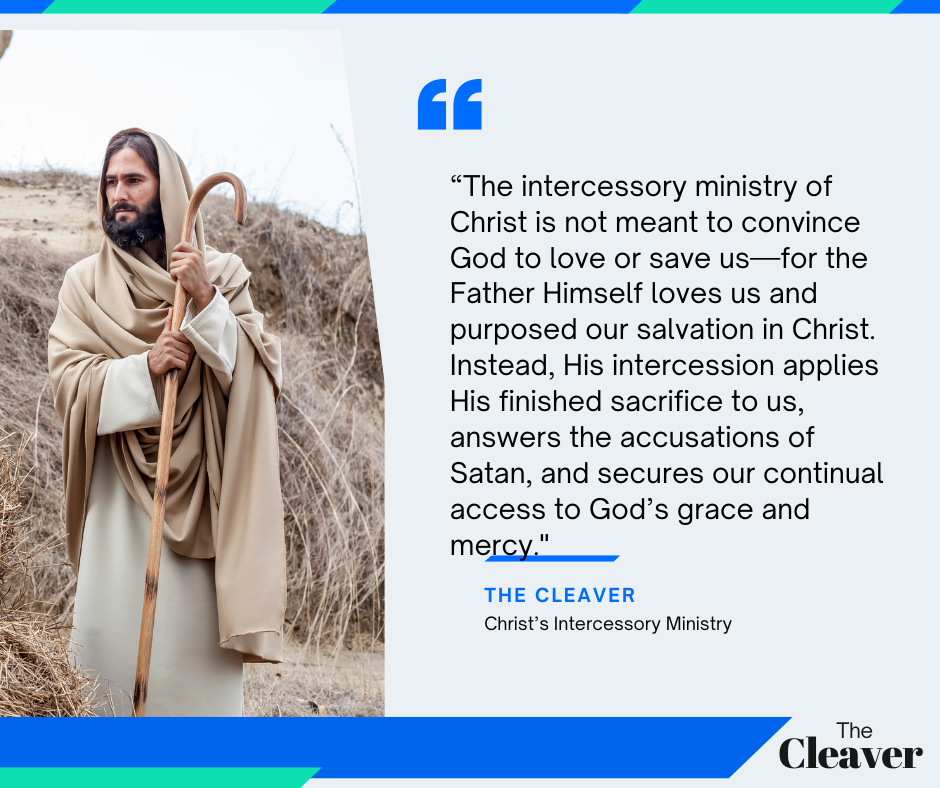
Christ’s intercession is not aimed at changing the Father’s attitude toward us. The Father already loves us and purposed our salvation in Christ.
Instead, His intercession ensures that:
- The benefits of His sacrifice are continually applied to us.
- Satan’s accusations are answered with His blood.
- Our access to God’s mercy is never in doubt.
In short, Christ intercedes not to persuade God to be for us, but to secure us in the assurance that God already is for us.
So, what are the pastoral implications of this wonderful reality?
Pastoral Implications
This truth has profound practical implications for believers:
- Assurance of salvation: We need not fear that God’s favour is unstable or that Christ must beg Him to be gracious. Our acceptance is rooted in the Father’s eternal love and Christ’s finished work.
- Confidence in prayer: When we pray “in Jesus’ name,” we are not invoking a formula but entering God’s presence through the living intercession of Christ.
- Victory over accusation: Many Christians are weighed down by guilt, feeling condemned for past or present failures. Christ’s intercession means that when Satan accuses, our High Priest speaks for us: “My blood has covered this one.”
- Perseverance in faith: Because Christ “always lives to make intercession” (Hebrews 7:25), our salvation is not a fragile hope but a secure promise. His ongoing ministry ensures we will be saved “to the uttermost.”
Christ’s Intercession is as Essential as His Death on the Cross
The intercessory ministry of Christ is one of the most comforting truths of the gospel. It does not picture the Son persuading a reluctant Father, but the Son applying His finished work on behalf of those the Father already loves. In doing so, He rebukes the accuser, secures our access to grace, and guarantees our salvation to the very end.
As Ellen White assures:
“The intercession of Christ in man’s behalf in the sanctuary above is as essential to the plan of salvation as was His death upon the cross” —Christ in His Sanctuary, p. 186.
So we may confidently declare with Paul: “If God is for us, who can be against us?” (Romans 8:31).

 The Cleaver
One thought on “Christ’s Intercessory Ministry: Why is It Necessary?”