
Our idea of how God works, in most cases, is based on the worldview of “whoever calls on the name of the Lord shall be saved” (Joel 2:32, Romans 10:13). And that is true. God has always proved faithful in opening ways where we only see an impasse.
God Himself invites us to seek him in the day of trouble:
“Call upon Me in the day of trouble; I will deliver you, and you shall glorify Me” (Psalm 50:15, NKJV).
Yet as we will in this episode, there is something you can do after calling upon God in the day of your trouble. And God sometimes waits for you to take that step, because in such a step, there is a demonstration of faith and trust in what He has said He will do.
Let’s see how God honours faith by examining the Red Sea experience.
We’ll cover:
- Context
- The Time for Prayer Had Passed
- Divine Questions That Redirect
- Go Forward—Into the Impossible
- Obedience Precedes Revelation
- Don’t Cry; Go Forward
Context
“And the Lord said to Moses, ‘Why do you cry to Me? Tell the children of Israel to go forward’” (Exodus 14:15, NKJV)
After the passover, Pharaoh finally gave in and asked the Israelites to go, accepting all of Moses’ requests.
But after setting off to leave Egypt, they find themselves at a dead end.
The Red Sea is in front of them. Pharaoh’s chariots thunder behind. On either side, wilderness stretches endlessly into tall mountains.
Israel is trapped.
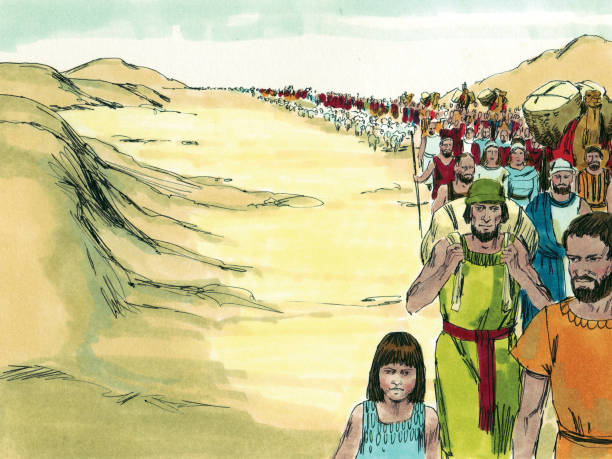
And in this terrifying moment, Moses—God’s chosen leader—does what we might expect. He turns to God. He cries out in prayer.
But what comes next is unexpected.
“Why do you cry to Me?” “Tell the children of Israel to go forward.”
It is not a dismissal of prayer, but a divine call to obedience in motion. Sometimes the most spiritual thing to do is not to wait for another sign, but to move forward in faith based on what God has already said.
This thirteenth installment in our Questions God Asks series confronts us with a familiar spiritual tension: When is it time to pray, and when is it time to act?
The Time for Prayer Had Passed
In the verses just before this, Moses offers bold encouragement:
“Do not be afraid. Stand still, and see the salvation of the Lord.” (Exodus 14:13)
It’s a decisive moment—a rallying cry for trust. But in the very next verse, God essentially tells Moses:
“Now is not the time to stand still. It’s time to move.”
This is where we see something profound:
Faith is not always passive. Sometimes it walks forward before the sea parts.
There are moments when prayer is the proper response. And there are moments—just as holy—when God says, “You already know what to do. Obey.”
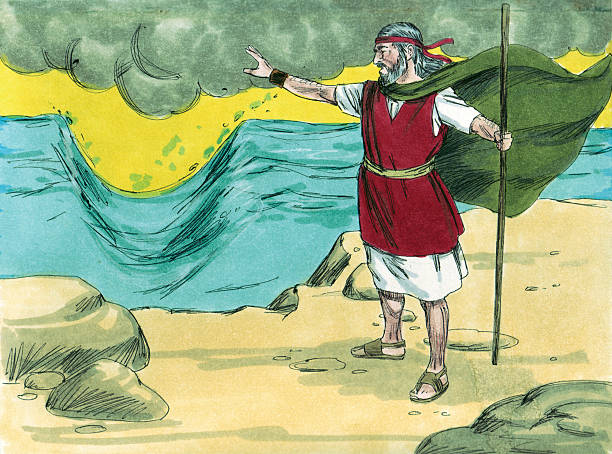
God had already told Moses that deliverance was coming. Now, He tells him, “Tell the people to move.”
Divine Questions That Redirect
God’s question, “Why do you cry to Me?”, is not a rebuke of prayer in general. Moses had every right to seek God. But in this case, Moses already had enough light to take the next step. And God is not interested in delay disguised as devotion.
This is a moment of divine redirection.
There comes a time when continuing to pray about something we’ve already been called to obey becomes a subtle form of disobedience.
As Ellen White insightfully writes:
“The great lesson here taught is for all time. Often, the Christian life is beset by dangers, and duty seems hard to perform. The imagination pictures impending ruin before and bondage or death behind. Yet the voice of God speaks clearly, “Go forward.” We should obey this command, even though our eyes cannot penetrate the darkness, and we feel the cold waves about our feet. The obstacles that hinder our progress will never disappear before a halting, doubting spirit. Those who defer obedience till every shadow of uncertainty disappears and there remains no risk of failure or defeat, will never obey at all. Unbelief whispers, “Let us wait till the obstructions are removed, and we can see our way clearly,” but faith courageously urges an advance, hoping all things, believing all things.”
—Patriarchs and Prophets, p. 290
Go Forward—Into the Impossible
God doesn’t say: “Wait until the sea parts.” He says:
“Go forward.”
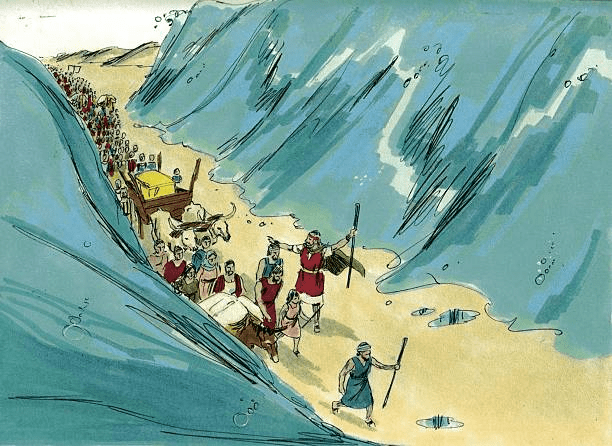
And that’s the miracle. The Red Sea will not open until they walk toward it in obedience.
Faith often works like this:
- Abraham left his homeland without knowing where he was going
- Peter stepped out of the boat before the water held him
- The priests carrying the ark stepped into the Jordan before it stopped flowing.
God’s people are called to move before the miracle, not after.
Israel was not asked to swim. They were asked to trust. And when Moses lifted his rod and stretched out his hand, God acted—the sea split. The path appeared.
But first, they had to move.
Obedience Precedes Revelation
God’s question, “Why do you cry to Me?”, reveals something about His character:
He honors faith that obeys in uncertainty.
This is not about impulsiveness. It’s about faith that acts on what God has already made clear.
Moses didn’t need a new word. Instead, he needed to believe the word already spoken.
“Speak to the children of Israel, that they go forward.”
There are seasons in our walk with God when the most spiritual thing we can do is to take the next step—even when we don’t know what comes after it.
As Ellen White writes:
“In the future life the mysteries that here have annoyed and disappointed us will be made plain. We shall see that our seemingly unanswered prayers and disappointed hopes have been among our greatest blessings.”
—Ministry of Healing, p. 474
Don’t Cry; Go Forward
God’s question to Moses is one we all face at the Red Sea moments of life: “Why do you cry to Me? Tell the children of Israel to go forward.”
It’s not a rejection of prayer. It’s a call to courage.
- Are you waiting for a sign when God has already spoken?
- Are you crying out for direction while ignoring the one step in front of you?
- Are you standing still when God is saying, “Go forward”?
The sea will part. But it may not part until you move.
God does not always remove the barriers first. Sometimes, He asks for faith that walks before the way is clear. And when you move in obedience, everything changes…
You will find the water rising… and then the walls dividing… and the dry ground beneath your feet.
Just as God asked Moses, “What is that in your hand?” and “Who made man’s mouth?”, so now He says: “Why do you cry to Me? Tell the people to go forward.” His call is not for hesitation, but for holy movement.
In your Red Sea moments, go forward in faith. God will not allow even the soles of your feet to get wet by the shallow shores of the Red Sea. If His will has led you where you are now, don’t cry. Instead, go forward in faith.

 The Cleaver
One thought on “Questions God Asks #13: Why Do You Cry to Me? Tell the Children of Israel to Go Forward”