One of the wonders of the world that almost defies all ages is the linguistic identity of the world.
It is somewhat astonishing that two human beings can speak and understand each other. Meanwhile, the third person is entirely ignorant, wondering what the sounds they hear mean.
Language is a wall that is not easily penetrated. You can struggle to fit in a space just because you are not linguistically agreeable. On the same note, you may feel more at ease in a space because someone speaks the same language as you. This is especially true for expatriates or foreigners.
For the natives, Swahili may sound like a common thing when you’re in the streets of Nairobi or Dar-es-Salaam. But when you hear someone say, “Habari yako” in the streets of Moscow, Beijing, or Frankfurt, that is a big deal.
But how did these languages—which make us feel at home, and sometimes completely out of place—come to exist as they are now?

Historians and scientists have different opinions regarding the origin of languages. To appreciate all these and finally see that language that brings us all together, we’ll cover:
- Theories That Attempts To Explain the origins of Human Language
- What the Bible Says About Human Languages
- How Language Barrier Affects the World
- The Language That Everyone Understands
Theories That Attempts To Explain the origins of Human Language
There are various theories that linguists propose to explain the possible origins of the languages spoken around the world today.
They include:
The Bow-Wow Theory
According to this theory, language began when our ancestors started imitating the natural sounds around them. The first speech was onomatopoeic—characterized by echoic words such as “moo,” “meow,” “splash,” “cuckoo,” and “bang.”
The Ding-Dong Theory
Plato and Pythagoras supported this postulate. It maintains that speech arose in response to the essential qualities of objects in the environment. Therefore, the original sounds people made were supposedly in harmony with the world around them.
The La-La Theory
The power of music is on display here. The Danish linguist Otto Jespersen suggests that language may have developed from sounds associated with love, play, and (especially) song.
The Pooh-Pooh Theory
This theory holds that speech began with interjections—spontaneous cries of pain (“Ouch!”), surprise (“Oh!”), and other emotions (“Yabba Dabba Do!”).
The Yo-He-Ho Theory
Response to fatigue and burdensome activities. According to this theory, language evolved from the grunts, groans, and snorts associated with heavy physical labour.
All these notwithstanding, some bold opinions are also there.
For instance, Bernard Campbell states flatly in “Humankind Emerging” (Allyn & Bacon, 2005), “We simply do not know, and never will, how or when language began.”
To e great extent, even lexicostatistic—a method of comparative linguistics that involves comparing the percentage of lexical cognates between languages to determine their relationship—is deemed controversial and not sufficiently reliable.
Amidst all these opinions and theories, can we find some insights from Scripture?
What the Bible Says About Human Languages
The Bible, however, does not present difficulties on this subject.
You may not have read the Bible yet, but you must have heard of the Tower of Babel experience. I first encountered it in a passage in my languages class before I had the opportunity to study it myself. It recounts the story of the human family’s activities after the deluge, with various intentions. Maybe you can read this remarkable passage:
Now the whole earth had one language and one speech. And it came to pass, as they journeyed from the east, that they found a plain in the land of Shinar, and they dwelt there. Then they said to one another, “Come, let us make bricks and bake them thoroughly.” They had brick for stone, and they had asphalt for mortar. And they said, “Come, let us build ourselves a city, and a tower whose top is in the heavens; let us make a name for ourselves, lest we be scattered abroad over the face of the whole earth.” But the Lord came down to see the city and the tower which the sons of men had built. And the Lord said, “Indeed the people are one, and they all have one language, and this is what they begin to do; now nothing that they propose to do will be withheld from them. Come, let Us go down and there confuse their language, that they may not understand one another’s speech.” So the Lord scattered them abroad from there over the face of all the earth, and they ceased building the city. Therefore its name is called Babel because there the Lord confused the language of all the earth; and from there, the Lord scattered them abroad over the face of all the earth. [Genesis 11:1-9]
This Tower of Babel account is a remarkable evidence of the power of language.
With a common language, they understood each other and worked towards a common cause, disregarding God and exalting their genius and abilities. However, God simply confused their language, resulting in a communication breakdown.
In my imagination, I see the engineers on the top floor sending for mortar and brick, but they are given a spindle instead. In annoyance, they throw it at their subordinates and demand seriousness from them, which they can’t understand. When they try to seek clarification, no one understands, and they get mad at each other, thinking it’s some kind of bad joke.
But finally, they accept that they are no longer one. Everyone is supplying what was not intended, and the work is retarded. Eventually, utterly discomfited, everyone goes their way with their very vision blurred by mist and fog, never to be rolled away. The construction, meant to be a monument to their pride, became a memorial of their folly. After this, they were scattered across the world.
Of all the possibilities of lexical origins, I find the biblical account to be very sensitive and reasonable.
But what effect do language barriers have on the world?
How Language Barrier Affects the World
Language differences have had a significant impact on the world at large.
Look at the world today. People who speak the same language dwell together. This happens except where the waves of urbanization result in cosmopolitans. The Anglophones, Francophones, Mandarins, Swahili, etc., can be found intensively in specific areas.
People of these diverse linguistic heritages regard each other as family. If you dig deep into all battles ever fought on land and sea, it has always been tribal clashes. World War I and World War II were essentially inter-tribal feuds. They brought together the European tribes. These wars drew the attention of the world and compelled various nations to take sides.
The same issue of language is also the basis of political intolerance and poor governance. People often assume that great leaders are from their own language group, overlooking other options.
Even if the candidate they share a mother tongue with has demagoguery, they choose them despite apparent incompetence. They would rather suffer a semi-decade of doom loop than think outside the box. It is because people have been attached to their linguistic heredity that you can’t convince them otherwise.
Perhaps now you understand the root of all biases and prejudices based on the wall of lexical differences.
Which language, then, does everyone understand?
The Language That Everyone Understands
Despite the bare and disturbing facts well enumerated, there is a language that everyone understands. This is not statistics but mathematics.
The most widely spoken language in terms of native speakers is Mandarin( spoken by billions of Chinese). And English follows it. However, not everyone in the world understands either of them.
Surprisingly, there is a language that everyone understands. Every time I speak in it, I get good feedback and satisfaction. It is more beautiful than Bengali or Arabic. You must have spoken in it before. It is the language of kindness.
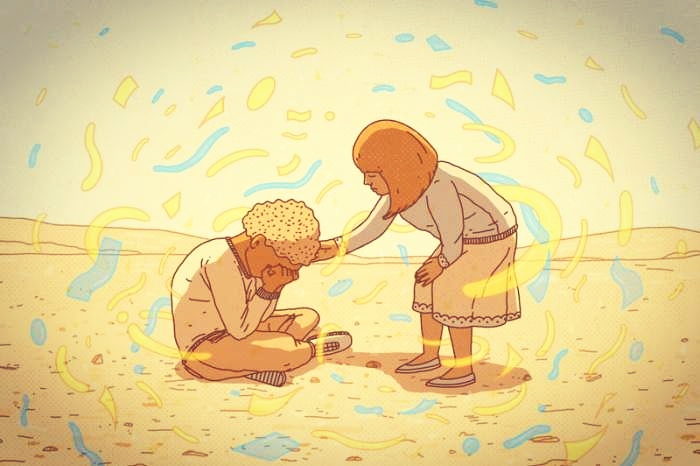
When you meet anyone you don’t know and figure out what you can do to make their day, you will always get each other. The World is so full of unkindness and abuse. People have been misused and wasted. Negative energy is being served every day, everywhere. We can make a difference and ring a lovely note to a disturbed soul by showing just a little kindness.
You may have a wall of Mandarin between you or a bulwark of Spanish in between, but they will always understand if you speak the language of kindness.

 The Cleaver
Nice. I remember having such kind of conversation about origin of languages this past Saturday.
And yesterday I was at a loss of origin of names. I digress
Kindness wins it all
LikeLiked by 1 person
Nowadays it seems what cleaver posts answers your debates 😙
LikeLike
A very powerful masterpiece.There is a thin bond between Science and Religion…. Kowili has made it more clear
LikeLiked by 1 person
Thanks senior Educationist…
“A little science distance is from God, but a lot of science brings us close to Him” —Louis Pasteur
LikeLike
The alarming spread of English literacy among nations could possibly be also one of the end time signs
LikeLiked by 1 person
Bringing people together to build another tower of Babel
LikeLike
It’s cool. I enjoy reading it.
LikeLiked by 1 person
Power. Share
LikeLike
Amazing that after I read the title generosity popped my mind and truly it was what I thought which was actually to be . So in essence what language do you speak is it your ethnical or is it kindness. I choose kindness .
LikeLiked by 1 person
Everyone understands that language
LikeLike
Everyone responds to kind words and gestures. A little more of this language is needed in this retrogressive society of today.
LikeLiked by 1 person
Well Said. Let’s be the agents
LikeLike
Insightful,let’s change the game,language is a powerful tool in communication
LikeLiked by 1 person
Amen and Amen…
LikeLike
” In a world where I can be anything, I have chosen kindness” It’s the language the deaf can hear and the blind can see. It takes grace and courage to be kind in a world that is constantly getting cruel by the day.
Here’s to a kind day
LikeLiked by 1 person
Kindness is audible Enough
LikeLike
As I read through, at the back of my mind as I got to learn about the theories…I knew for sure this language that everyone understands had it’s name start with a K…
Let me share this with a Kind soul.
LikeLiked by 1 person
Give the world a smile
LikeLike
Kindness! The universal language. Insightful read here!
LikeLike
In a world where you can be anything, choose to be kind. Great account of language origins and a wonderful take home to sum it up.
LikeLiked by 1 person
Amin…
Nature and daily life experience is an open book 📚.
We’ve got to show a little kindness
LikeLike