There are moments in life when God speaks promises that seem… too late.
We’ve waited too long. We’ve been disappointed too often. The deadlines we set for God have passed. And when He finally speaks—when the divine promise breaks into our ordinary space—we may respond not with celebration, but with hesitation and laughter.
Not the joyful kind. But the quiet, guarded chuckle of someone who has been let down before.
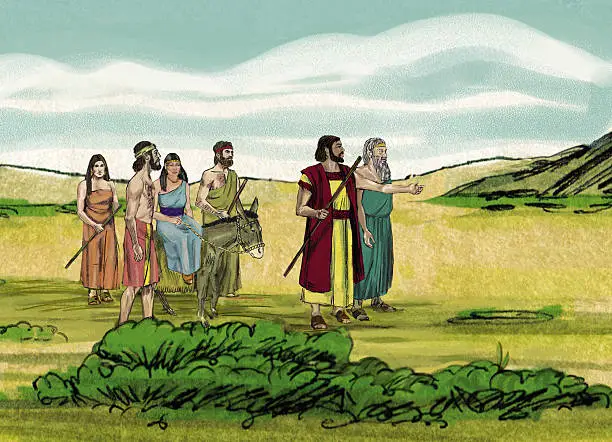
In Genesis 18, God visits Abraham with an astounding word: Sarah, well past the age of childbearing, will bear a son within the year. Hidden behind the tent curtain, Sarah hears—and laughs.
What follows is one of the most revealing divine questions in all of Scripture:
“Why did Sarah laugh?”
Followed by a second, even more probing:
“Is anything too hard for the Lord?”
In this installment of Questions God Asks, we step into the tent with Sarah. We listen to her laughter. We hear the gentle but firm voice of the Lord. And we ask ourselves: What happens when God’s promises challenge our realism? When His word confronts the quiet unbelief we’ve come to live with?
Sarah’s story is not just about a miracle birth. It’s about how God engages with our doubts, how He patiently leads us from skepticism to joy, and how every question He asks is meant to bring us back to faith.
Let us listen again to the question… and let it ask us something more profound.
“And the Lord said to Abraham, ‘Why did Sarah laugh, saying, ‘Shall I surely bear a child, since I am old?’ Is anything too hard for the Lord? At the appointed time I will return to you, according to the time of life, and Sarah shall have a son” (Genesis 18:13-14, NKJV).
To appreciate this divine questioning, we will cover:
- The Quiet Laughter of Doubt
- Unbelief Revealed by Laughter
- Grace That Confronts
- From Laughter of Doubt to Laughter of Joy
- Is Anything Too Hard for the Lord?
- What the Lord Has Said, He Will Do
The Quiet Laughter of Doubt
Behind the fabric of the tent, Sarah listens. Three guests speak with her husband, and one, more than a man or angel, declares the unimaginable: a child will be born to Sarah within the year. And Sarah laughs.

It wasn’t loud laughter. Not in mockery. But within herself.
“After I have grown old, shall I have pleasure, my lord being old also?” (v. 12). It is the laughter of long disappointment. Of decades spent cradling unfulfilled hope. A laughter more weary than wicked.
But the Lord hears it.
And He asks, “Why did Sarah laugh?”
Not to accuse. Not to embarrass. But to reveal.
Unbelief Revealed by Laughter
When God asks questions, they are never for the sake of information. They are invitations. This question pierces beneath behavior to the root: belief.
Sarah did not laugh because God’s promise was unclear. She laughed because it was too much to take in. Her reason had set limits to God’s power. Her realism had become a religion. And into that space, God speaks—not only asking why she laughed, but pressing further:
“Is anything too hard for the Lord?”
This is not just a rhetorical flourish. It’s a foundational theological challenge. The Hebrew word for “hard” (pālāʾ) can also mean wonderful, extraordinary, or miraculous. God’s question is not only about power—it’s about His nature. Is anything too wondrous for the One who made the stars and formed your womb?
Grace That Confronts
Sarah, caught, denies her laughter: “I did not laugh.” The Lord does not rage or scold. He simply replies, “No, but you did laugh.”
Truth must come before transformation. God doesn’t shame her; He corrects her because even weak faith must be made honest before it can be made strong.
The Lord’s gentle but firm response tells us something critical: He can work with a doubter, but not with a deceiver.
His question is grace. Grace that probes. Grace that exposes. Grace that prepares the barren heart to become fruitful, not just biologically, but spiritually.
From Laughter of Doubt to Laughter of Joy
Sarah would laugh again.
In Genesis 21:6, after the birth of Isaac, she declares:
“God has made me laugh, and all who hear will laugh with me.”
Her second laughter is not born of disbelief, but of wonder. It is what God had always intended: that her joy and God’s faithfulness would become a testimony shared by all who hear. The barren woman becomes a mother. The doubter becomes a proclaimer of praise.
This is the transformation God works in all who answer His question rightly.
Is Anything Too Hard for the Lord?
This second question is the real center of the passage. It reframes Sarah’s doubt and confronts ours.
It calls us to remember:
- God is not bound by age, time, or impossibility
- His promises are not dependent on the natural order
- His plans are often delayed, but never denied
So the question is not merely why Sarah laughed, but whether we believe what she doubted.
Do you think it’s too late for God to fulfill what He’s promised you?
Do you secretly laugh—not with joy, but with resignation—when you read of hope, transformation, or spiritual rebirth?
Then hear the divine response:
“Is anything too hard for the Lord?”
What the Lord Has Said, He Will Do
Sarah’s laugh is not far from our own.
We, too, carry silent doubts tucked behind polite expressions. We sit in our tents—wounded by delay, hardened by experience—and when God’s promises come knocking, we smile outwardly but laugh inwardly.
And still, the Lord asks:
“Why did you laugh?”
“Is anything too hard for Me?”
These are not words of condemnation, but of invitation. God’s question meets us at the crossroads of realism and faith, of resignation and hope. He is not asking for blind optimism. He is inviting us to believe that His word has creative power—that what He says, He will do.
As we reflect on this question, we can trace a pattern emerging through Scripture:
- To Adam in the garden, God asked, “Where are you?”, not for information, but for restoration.
- Then, “Who told you that you were naked?”, exposing false narratives and shame.
- “What is this you have done?”, a call to responsibility and truth.
- To Cain, “Why are you angry?” and “Where is Abel, your brother?”, confronting sin and justice.
- To Hagar, “Where have you come from, and where are you going?”, speaking to the lost and wandering.
- And most recently, “What’s wrong?”, the divine compassion in our distress.
Now, to Sarah—and us—He asks, “Why did you laugh?” followed by the deeply personal, deeply theological challenge:
“Is anything too hard for the Lord?”
So the question is now ours to answer.
- What promises of God have we quietly dismissed as impossible?
- Can we dare to believe again?
Sarah’s story reminds us: God is not limited by what limits us. Not by age. Not by circumstance. Not even by our own shaky faith.
Let the question ring in your heart today:
“Is anything too hard for the Lord?”
And let your laughter, once born of doubt, be reborn in joy.

 The Cleaver