What happens when a ruler converts to a faith not out of personal conviction, but for political convenience?
This question lies at the heart of one of history’s most transformative turning points—Constantine the Great’s conversion to Christianity. Lauded by some as the champion of Christian liberty and criticised by others as the architect of imperialized faith, Constantine’s conversion shaped not only the Roman Empire but also the future of the Christian church.
In this article, we’ll explore:
- What Is Nominal Conversion?
- The Historical Context and Political Motives Behind Constantine’s Conversion
- Immediate and Long-Term Consequences for the Church
- Did Constantine’s Nominal Conversion Lead to the Establishment of the Papacy?
- Lasting Influence on Church-State Relations and Religious Authenticity
- Timeline: Constantine and the Development of the Roman Church
- A Timeless Warning and a Call to Authentic Faith
Read on if you’ve ever wondered how power can co-opt faith—and what happens when the church gains influence but loses integrity. Constantine’s story is not just history; it’s a cautionary tale that remains strikingly relevant today.
What Is Nominal Conversion?
Nominal conversion refers to adopting a religion in name only without genuine spiritual conviction or heart transformation. It’s like wearing a faith’s uniform without embracing its beliefs.
This type of conversion often arises from social, political, or personal convenience rather than a deep sense of calling or belief in the tenets of that faith.
In the Christian context, nominal conversion can lead to a form of Christianity that is outwardly religious but inwardly lacking in spiritual substance. Jesus warned of this danger in the gospels:
“These people draw near to Me with their mouth, and honor Me with their lips, but their heart is far from Me” (Matthew 15:8, NKJV).
But what happens when a leader with power over millions embraces Christianity in name only? Let’s travel back to the fourth century and look at one of the most influential conversions in history.
The Historical Context and Political Motives Behind Constantine’s Conversion

Constantine the Great, Roman Emperor from 306 to 337 AD, made headlines across the empire when he aligned himself with Christianity.
But was it faith or politics that drove this decision?
At the time, the Roman Empire was fractured by internal strife and religious division. Paganism was waning, and Christianity, though still persecuted, was rapidly growing.
After reportedly seeing a vision of the cross and the words “In this sign conquer” (In hoc signo vinces) before a pivotal battle, Constantine embraced the Christian God for military favor. He later enacted the Edict of Milan (313 AD), granting religious freedom and ending centuries of Christian persecution.
However, Constantine did not immediately abandon pagan customs. He retained the title Pontifex Maximus, which means “Chief Priest” or “Great Bridge Builder” between gods and men—a pagan religious title traditionally held by Roman emperors as the head of Rome’s official state religion.
His continued use of this title symbolized his ongoing control over religious affairs and reflected his desire to unite Christian and pagan constituents under his rule.
These actions suggest Constantine’s conversion was less about wholehearted belief and more about pragmatic empire-building. It lacked the transformative repentance and faith described in Scripture (Romans 12:1-2, John 3:3-5).
Now that we understand his motives, how did this impact the church and Christian life? The effects were far-reaching.
Immediate and Long-Term Consequences for the Church
Constantine’s conversion radically changed the course of Christianity, both positively and problematically.
Immediate Effects:
- Legalization of Christianity: The faith moved from the shadows into public life.
- Increased Resources: Churches were built, bishops gained status, and Christian charities flourished.
- Imperial Support: Being Christian now offered political and social advantages.
Long-Term Effects:
- Church-State Entanglement: The once-persecuted faith became entangled with imperial power. Spiritual leadership began to mirror political hierarchy.
- Doctrinal Compromises: Councils like Nicaea (325 AD) attempted to unify doctrine under imperial oversight, sometimes sidelining Scripture in favor of political consensus.
- Cultural Christianity: Faith became fashionable. Converts joined the church not out of conviction, but to gain imperial favor, blending pagan customs with Christian rituals.
While Constantine helped stop the bloodshed of persecution, he inadvertently opened the door to a diluted Christianity—one that prioritized influence over integrity.
But it doesn’t end there. Let’s explore one of the most profound and controversial outcomes of Constantine’s legacy.
Did Constantine’s Nominal Conversion Lead to the Establishment of the Papacy?
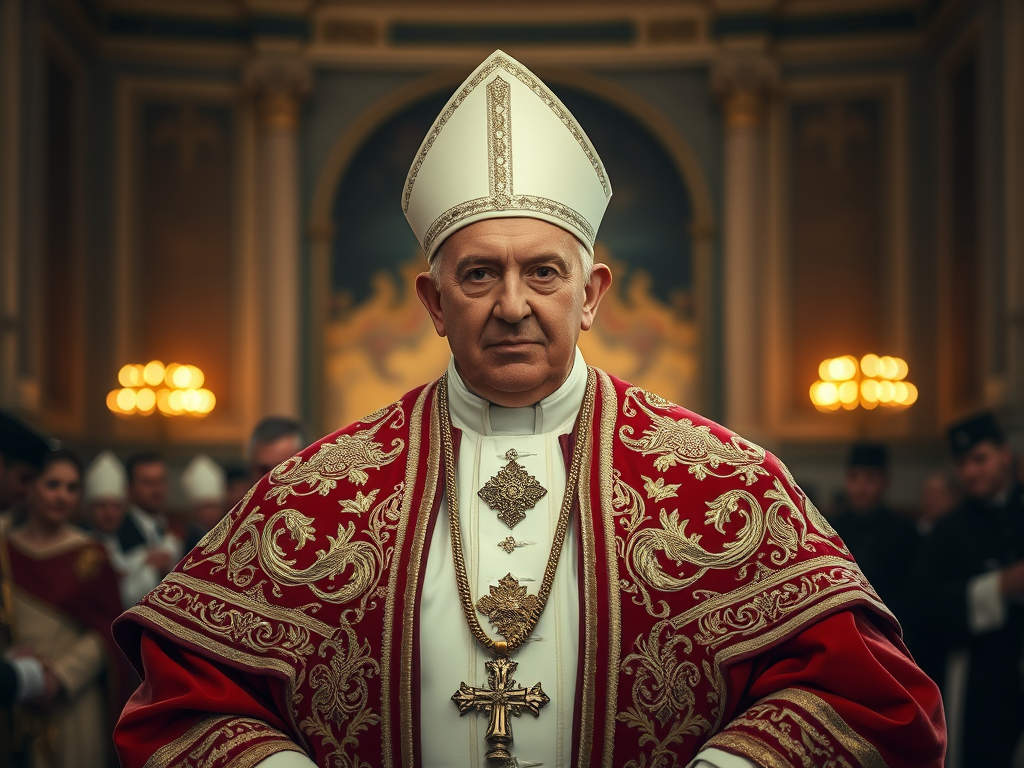
Constantine’s conversion set in motion a series of religious and political shifts that eventually contributed to the rise of the Papacy, but not directly or immediately.
Here’s how:
- Blending of Political and Ecclesiastical Authority
Constantine gave church leaders political privileges and civil authority, making bishops more like imperial administrators than shepherds. Over time, this blurred the line between spiritual leadership and state power. - Elevation of the Bishop of Rome
While the Papacy as an office developed over centuries, Constantine’s favouring of Rome as a political and religious center elevated the prestige of its bishop. Later, Roman bishops used this foundation to assert primacy over other churches. The Church in Rome became the Church of Rome. - Institutional Model for a Centralized Church
Constantine’s governance model—where a single ruler (himself) presided over both the empire and the church councils—paved the way for a centralized church hierarchy. This laid the structural groundwork for what became the Roman Catholic Church and the office of the Pope.
While Constantine did not establish the Papacy, his nominal conversion indirectly contributed to the environment in which the Bishop of Rome would later assume universal authority. The centralization of power in the church echoed the imperial system, reflecting Christianity’s integration with the state.
So, what are we left with today? How has Constantine’s legacy shaped modern Christianity, and what should we learn from it?
Lasting Influence on Church-State Relations and Religious Authenticity
The legacy of Constantine’s nominal conversion continues to echo today in how we approach faith and politics.
Church-State Dynamics:
His model laid the groundwork for centuries of church-state partnerships—some fruitful, others corrupt. When the church gains political power, it risks losing its prophetic voice. As Jesus declared, “My kingdom is not of this world” (John 18:36, NKJV).
Religious Authenticity:
Constantine’s story warns us that true faith must begin in the heart. Outward allegiance to Christianity, even by a nation or leader, means little without inner transformation. As believers, we must guard against cultural Christianity that imitates faith but lacks its power (see 2 Timothy 3:5).
His life invites us to ask hard questions:
- Is my faith genuine or convenient?
- Am I living for Christ or merely identifying with Christianity?
Before we conclude, let us recap some landmark timelines in Constantine’s nominal (in name only) conversion.
Timeline: Constantine and the Development of the Roman Church
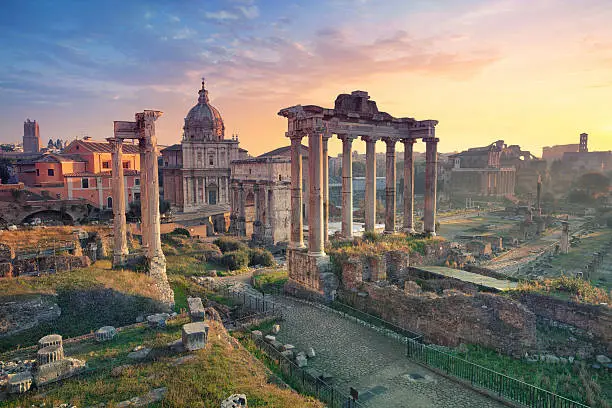
312 A.D. – Battle of the Milvian Bridge:
- Constantine claims to see a vision of the cross and hears, “In this sign conquer.”
- Defeats rival Maxentius and becomes ruler of the Western Roman Empire.
- Attributes victory to the Christian God, beginning his favor toward Christianity.
313 A.D. – Edict of Milan:
- Legalizes Christianity throughout the empire.
- Ends centuries of official persecution.
- Church gains state favor, wealth, and political influence.
321 A.D. – Sunday Observance Law:
- Constantine issues a civil decree making Sunday a day of rest.
- Pagan sun worship and Christian observance are fused, accelerating the shift from Sabbath observance (Saturday).
- This marks the first legal step toward Sunday sacredness in civil law.
325 A.D. – First Council of Nicaea:
- Constantine convenes the council to resolve theological disputes, particularly Arianism.
- Establishes a precedent: state involvement in church doctrine.
- The Nicene Creed is formed, centralizing orthodoxy under imperial influence.
330 A.D. – Constantinople Founded:
- Constantine moves the empire’s capital from Rome to Byzantium, renamed Constantinople.
- This creates a power vacuum in Rome, which the bishop of Rome (later pope) begins to fill, increasing his political and spiritual power.
337 A.D. – Constantine’s Death:
- Baptized on his deathbed by an Arian bishop.
- His dynasty continues to support and shape the church’s political role.
Late 4th Century – Christianity Becomes the State Religion:
- Under Emperor Theodosius I (in 380 A.D.), Christianity is made the official state religion.
- Pagan temples are shut down, and heresies are punished by the state.
- The Roman Church becomes the de facto imperial church.
5th–6th Centuries – Rise of Papal Authority:
- As the Western Roman Empire declines (falling in 476 A.D.), the bishop of Rome gains increasing power.
- The title “Pontifex Maximus” is eventually transferred to the pope.
- Church-state union becomes deeply entrenched.
538 A.D. – Papal Political Supremacy:
- Generally marked by historians as the beginning of the papal reign in medieval Europe.
- Prophetic in significance (linked to the 1260-year prophecy in Daniel 7:25 and Revelation 13:5).
In summary, Constantine’s nominal conversion in 312 A.D. set in motion a series of developments that:
- Shifted Christianity from a persecuted faith to an imperial religion,
- Blended Christian and pagan practices (especially Sunday worship),
- Laid the groundwork for the papacy and the medieval church-state system prophesied in Scripture.
This brings us to the heart of the matter—a personal call to evaluate the authenticity of our own spiritual journey.
A Timeless Warning and a Call to Authentic Faith
Constantine the Great remains one of history’s most impactful figures—not because he embodied Christian faith, but because he redefined how Christianity interacted with power.
His story reminds us that true conversion is not about position, popularity, or political advantage—it’s about surrendering the heart to Christ.
So what about you?
Are you following Jesus out of personal conviction—or just going along with what’s popular, comfortable, or expected?
Let Constantine’s life inspire a deeper pursuit of authentic faith—one that’s not just declared with lips but lived out with love, sacrifice, and sincerity.
Want to explore more Bible-based insights on genuine faith and personal transformation?Check out this informative article on “What It Means to Be Born Again” published on the Hope for Africa (HFA) page.

 The Cleaver
One thought on “Nominal Conversion and Its Consequences: A Case of Constantine the Great”